


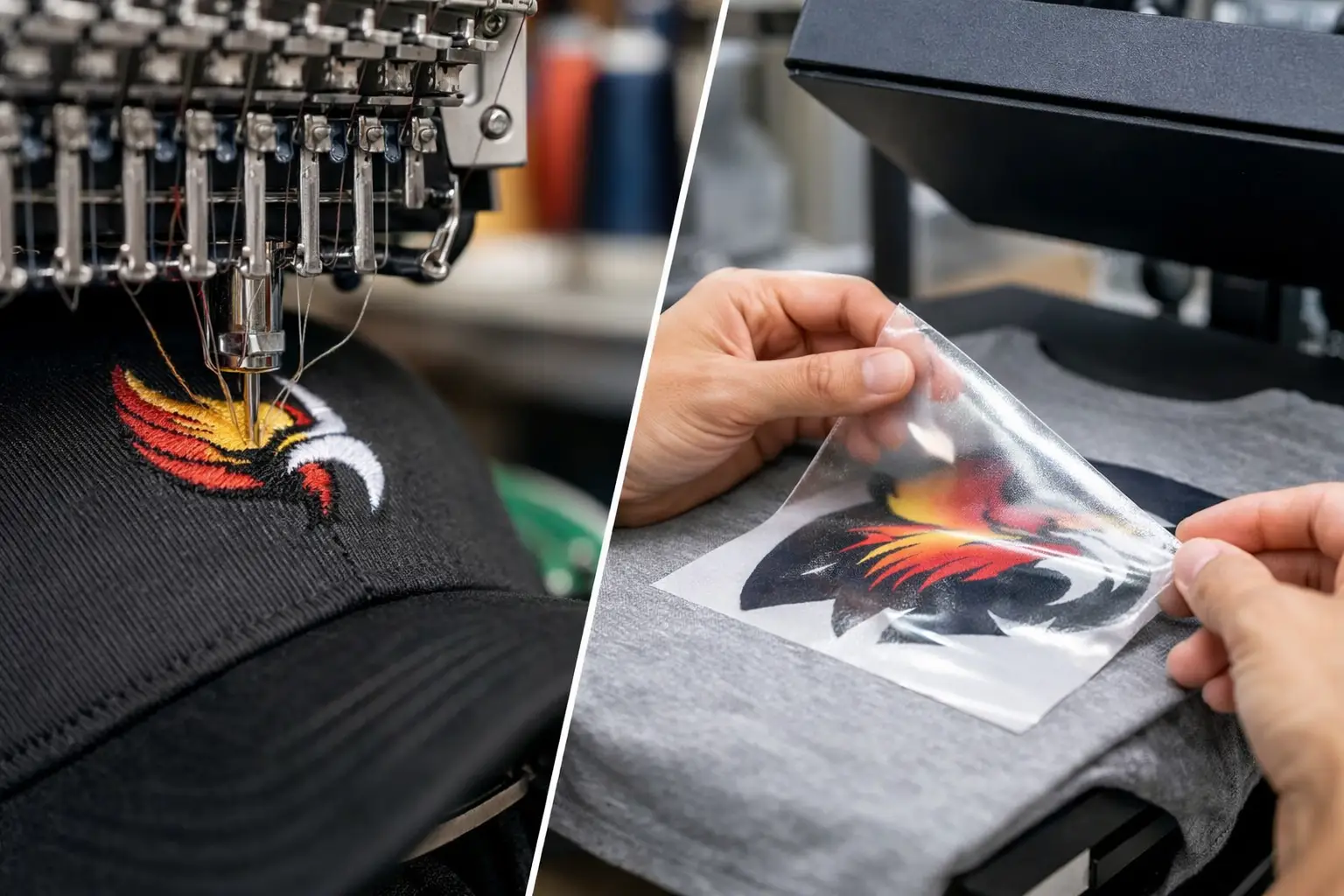
When a team needs branded apparel fast, the embroidery vs heat transfer decision usually comes down to more than looks. It affects budget, turnaround time, logo clarity, garment choice, and how the finished piece holds up after repeated wear. For corporate uniforms, event shirts, staff jackets, and promotional merchandise, choosing the right method early can prevent rework, delays, and results that do not match the brief.
Some buyers come in assuming embroidery is always the premium option. Others prefer heat transfer because it seems faster and more flexible. Both assumptions can be true, but only in the right context. The better question is not which method is better overall. It is which method makes sense for the product, the logo, the quantity, and the purpose of the order.
Embroidery vs heat transfer: the core difference
Embroidery stitches a design directly into the fabric using thread. The result has texture, dimension, and a more structured finish. It is commonly used on polo shirts, uniforms, caps, jackets, and bags where a polished corporate look matters.
Heat transfer applies a printed or cut design onto the garment surface using heat and pressure. Depending on the technique, it can reproduce full-color artwork, gradients, names, numbers, and fine details more easily than thread can. It is often chosen for event T-shirts, campaign apparel, sportswear, and short-run custom pieces.
That basic difference shapes everything else. Embroidery becomes part of the fabric through stitching. Heat transfer sits on top of the fabric as an applied graphic. Neither is automatically right or wrong. Each has strengths that suit different business uses.
When embroidery makes more sense
Embroidery is often the safer choice when brand presentation needs to feel formal, durable, and established. If you are outfitting front-facing staff, sales teams, hotel crews, school personnel, or operations staff, embroidered polos and uniforms usually communicate professionalism immediately.
Logos with simple shapes, limited colors, and strong outlines translate especially well in thread. A chest logo on a polo or jacket tends to look clean and consistent with embroidery, and it handles regular workplace wear well. For companies ordering uniforms that will be used for months rather than a one-day event, that matters.
There is also a perceived value factor. Embroidered apparel tends to feel more substantial because of the raised stitching. On premium gifts, executive apparel, and corporate outerwear, that finish can help the item feel less promotional and more like a branded product people will actually keep using.
The trade-off is detail. Very small text, intricate gradients, shadow effects, and highly complex illustrations do not always convert neatly into thread. Stitching has physical limits, so logos often need adjustment before production. That is normal, but it does mean embroidery works best when the artwork is suited to the method.
Where heat transfer has the advantage
Heat transfer is usually the practical answer when artwork is detailed, colorful, or variable from piece to piece. If you need a large front print, a back design, individual names, event roles, or sponsor logos, heat transfer often offers more flexibility with fewer compromises.
This is especially useful for campaign shirts, roadshow apparel, sports jerseys, school event tees, and short lead-time event orders. Full-color logos and graphic-heavy layouts are easier to reproduce because the design is printed rather than built from thread. You are not simplifying artwork to fit stitch limitations in the same way.
Heat transfer also works well when placement needs to be bold. Large chest prints, oversized back logos, sleeve graphics, and temporary event messaging are all more practical through transfer methods. Embroidery can become heavy, expensive, or visually crowded when used for large areas.
For lower quantities or mixed personalization, heat transfer can also be more cost-efficient. If every shirt needs a different name or title, changing stitched files for each item is rarely the best route. Transfer production generally handles those variations more smoothly.
Cost depends on what you are ordering
Many buyers ask which is cheaper, but cost only makes sense when you look at the full job. Embroidery pricing is commonly influenced by stitch count, logo size, placement, and setup. A small left-chest logo on 100 polos may be very reasonable. A large, dense embroidered design on jackets is a different story.
Heat transfer costs are affected by print size, number of colors or artwork complexity, material compatibility, and quantity. For short runs or variable designs, it can be very efficient. For larger volumes of simple prints, the value can be excellent. But if you are comparing a tiny embroidered logo to a large multicolor transfer across front and back, you are not comparing like for like.
This is why experienced buyers look beyond unit price. They ask what finish the garment needs, how long it will be used, and whether the visual result supports the purpose of the item. A slightly higher cost can still be the better business decision if it improves wearability, brand image, and lifespan.
Durability and wear in real use
Embroidery has a strong reputation for durability, and in many workplace applications that reputation is deserved. The stitched logo usually stands up well to repeated washing and regular wear, particularly on uniforms, work shirts, caps, and outerwear. It does not peel because it is sewn into the garment.
That said, embroidery is not immune to issues. Poor digitizing, unstable fabric, or very dense stitching can cause puckering or distortion. On lightweight performance fabrics, embroidery can sometimes feel too heavy or pull the material.
Heat transfer durability varies more because different transfer materials and production methods perform differently. A well-produced transfer applied to the right garment can hold up very well. But cheap materials, incorrect application, or unsuitable fabric choices can lead to cracking, peeling, or fading sooner than expected.
That is why garment type matters as much as decoration type. A cotton event tee, a dri-fit sports shirt, and a nylon jacket will not all behave the same way. Matching the application method to the fabric is part of getting a reliable result.
Appearance, texture, and brand impression
If your goal is a classic corporate look, embroidery often wins on appearance. It signals permanence and structure. On polos, button-down workwear, fleece jackets, and caps, it tends to look refined and intentional.
If your goal is visual impact, heat transfer often has the edge. It can reproduce sharp lines, vivid colors, and larger graphics without adding bulk. For promotional launches, festival apparel, staff shirts with campaign messaging, or sponsor-heavy event uniforms, that flexibility is valuable.
There is also a comfort factor. A small embroidered chest logo is rarely a problem. A large embroidered design can feel stiff and heavy. Heat transfer, depending on the material used, can feel lighter for bigger artwork, though some finishes may still create a noticeable layer on the fabric.
How to choose for common business use cases
For office uniforms, hospitality apparel, school staff wear, and corporate polos, embroidery is often the better fit because it supports a cleaner, more professional presentation. For jackets, caps, and bags, it also tends to deliver a premium branded finish.
For event T-shirts, promotional giveaways, product launch apparel, and one-off campaigns, heat transfer is often more practical. It handles larger visuals, fast-changing artwork, and personalization with less friction.
For sportswear and team orders, the answer usually depends on the design. A small crest may look great embroidered, but player names, numbers, and large team graphics are usually better suited to heat transfer.
For premium merchandise, both can work. If the brand mark is simple and the garment is structured, embroidery can elevate the product. If the design relies on color detail or illustration, heat transfer may preserve the creative better.
The best choice often starts with the artwork
One of the biggest mistakes in branded apparel is choosing the decoration method before reviewing the logo file, garment fabric, and intended placement together. A method may sound ideal in theory but create compromises once the actual artwork is on the table.
A reliable production partner will usually check whether the logo has fine text, tonal effects, thin lines, or oversized coverage. They will also flag if the selected garment is too light for dense embroidery or too textured for a clean transfer result. That guidance saves time and avoids disappointment after samples or final delivery.
At Global Asia Printings, this is often where the value comes in for business buyers managing deadlines, budgets, and multiple item types at once. When uniforms, event shirts, bags, and booth branding all need to work together, the right recommendation is rarely about pushing one method. It is about making sure each item is decorated in the way that best supports its use.
If you are deciding between embroidery and heat transfer, start with the outcome you need, not the technique you assume you want. The best branded apparel is the kind that looks right, wears well, fits the budget, and arrives ready for the job it was ordered to do. That is usually the smartest place to make the call.