


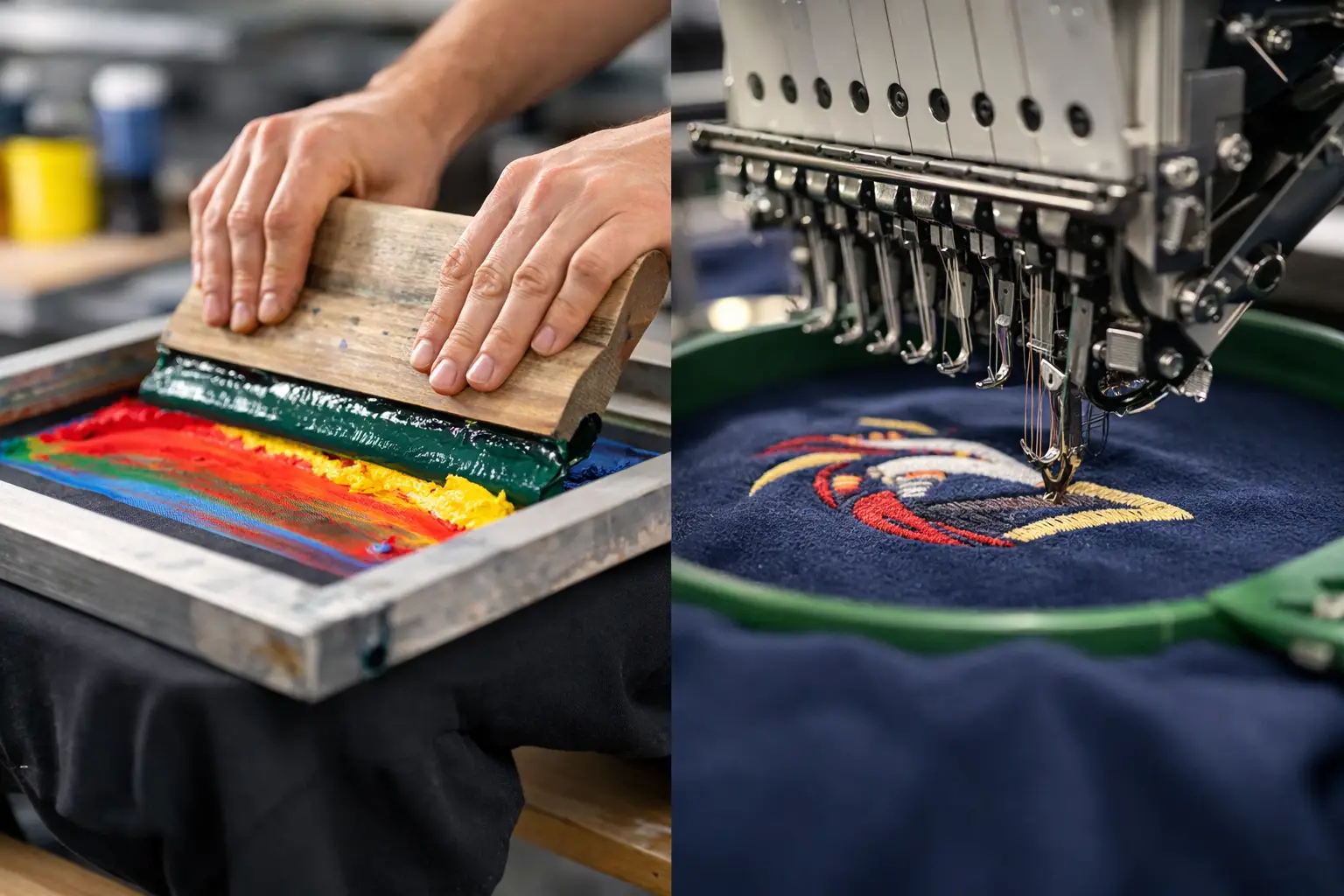
When a team needs branded apparel fast, the biggest question usually is not the garment – it is screen printing vs embroidery. The right choice affects budget, lead time, logo appearance, garment feel, and how polished your brand looks at an event, in the office, or on the sales floor.
For corporate orders, there is no one-size-fits-all answer. A startup ordering campaign T-shirts for a roadshow has different priorities than an HR team sourcing executive polos or a school organizer preparing staff uniforms. What matters is choosing the decoration method that fits the garment, the logo, the quantity, and the setting where it will be worn.
Screen printing vs embroidery: the real difference
Screen printing applies ink directly onto the fabric. It is typically the better fit for larger artwork, bold graphics, and higher-volume orders where cost efficiency matters. You see it often on T-shirts, event shirts, campaign apparel, and promotional wear because it handles strong visual impact well.
Embroidery stitches the design into the garment using thread. It creates a more textured, premium look that is often chosen for polos, jackets, caps, uniforms, and corporate wear. When a business wants apparel to feel more formal or long-term, embroidery usually enters the conversation first.
That basic distinction is easy enough. The more useful question is what each method actually means for your order.
How the logo will look on the garment
If your design includes large artwork, gradients converted into solid areas, or bold branding across the chest or back, screen printing usually gives a cleaner result. It lays flatter on the fabric and allows logos to appear vibrant without adding bulk. This is especially helpful for promotional shirts where visibility from a distance matters.
Embroidery has a different visual strength. It adds dimension and texture, which can make a small chest logo feel more refined. On polos, button-down work shirts, fleece jackets, and caps, that raised stitched finish often looks more professional than ink.
There are trade-offs. Very fine details, tiny text, or intricate shading may not translate well in embroidery because thread has physical thickness. The design may need simplification. Screen printing can preserve more detail in many cases, but it does not create the same tactile, executive look.
For businesses focused on brand presentation, the garment category matters just as much as the logo. A stitched logo on a dry-fit polo can look appropriate for front-facing staff. The same logo embroidered large on a lightweight event tee may feel heavy and unnecessarily costly.
Cost depends on quantity, size, and placement
This is where many buyers get tripped up. They ask which option is cheaper, but the honest answer is that it depends on the order setup.
Screen printing is often more cost-effective for larger runs, especially when the same design is repeated across many shirts. Once the setup is done, unit pricing typically becomes more attractive as volume increases. That is why it is a common choice for company events, school activities, product launches, and campaign merchandise.
Embroidery usually carries a higher per-piece cost because stitching takes more machine time and is priced based on stitch count, logo complexity, and placement. For smaller logos on polos or uniforms, that added cost can still make sense because the perceived value is higher. On premium garments, embroidery often feels aligned with the product itself.
If you are ordering 300 event T-shirts with a front and back design, screen printing will usually make more financial sense. If you are ordering 30 executive polos for management or sales staff, embroidery may be the stronger investment.
The garment also affects price. Thick, structured items like jackets and caps are often well suited to embroidery. Lightweight tees intended for mass distribution usually lean toward screen printing. Cost planning works best when the decoration method is chosen together with the apparel style rather than after the fact.
Durability is not one simple winner
Both methods can be durable when produced properly and matched to the right use case. The better question is what kind of wear the apparel will face.
Embroidery is known for long-term durability because the logo is stitched into the fabric. It generally holds up very well on uniforms, workwear, jackets, and items that are washed frequently. For staff apparel that needs to maintain a professional look over time, this is a strong advantage.
Screen printing can also last very well, particularly when quality inks, proper curing, and the right garment are used. For promotional tees, team shirts, and event wear, it performs reliably. Problems usually come from poor production, not the method itself. Cracking, fading, or peeling is more likely when the print process or garment choice is not handled correctly.
That said, heavy embroidery on thin fabric can cause puckering or pull on the material over time. Large printed areas, on the other hand, may feel less breathable on some garments. Durability is not just about how long the logo survives – it is also about how the apparel feels and wears after repeated use.
Comfort matters more than many buyers expect
For giveaway shirts, campaign apparel, and high-wear event clothing, comfort has a direct effect on whether people actually wear the item again.
Screen printing usually feels lighter for larger graphics because the design sits flat on the garment. It is better suited to full-front artwork, oversized logos, or back prints where embroidery would feel stiff or heavy. If the goal is a shirt that people wear casually after the event, print often has the advantage.
Embroidery works well when the logo stays relatively small, such as a left chest mark or sleeve placement. In those cases, the added texture is not intrusive. But large stitched areas can feel dense, especially on performance fabrics or lightweight apparel.
This is one reason many corporate programs split methods by item type rather than trying to force one solution across everything. Event tees may be screen printed, while staff polos and caps are embroidered. That approach keeps the brand consistent while respecting how each product is used.
When screen printing is the smarter choice
Screen printing tends to be the better option when you need visual impact, quantity efficiency, and flexibility for larger artwork. It is especially practical for event shirts, roadshows, school activities, promotional campaigns, and product launch apparel.
It also works well when your branding includes multiple placements, such as front, back, and sleeves, or when the design is central to the shirt rather than a subtle corporate mark. If the apparel is meant to energize a crowd, support a campaign, or create visibility at scale, print usually delivers better value.
For procurement and marketing teams managing tight budgets, screen printing can help stretch spend across higher volumes without sacrificing presence.
When embroidery is the better investment
Embroidery makes sense when the apparel needs to look polished, durable, and more premium from the start. It is often the right call for staff uniforms, office polos, hospitality wear, outerwear, caps, and client-facing apparel.
It also suits brands that want a more understated finish. A stitched logo on the left chest communicates professionalism without making the garment feel overly promotional. For internal use, retail staff, field teams, and executive apparel, that balance matters.
If the order is smaller, the garment is higher quality, and the goal is long-term wear rather than one-time event use, embroidery often justifies the extra cost.
How to decide faster for your next order
The most efficient way to choose in a real business setting is to start with four factors: garment type, logo size, order quantity, and use case. A cotton event tee with a large front design points toward screen printing. A polo for customer-facing staff points toward embroidery. Once those basics are clear, budget and timeline become easier to manage.
Artwork should also be reviewed early. Some logos look strong in both methods, while others need adjustment depending on the decoration style. Fine lines, small text, and complex gradients may need simplification for embroidery. Large stitch-heavy designs may be better converted to print.
This is where working with an experienced production partner saves time. Instead of choosing based on assumption, you can match the method to the actual garment and purpose of the order. For companies managing uniforms, merchandise, and events across multiple departments, that kind of guidance prevents expensive rework.
At GAPS, this is often how apparel planning is approached in practice – not as a generic print decision, but as part of a larger branding requirement with deadlines, budgets, and presentation standards attached.
If you are choosing between screen printing and embroidery, do not start by asking which is better overall. Start by asking what the apparel needs to do once it leaves the box. That answer usually points you to the right method much faster.