


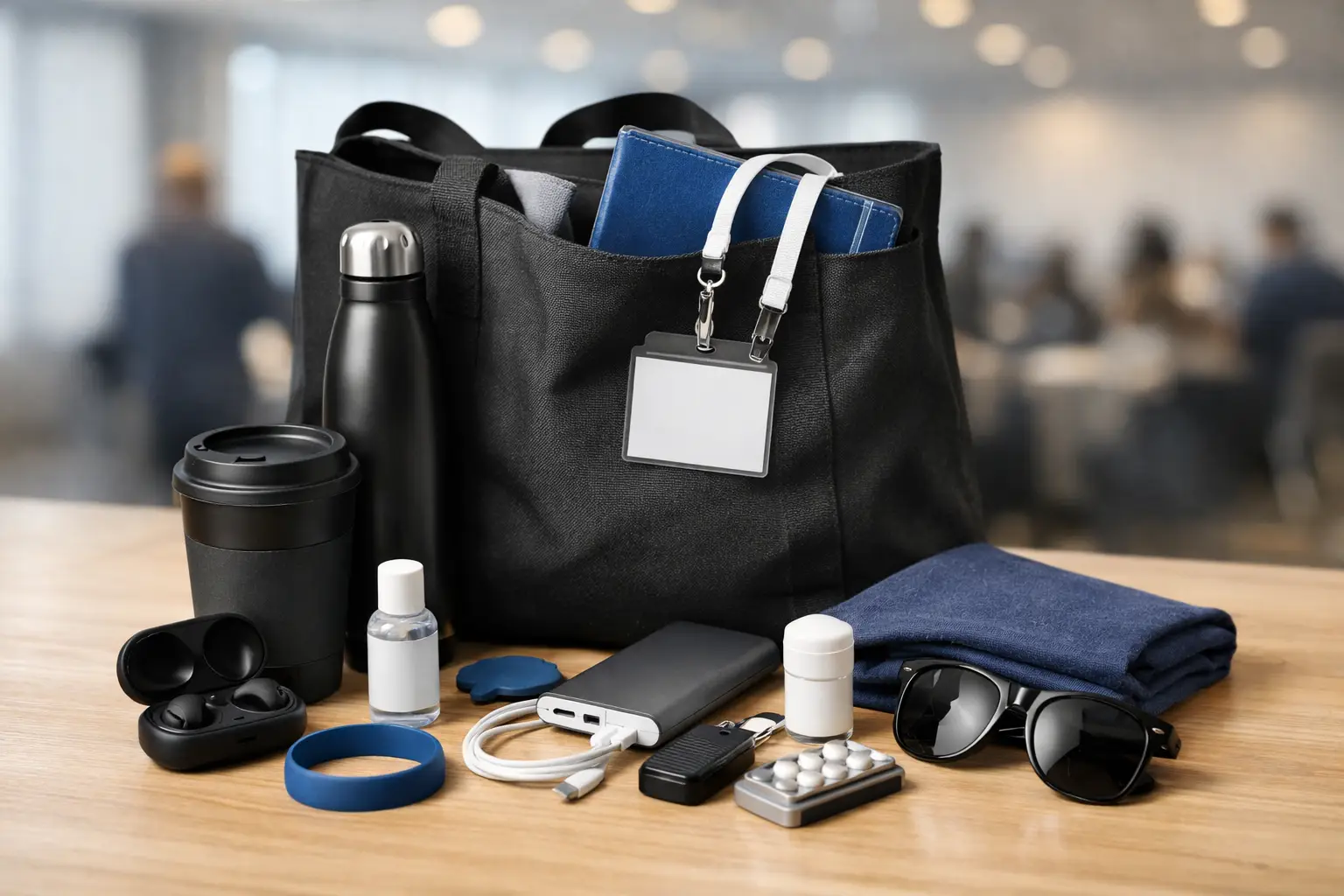
The fastest way to waste an event budget is to fill giveaway bags with items nobody wants. The right conference swag bag checklist helps you avoid that problem early – before you approve artwork, place rush orders, or end up shipping boxes of leftovers back to the office.
For marketing teams, HR leads, event planners, and procurement buyers, swag bags are not just a nice extra. They shape first impressions, reinforce brand presence, and give attendees something tangible to remember after the event. But good swag is rarely about adding more items. It is about choosing the right mix for your audience, your budget, and your event format.
What a good conference swag bag checklist should do
A useful conference swag bag checklist should help you answer three practical questions. First, who is receiving the bag? Second, what do you want them to do or remember after the event? Third, what can you realistically source, customize, pack, and deliver on time?
That sounds obvious, but this is where many event teams get stuck. A startup expo, a leadership summit, a school conference, and a trade show all call for different merchandise choices. The same tote bag and pen set will not perform equally well across all four.
The strongest swag bags usually balance three things: usefulness, brand visibility, and logistics. If an item is useful but hard to transport, it may create more friction than value. If it is easy to distribute but feels cheap, it can weaken brand perception. If it looks impressive but blows the budget, it reduces room for the pieces that attendees will actually keep.
Start your conference swag bag checklist with the bag itself
Before you think about inserts, decide what kind of bag makes sense. This is one of the most overlooked choices in conference planning.
A non-woven tote is often the practical baseline for large-scale events because it is cost-effective, lightweight, and easy to brand. Cotton canvas feels more premium and tends to be reused longer, which can improve post-event visibility. Drawstring bags work well for youth programs, internal staff events, or casual conferences where attendees will move around a lot. If the event is executive-facing, a more structured bag or document carrier may be a better fit.
The trade-off is simple. A more premium bag can carry the whole experience, but it also takes up more of your budget. If you are planning for high attendance, it may be smarter to choose a strong, well-branded mid-range bag and put more value into the contents.
You should also think about packing weight. A bag that looks good on the registration table but becomes bulky after a few booth visits is not helping your attendees.
The must-have categories inside the swag bag
Not every bag needs the same products, but most successful ones include a mix of practical, branded, and event-specific items.
1. Event essentials
These are the items that support the attendee during the event itself. A lanyard, badge holder, event booklet, printed agenda card, or venue map can all belong here. If the conference includes breakout sessions, sponsor activations, or multiple floors, these pieces become much more valuable.
This category is often where print coordination matters most. If your event materials, credentials, and bag inserts come from different vendors, small inconsistencies show up fast. Colors shift, sizing varies, and deadlines become harder to manage.
2. Everyday usable merchandise
This is the core of most effective swag bags. Think notebooks, pens, drinkware, pouches, cable organizers, phone accessories, reusable shopping bags, or travel items. Attendees keep these because they fit into daily routines, not because they were handed out at a conference.
Usefulness should come before novelty. A stylish water bottle or quality notebook usually outperforms a gimmicky product that gets one laugh and then disappears into a drawer.
3. Brand visibility items
Some items work mainly because they keep your logo in circulation after the event. Apparel, caps, desk accessories, and premium tote bags can do this well when the design is clean and wearable. The keyword here is restraint. If branding is too loud, the item becomes less likely to be reused.
For corporate audiences, subtle placement often wins. A small chest logo on a polo, a tasteful one-color print on a notebook, or a neat imprint on a tumbler can feel more considered than covering every surface with brand graphics.
4. Sponsor or campaign inserts
If your conference includes sponsors, partner flyers, promotional cards, or product samples, include them selectively. Too many paper inserts make the bag feel like advertising rather than value.
This is where discipline matters. Ask whether each insert earns its place. If it does not help the attendee, support the event, or reinforce a clear campaign goal, leave it out.
How to choose items based on audience and event type
A conference swag bag checklist only works if it reflects the people attending.
For trade shows and business networking events, practical desk and travel items usually perform best. Attendees are collecting information all day, moving between booths, and often traveling home afterward. Compact products with real utility make sense.
For internal conferences or employee town halls, apparel, wellness items, and team-branded accessories can have stronger impact. These events often focus on culture, recognition, or engagement, so the swag can support a sense of belonging.
For educational or school-related conferences, budget sensitivity and volume often matter more. Pens, notebooks, folders, lanyards, and affordable bags tend to be reliable choices. Durability is important here because the items may be used repeatedly.
For executive or VIP events, quantity matters less than finish. A smaller number of better items usually feels stronger than a stuffed bag of average ones. Premium notebooks, quality drinkware, leatherette accessories, or curated gift sets can be more appropriate.
Budget decisions that improve the bag instead of shrinking it
When budgets tighten, many teams reduce quality across every item. That usually leads to a bag full of things nobody values.
A better approach is to prioritize. Keep one anchor item that feels worthwhile, one or two functional items, and only then add printed materials or sponsor content. If needed, reduce the number of pieces rather than lowering the standard of every piece.
It also helps to separate visible value from hidden cost. Packaging, individual wrapping, complex print methods, and multiple artwork versions can raise production costs quickly. Sometimes a simpler print treatment on a better product gives you a stronger result than a heavily customized low-cost item.
This is where experienced budget guidance matters. Suppliers who handle both merchandise and print production can often recommend practical substitutions before costs get out of hand.
Timing, printing, and packing details that are easy to miss
Even the best conference swag bag checklist can fail on execution if the production timeline is too tight.
Start by confirming quantities with a buffer. Running short at registration creates immediate problems, while over-ordering too heavily can leave you with excess stock and wasted spend. Artwork approval should happen early, especially for multi-item orders where logo placement and brand consistency matter.
Packing also deserves attention. Will bags be pre-packed before delivery, assembled on-site, or filled at registration? Pre-packing saves time during event setup, but only if all items arrive together and in the correct quantities. If you are coordinating apparel, print materials, electronics, and bags from separate sources, one late shipment can hold up everything.
For larger events, it is often more efficient to work with a single production partner that can coordinate product sourcing, branding, printed inserts, and packing requirements. That reduces handoff errors and makes deadline management much easier. For teams managing conferences under real-world pressure, that matters as much as the products themselves.
A practical conference swag bag checklist before you place the order
Before signing off, check that your bag includes the right format, the right item mix, and the right execution plan. Make sure the bag suits the event type, the contents have a clear purpose, and the branding is consistent across all pieces. Confirm lead times, artwork approvals, delivery dates, and packing method.
Then ask one final question: would an attendee choose to keep at least half of what is inside? If the answer is no, the bag needs another round of editing.
At GAPS, we see the best event merchandise decisions happen when teams plan around attendee experience first and product selection second. That is usually the difference between a giveaway bag that gets dropped in a hotel room and one that keeps working long after the conference ends.
A good swag bag does not need to be oversized or expensive. It just needs to feel considered, useful, and well executed – which is exactly what attendees remember.