


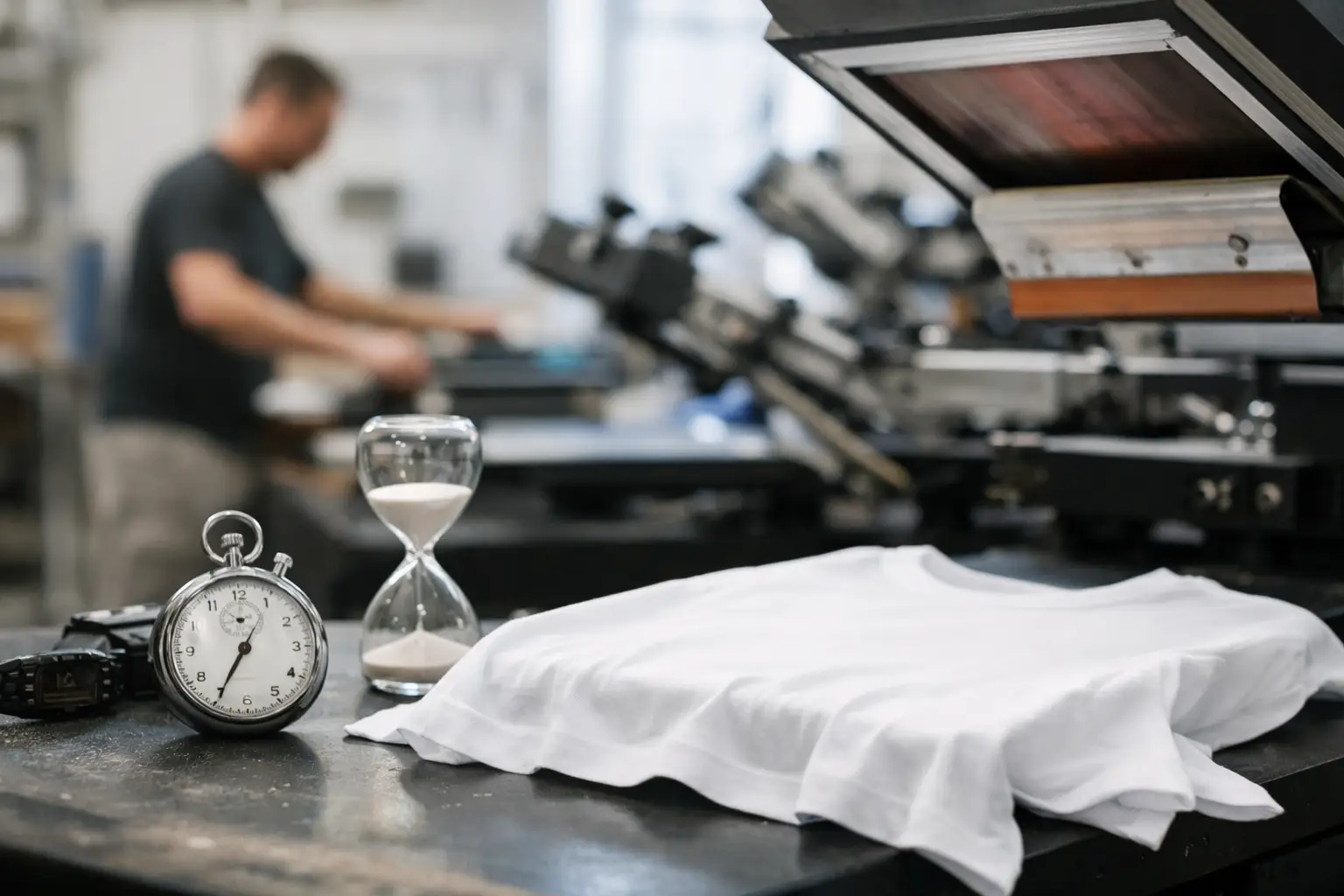
A campaign launch is next Friday, your event shirts are not approved yet, and someone on the team has just asked the question that matters most: how long does tshirt printing take? The honest answer is that it depends on the print method, order size, artwork readiness, and whether blanks are in stock. For business orders, the timeline is rarely just about printing. It also includes coordination, approvals, sourcing, production scheduling, packing, and delivery.
If you are ordering for a corporate event, staff uniform rollout, school program, or promotional giveaway, knowing the timing upfront helps you avoid rushed decisions and expensive last-minute changes. A realistic production plan protects both quality and budget.
How long does tshirt printing take for most orders?
For most standard custom T-shirt orders, production can take anywhere from a few business days to around two weeks. Small runs with simple artwork and available stock are usually faster. Larger quantities, specialty inks, multiple print locations, or mixed sizing across several shirt types will take longer.
A common working range for business buyers is 5 to 10 business days after artwork approval and stock confirmation. That is a useful benchmark, but it is not a guarantee for every order. If you need delivery by a fixed event date, the safer approach is to work backward from the deadline and leave room for revisions, shipping, and unexpected stock issues.
What actually affects T-shirt printing turnaround time?
The biggest mistake buyers make is assuming the clock starts when they send an inquiry. In reality, production usually starts after the artwork is confirmed, the garment stock is secured, and the order details are finalized.
1. Print method
Different decoration methods move at different speeds. Screen printing is efficient for larger runs, but setup takes time because each color needs its own screen. That makes it slower to start, though often faster per piece once production begins.
Heat transfer and DTF can be quicker for short runs or designs with many colors. They usually involve less setup, which helps on urgent orders. Embroidery is a different timeline altogether and should not be treated like standard shirt printing, especially if the logo needs digitizing first.
2. Order quantity
A 20-piece department order is not scheduled the same way as a 2,000-piece event rollout. Larger orders need more press time, more quality checks, and more packing coordination. If sizes are split across multiple garment colors or styles, the complexity increases further.
3. Artwork readiness
Clear, print-ready files speed everything up. Low-resolution logos, missing fonts, unclear color references, or designs that need recreation can delay the order before production even begins. Approval bottlenecks inside your own organization can add just as much time as the printer’s workflow.
4. Garment availability
Sometimes the print schedule is not the problem. The blank shirts are. If your selected style, brand, color, or size range is out of stock, the order may need to wait for replenishment or be switched to an alternative product. This is especially common during peak event seasons or when buyers need unusual sizes in large quantities.
5. Print locations and finishing
A left chest logo is faster to manage than front, back, sleeve, and individual name printing on each shirt. Add-ons such as folding, poly bagging, relabeling, or sorting by team also affect timing. These details matter for corporate distributions and event kits, so they should be discussed early.
Typical timelines by printing method
If you are comparing options, it helps to understand the usual pace of each method.
Screen printing
Screen printing often takes about 5 to 10 business days for a standard business order once everything is approved. It is a strong choice for larger quantities because the print cost per piece is usually more efficient at volume. The trade-off is setup time. If your design uses multiple colors or your order includes several print positions, allow more time.
Heat transfer or DTF
These methods can be turned around faster for small to mid-size runs, sometimes in as little as 3 to 7 business days depending on workload and stock. They are especially useful for colorful designs, variable names, or short-run promotional shirts. The timeline advantage can be significant when the order is urgent and the artwork is ready.
DTG
Direct-to-garment printing is usually used for smaller quantities and detailed artwork. Timing can be relatively quick if the garments are compatible and available. Still, not every corporate order is suited to DTG, especially if you need a consistent result across high volumes or a wider garment selection.
Rush orders are possible, but there is a trade-off
Yes, faster production can often be arranged. No, it is not always the best option.
Rush printing may limit your garment choices, reduce time for sample checks, or increase cost because the order has to be prioritized in the production queue. For business buyers, that matters. If brand consistency is critical, a one-day or two-day turnaround may solve the deadline problem while creating another one in quality control or product substitution.
A dependable supplier will tell you plainly what can be done without overpromising. That is far more useful than hearing “no problem” and discovering later that stock is missing or delivery has slipped.
How to shorten the timeline without compromising the order
If speed matters, the best results usually come from preparation rather than pressure. Send final artwork in the right file format. Confirm the exact quantity, sizes, print positions, and delivery address early. Keep the shirt style flexible in case your first choice is unavailable.
It also helps to assign one decision-maker on your side. Many delays happen when marketing, procurement, HR, and event teams all need to approve different parts of the order. Internal alignment can save more time than any rush fee.
When buyers need guidance, a full-service partner can make a real difference by handling sourcing, artwork checks, print recommendations, and fulfillment in one workflow. That is often faster than managing separate vendors for garments, printing, and event distribution.
When should you place your order?
For routine company apparel, placing your order at least two weeks ahead is a practical minimum. For larger campaigns, exhibitions, school events, or nationwide rollouts, three to four weeks is safer. If the order includes custom sourcing, special garment colors, multiple SKUs, or bundled merchandise, build in even more time.
Peak periods deserve extra caution. End-of-year gifting, conference season, onboarding cycles, and major public events can all increase production demand. If your deadline is fixed, earlier is always better.
A realistic example for corporate buyers
Say your company needs 300 event shirts with a two-color front print and one-color back print. If the artwork is approved today and the selected shirt is in stock, a typical timeline might look like this: one business day for artwork confirmation and stock reservation, several business days for screen setup and printing, then additional time for packing and delivery. In a smooth case, you may receive the order within a week or slightly more.
Now change the scenario. The team wants individual names on the back, the preferred shirt color is low in stock, and three departments need to approve the artwork. Suddenly the timeline extends. The printing itself may still be manageable, but the project becomes slower because the order is more complex.
How long does tshirt printing take when you need event support too?
If shirts are only one part of a larger campaign, timing should be managed as part of the whole activation. Event buyers often need lanyards, tote bags, booth graphics, backdrops, and on-site setup on the same schedule. In that situation, T-shirt printing should not be planned in isolation.
Working with one supplier that can coordinate merchandise, printing, and event execution often reduces handoff delays and helps you keep one clear production timeline. For many business clients, that operational simplicity matters just as much as the print speed itself. Companies such as Global Asia Printings often support this kind of end-to-end planning because the deadline is tied to the event, not just the shirts.
The best time estimate is always the one based on your actual order details, not a generic promise. If you have a target date, share your quantity, artwork status, preferred shirt type, and delivery requirements as early as possible. That gives your printer room to recommend the right method, protect quality, and keep the timeline realistic. When the order supports a launch, conference, or internal program, a little planning upfront usually saves a lot of stress later.