


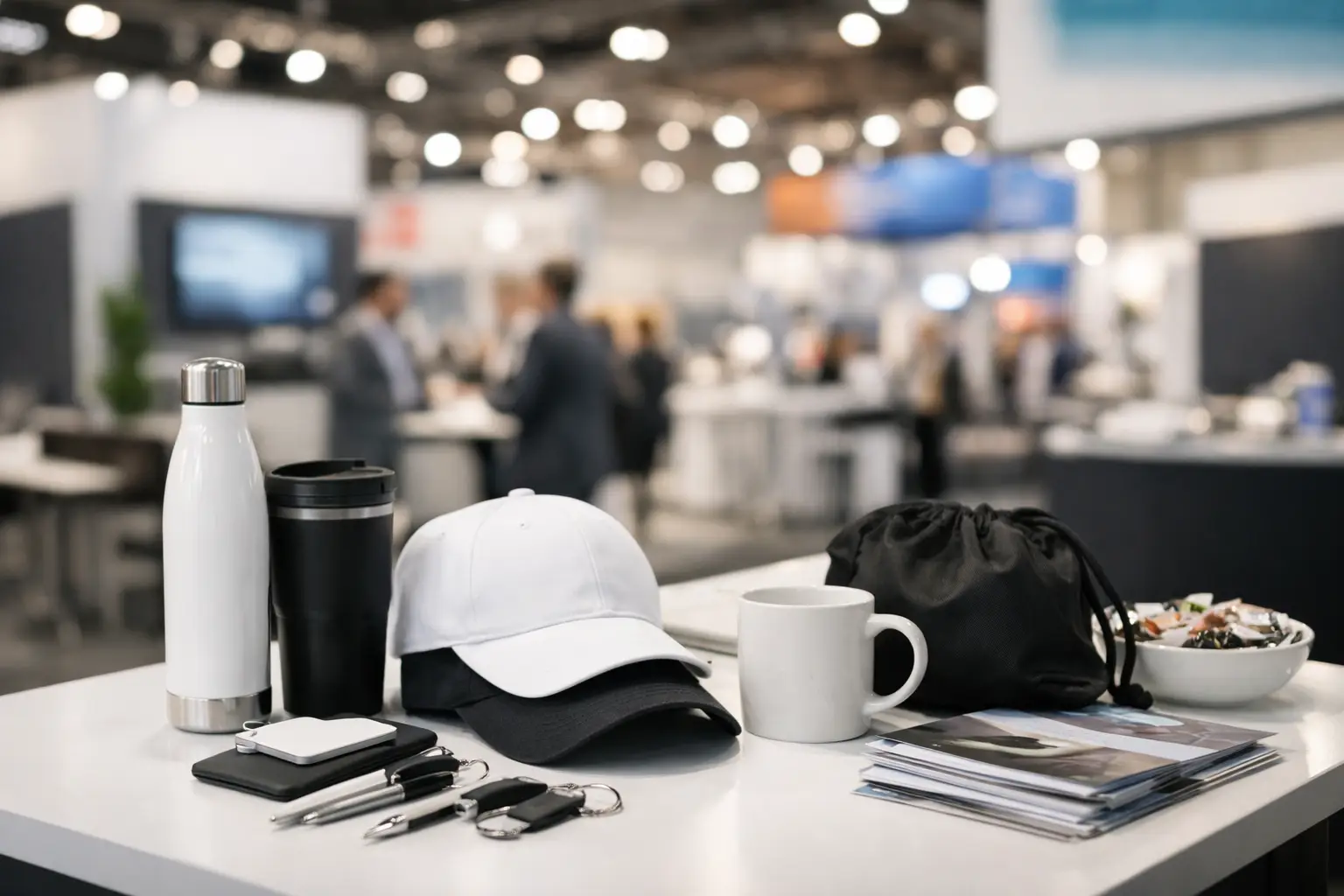
A busy trade show floor gives exhibitors only a few seconds to earn attention. The right giveaway can start a conversation, reinforce your brand after the event, and give visitors a reason to return to your booth. This trade show merchandise guide helps marketing teams, event planners, and procurement staff make choices that support real business goals rather than simply handing out items.
The strongest merchandise programs are planned alongside the booth, lead-capture process, and follow-up strategy. A useful product in the right person’s hands can create more value than thousands of generic giveaways distributed without a purpose.
Start With the Job Your Merchandise Must Do
Before choosing products, define what success looks like at this particular show. A product launch may need high-visibility items that create traffic. A B2B conference with scheduled meetings may call for premium gifts that strengthen relationships with key prospects. A recruitment fair may benefit from practical apparel or accessories that make the employer brand feel relevant and approachable.
There is no single best trade show giveaway. It depends on your audience, booth traffic, budget, and how much time visitors will spend with your team. A lightweight tote bag may be ideal at a large expo where attendees collect brochures all day. At a technology conference, a charging accessory or cable organizer may feel more useful. For a smaller executive event, a well-finished notebook or premium drinkware can make a stronger impression than a low-cost novelty item.
Think about merchandise in three roles: traffic builders for broad distribution, conversation starters for qualified visitors, and relationship gifts for priority contacts. Splitting your order across these roles gives the team more control than selecting one item for everyone.
Trade Show Merchandise Guide: Choose for Usefulness First
Visitors see countless branded items during an event. The products they keep are usually the ones that solve a small, everyday problem. That does not mean every giveaway needs to be expensive. It means the item should have a clear place in someone’s workday, commute, travel bag, or desk.
Apparel, lanyards, tote bags, notebooks, pens, drinkware, umbrellas, and travel accessories remain popular because they are familiar and easy to use. Electronics such as power banks, wireless chargers, USB accessories, and earbuds can create a higher perceived value, although they require more careful budget and lead-time planning. Sustainable choices, including reusable bags and reusable drinkware, work well when they reflect a genuine company initiative rather than serving as a vague environmental claim.
Brand fit matters as much as product utility. A financial services firm may prefer a refined notebook, metal pen, or compact travel accessory. A consumer brand with a lively visual identity may make better use of colorful tees, caps, bags, or live-printed items. If your logo is detailed, select a product and print method that will preserve fine lines and remain readable at a glance.
Avoid choosing merchandise solely because it is inexpensive. A poorly made item can weaken the impression you are trying to create, especially when it breaks, fades, or feels disposable before the event ends. The goal is not maximum quantity. The goal is an appropriate item that represents your standards.
Match the product to the audience
Audience context should guide the final selection. Ask what attendees are likely carrying, where they are traveling from, and what they may need during the show. A tote bag is highly relevant when attendees walk a large convention hall. A compact fan may suit an outdoor activation. A branded polo or jacket can support team visibility and also serve as a useful staff uniform long after the event.
For international audiences, keep product instructions, claims, and branding simple. For events with mixed seniority levels, reserve premium gifts for pre-booked meetings, existing clients, and decision-makers rather than placing them openly on the counter.
Plan Your Budget Beyond Unit Price
A merchandise budget is more than the product cost. It should account for customization, artwork preparation, packaging, delivery, storage, and event-day requirements. For booth-based activations, factor in displays, staff apparel, signage, and replenishment if the event runs over multiple days.
A practical way to structure the budget is by audience tier. Allocate a larger quantity of accessible giveaways for general booth visitors, a more considered item for qualified leads, and a limited number of premium gifts for high-value meetings. This approach protects your spend while allowing the sales team to recognize priority conversations.
For example, a company expecting 2,000 visitors does not necessarily need 2,000 premium items. Many visitors may only pass by, while a smaller group will have meaningful discussions with the team. Ask event organizers for historical attendance figures, but also estimate likely booth traffic based on your location, show category, and activation plan.
Price breaks can make higher quantities attractive, but overordering creates its own cost. Leftover products can be useful for sales calls, employee programs, or future events if the branding is evergreen. Campaign-specific dates, event names, or highly seasonal messages are harder to reuse. When in doubt, keep core merchandise brand-led and use removable event signage for the campaign details.
Give Your Artwork Enough Production Attention
A strong product can still fall short if the artwork is rushed. Supply your logo in an appropriate vector format when possible, confirm brand colors, and decide whether the imprint should feature a logo only, a short message, or a campaign visual. On a small item, less is usually more. A clean logo placed well will look more premium than a crowded design trying to communicate every service line.
Print method affects both appearance and durability. Screen printing is effective for bold designs and larger quantities. Embroidery adds texture and a polished finish to apparel, caps, and selected bags. Heat transfer, digital printing, UV printing, engraving, and other methods each suit different materials and visual requirements. The right choice depends on the item, color count, artwork detail, order quantity, and desired finish.
Request a visual mockup before production and check it closely. Confirm logo placement, scale, color references, spelling, and the orientation of any contact information or QR code. If the QR code is part of the design, test it from a phone screen and on a printed sample size. It should lead to a mobile-ready destination with a clear next action.
Build Merchandise Into the Booth Experience
Merchandise works best when it supports an interaction. Leaving boxes of giveaways at the edge of the booth may increase distribution, but it rarely improves lead quality. Give staff a simple reason to offer each item: completing a product demo, joining a mailing list, booking a consultation, answering a quick poll, or attending a scheduled presentation.
Live on-site printing can turn a standard giveaway into an experience. Visitors can choose a design, add a name, or watch an item being customized. This creates visible activity around the booth and gives attendees a more personal reason to keep the product. It does require space, power planning, stock management, and a clear queue process, so it is best suited to events where engagement is a priority.
Staff apparel deserves the same consideration as attendee giveaways. Coordinated T-shirts, polos, jackets, lanyards, and badges make it easier for visitors to identify your team in a crowded hall. Choose comfortable garments, particularly for multi-day events, and consider bringing spare sizes for staff changes or unexpected needs.
Prepare for event-day realities
A reliable merchandise plan includes operational details that are easy to overlook. Before the event, confirm the delivery window with the venue and check whether there are rules on loading access, storage, carton labeling, or after-hours deliveries. Pack a small quantity of merchandise separately for immediate booth setup so the team is not waiting on a full shipment to begin.
Bring a simple inventory tracker and assign one person to monitor stock. High-traffic periods can empty a display faster than expected. Keep reserve stock out of sight, replenish the table in smaller batches, and avoid displaying all premium gifts at once.
Use this final pre-show check:
- Confirm product quantities by giveaway tier and carton count.
- Approve artwork, colors, logo placement, and print method before production.
- Separate booth staff uniforms, VIP gifts, and general giveaway stock.
- Prepare signage or a short staff script explaining how visitors receive each item.
- Verify venue delivery rules, setup times, storage access, and collection arrangements.
Measure What Was Worth Reordering
After the show, do more than count what was distributed. Compare giveaway activity with leads captured, demos completed, meetings booked, and follow-up responses. Ask booth staff which items prompted the best conversations and which products visitors requested without encouragement.
A high giveaway count is not automatically a win. If a product drew a crowd but prevented meaningful discussions, adjust the distribution method next time. If a premium item helped sales representatives open conversations with target accounts, it may have earned its place even at a higher unit cost.
Keep notes on quantities, lead times, print specifications, and attendee feedback while the event is still fresh. This record makes future planning faster and reduces the risk of repeating preventable issues. A partner that can advise on products, customization, apparel, event printing, and booth needs also simplifies coordination when deadlines are tight.
The merchandise visitors remember is rarely the loudest item on the floor. It is the one that feels useful, looks right for your brand, and arrives at the moment a good conversation begins.