


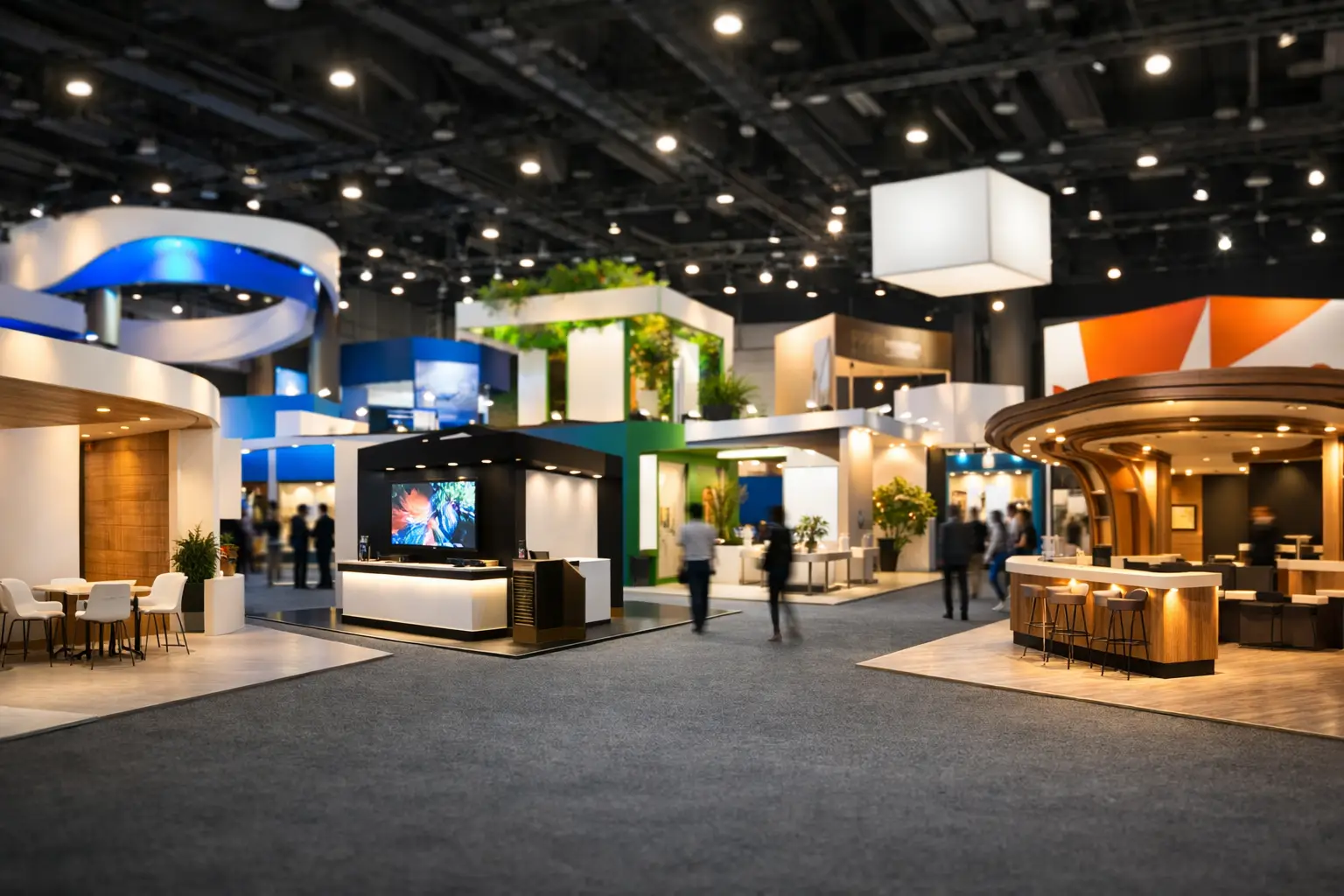
The difference between a busy booth and an ignored one usually comes down to clarity. At most shows, attendees decide in a few seconds whether your space is worth stopping at. That is why strong trade show booth branding examples are less about decoration and more about making your offer instantly recognizable, credible, and easy to engage with.
For marketing teams, procurement leads, and event organizers, the challenge is not just making a booth look attractive. It is making every printed panel, counter wrap, giveaway, uniform, and display work together. Good branding at an exhibition booth should answer three questions right away: who you are, what you do, and why someone should talk to you now.
What strong trade show booth branding examples have in common
The best booths are built around consistency. That does not mean every surface needs a logo. It means the visuals, messaging, merchandise, and visitor flow all support the same objective.
A booth can have premium structures and still underperform if the headline is vague, the colors are inconsistent, or the printed materials look like they came from different vendors. On the other hand, even a modest setup can feel polished when the backdrop, table graphics, brochures, apparel, and handouts are aligned.
The most effective trade show booth branding examples usually share a few practical traits. They use a clear visual hierarchy, keep messages short, make brand colors easy to spot from a distance, and give visitors a simple next step. They also match the event itself. A technology expo, a school fair, and a corporate hiring event all call for different booth behavior.
9 trade show booth branding examples worth learning from
1. The bold headline backdrop
One of the strongest booth branding choices is a large backdrop with a single clear promise. Instead of filling the wall with paragraphs, strong exhibitors lead with a short statement such as a service category, campaign message, or product benefit.
This works because trade show environments are noisy. Attendees are scanning, not reading. A bold printed fabric wall or panel with strong contrast and a concise message helps people understand your business before they even reach your booth. The trade-off is that this approach requires discipline. If your team tries to communicate five offers at once, the main message gets diluted.
2. Product-first display branding
Some booths perform best when the product is the hero. This is common for branded merchandise, apparel, packaging, electronics, or premium gifts. In these setups, the booth branding supports the product rather than competing with it.
For example, shelves, risers, tabletop signs, and category labels can be branded in a consistent color system so visitors can quickly browse. This is especially useful when you offer a broad catalog and want to make selection easier. The risk is clutter. If too many SKUs are displayed without structure, the booth can start to feel like a storage area instead of a curated brand experience.
3. Color-blocked booths that own their space
A booth that uses one or two dominant brand colors across the wall graphics, counters, printed banners, and staff apparel often stands out better than a booth packed with visual effects. This is one of the simplest trade show booth branding examples because it relies on repetition.
Color blocking helps with recognition from a distance. It also makes smaller booths feel more intentional. This is a practical choice for brands that need a clean, professional presentation without overcomplicating production. It depends, though, on having accurate print matching across materials. If the shades vary too much between backdrop, table cover, and uniforms, the result can look uneven.
4. Staff uniforms as part of the booth system
Booth branding is not limited to structures and signage. What your team wears matters just as much. Coordinated polo shirts, tees, jackets, or lanyards help create a more organized and trustworthy presence.
This is particularly useful at crowded events where attendees may not immediately know who is part of the exhibitor team. Branded apparel also extends your visual identity beyond the booth footprint. A visitor may remember your team walking the floor even before they remember your brochure. The key is choosing apparel that suits the event. A premium B2B expo may call for a more polished uniform than a casual roadshow or campus activation.
5. Interactive printing or live customization
A booth becomes far more memorable when visitors can see branding happen in real time. Live T-shirt printing, on-site heat transfer, personalized giveaways, and instant name customization turn a passive display into an experience.
This approach works well because it creates a reason to stop, stay, and share. It also gives your brand a practical demonstration element rather than just a sales message. For companies with event printing capabilities, this can be a strong differentiator. The trade-off is operational. Live production needs space, power planning, queue management, and reliable staffing. If the execution feels slow or disorganized, the attraction can backfire.
6. Giveaway branding tied to the booth message
A common mistake is handing out generic items that have no connection to the booth theme. Better examples use promotional products that reinforce the campaign itself. If the booth message is productivity, the giveaway might be a branded notebook set or desk accessory. If the focus is travel or mobility, the product might be a luggage tag, pouch, or charger.
This makes the item easier to remember and gives the booth a more complete identity. It also helps internal teams justify spend because the merchandise is supporting a specific communication goal, not just adding volume. The choice of item should still match budget realities. A lower-cost, well-branded product that fits the message usually performs better than a premium item chosen without strategy.
7. Zone-based booth branding for multiple offers
Some businesses need to present several service categories in one booth. In that case, zone-based branding can work well. One section may focus on apparel, another on corporate gifts, another on event services. Each zone uses related graphics and labels while staying within the same overall brand system.
This is useful for companies with broad capabilities because it helps visitors self-navigate. It can also support better conversations, since prospects naturally move to the area most relevant to their needs. The challenge is balance. Too much separation can make the booth feel fragmented. The main brand should still be visually dominant.
8. Social-proof-focused branding
Another effective booth format centers on credibility. Instead of only featuring products or claims, the booth uses printed customer names, project counts, industries served, testimonial snippets, or fulfillment numbers as part of the wall graphics.
For B2B audiences, this can be especially persuasive. Buyers often want reassurance that the vendor can handle deadlines, volume, and quality control. A booth that communicates experience clearly can shorten the trust-building process. This works best when the proof points are selective and easy to scan. Too much text weakens the impact.
9. Minimalist premium branding
Not every successful booth needs to be loud. In some sectors, a cleaner and more restrained visual style signals confidence. A minimalist booth may use fewer words, more open space, high-quality print finishes, neat lighting, and carefully selected display pieces.
This style works well for premium corporate gifting, design-led products, and executive audiences. It gives the impression of control and quality. Still, it is not the right fit for every event. At high-energy public expos, a subtle booth may disappear if the surrounding environment is visually aggressive.
How to choose the right booth branding approach
The right concept depends on what success looks like for your event. If your goal is lead generation, your branding should prioritize visibility and a fast explanation of your offer. If your goal is product discovery, you may need better display structure and category signage. If your goal is brand recall, interactive elements and memorable merchandise may matter more.
Budget also matters, but not always in the way people expect. A larger budget does not guarantee stronger branding if it is spread across too many disconnected elements. Often, a focused setup with consistent print quality, clear messaging, and well-selected merchandise outperforms a more expensive booth with no unifying idea.
Lead time is another real factor. Booth branding usually includes multiple moving parts such as artwork adaptation, print production, fabrication, apparel preparation, and logistics coordination. When timelines are tight, it is smarter to simplify and execute well than to overbuild and compromise quality.
Common mistakes these trade show booth branding examples help avoid
Many booth problems are easy to spot once you know what to look for. The most common is saying too much. If attendees need to stop and study your wall just to understand your business, the message is too dense.
Another issue is inconsistent production. A strong design can still feel weak if banners, counter wraps, brochures, and apparel do not match in color, finish, or tone. This is where working with a supplier that can coordinate multiple branded touchpoints becomes practical, not just convenient.
There is also the mistake of treating the booth and the merchandise as separate projects. In reality, they should support each other. The booth creates the first impression, and the take-home item extends it. Companies such as Global Asia Printings often see the best results when booth setup, printed graphics, event giveaways, and team apparel are planned as one system rather than purchased in pieces.
The strongest booth branding is not the one with the most features. It is the one that makes your brand easy to understand and hard to forget. If your booth can stop the right people, guide the conversation, and leave them with a useful branded reminder, you are already ahead of many exhibitors on the floor.