


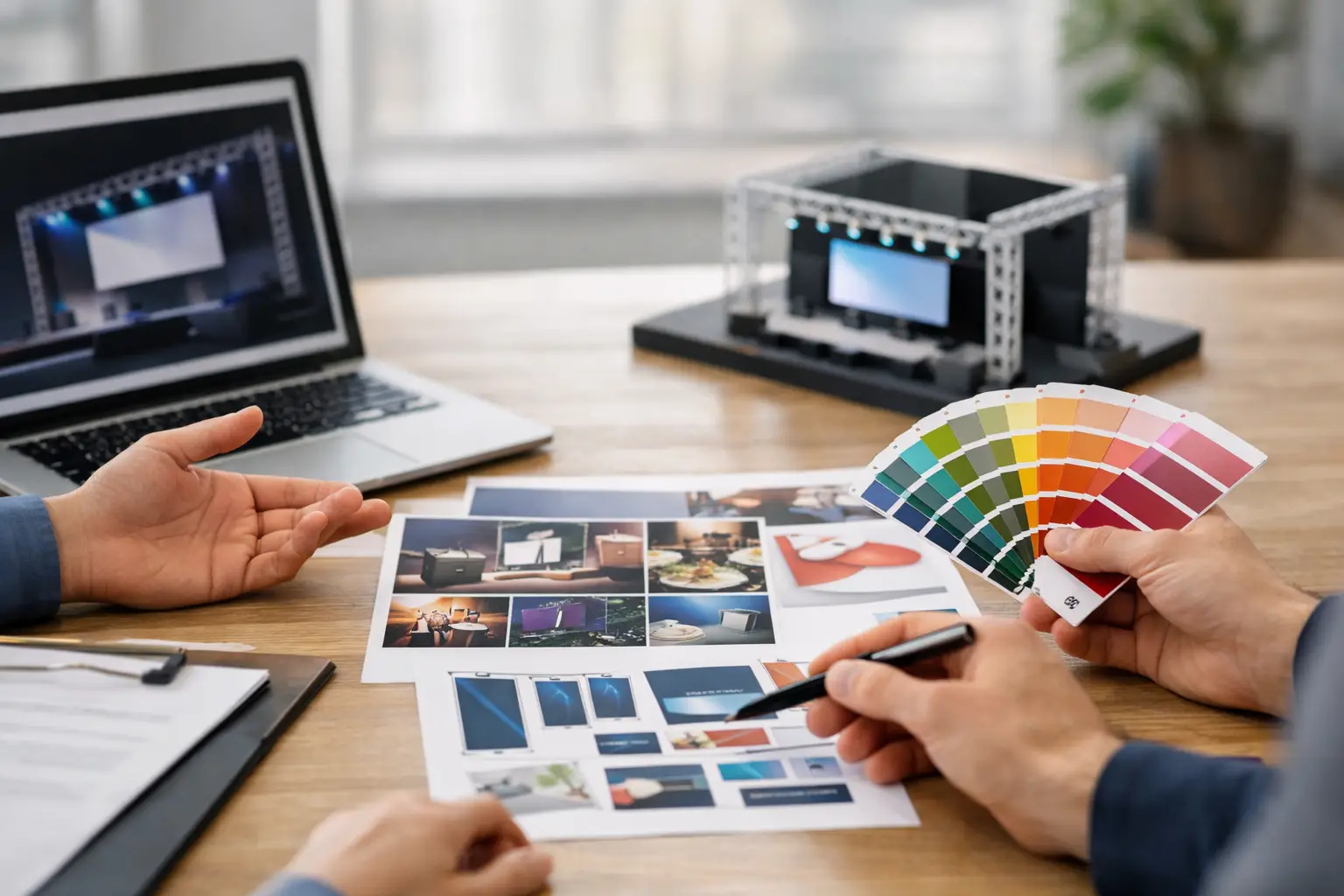
An event deadline has a way of exposing weak vendors fast. The samples look fine, then the print colors shift, the apparel arrives late, the booth setup is handled by someone else, and your team ends up managing three different suppliers while trying to run the event itself. That is usually the point when businesses stop looking for a printer and start looking for an event branding company.
For corporate events, trade shows, internal campaigns, school programs, and client gifting, branding is not one item. It is a system. Your backdrop, shirts, lanyards, giveaways, registration materials, packaging, signage, and on-site presentation all need to work together. When they do, the event feels organized and credible. When they do not, the brand looks fragmented no matter how much budget went into it.
What an event branding company actually does
A good event branding company does more than put logos on products. It helps businesses plan the right mix of materials, recommend suitable items for the audience, align production with timelines, and execute the final presentation across merchandise and event touchpoints.
That matters because most event buyers are not just ordering T-shirts or tote bags. They are managing a launch, a conference, a roadshow, a school event, an employee program, or a hospitality setup with real deadlines and multiple stakeholders. In those cases, product sourcing, design preparation, printing, packing, and event setup are all connected.
The difference between a basic supplier and a capable branding partner is ownership. A supplier takes an order. A partner helps you avoid mismatched quantities, poor material choices, and branding decisions that look good on screen but fail in production.
Why businesses prefer one vendor over many
On paper, splitting work across different vendors can look cheaper. One company handles shirts, another does booth panels, another supplies gifts, and another produces printed inserts. In practice, this often creates delays, finger-pointing, and inconsistent brand presentation.
Working with one event branding company gives you tighter control over output. Colors can be matched more consistently across product categories. Delivery timing is easier to manage. Artwork issues are caught earlier. Procurement also becomes simpler because your team is not chasing separate quotes, proofs, and delivery schedules for every item.
There is a trade-off, of course. Not every one-stop vendor is equally strong across all categories. Some have wide catalogs but limited production guidance. Others can print well but struggle with event execution. That is why the real question is not whether a company offers many services. It is whether it can manage them well under pressure.
How to evaluate an event branding company
The first thing to assess is product range with purpose. A large catalog is useful only if the company can guide you toward the right items for the event. A conference welcome kit needs a different mix than a staff engagement campaign or a premium client appreciation gift set. The best vendors do not just ask what logo you want printed. They ask who the audience is, how the items will be used, what budget range you need to work within, and when everything must be ready.
Next is print quality and material consistency. This sounds obvious, but many event issues come from poor fit between artwork, material, and printing method. A design that works well on a cotton tee may not translate cleanly to a windbreaker, metal bottle, or textured notebook. A dependable vendor explains those limits early and suggests practical alternatives instead of pushing every item through the same process.
Turnaround time is another major factor. Fast service matters, but speed without control is risky. Ask how proofs are handled, how changes affect lead times, and whether the company has experience with urgent corporate orders. Businesses often need part of an order delivered first, or items packed by team, department, or attendee type. Those details matter as much as production speed.
Then there is event support. If you need booth setup, signage installation, or live activation printing on-site, make sure the company has actual operational experience. Event branding is not only about making branded items. It is about getting everything into the venue correctly, on time, and ready to support the attendee experience.
The services that create real event impact
Branded apparel is often the most visible starting point. Staff uniforms, event shirts, jackets, and polos help teams look coordinated and easy to identify. But apparel works best when it is chosen with context in mind. Indoor seminars, outdoor roadshows, formal launches, and school events all call for different fabrics, cuts, and branding placements.
Promotional merchandise plays a different role. These items extend the event after it ends. A useful bag, quality notebook, travel accessory, or desk item can keep your brand present long after the booth is packed up. The key is relevance. Cheap giveaways may increase volume, but they do not always improve recall or brand perception. Sometimes a smaller quantity of better-selected items does more for the campaign.
Printed collateral and signage bring the identity together. Backdrops, booth graphics, table wraps, standees, registration signs, and informational materials help attendees navigate the space while reinforcing the brand. These are often treated as separate purchases, but they should be planned as one visual system.
Live on-site printing adds another layer when the goal is engagement. Personalized shirts, tote bags, or souvenirs can turn a passive giveaway into an experience. It is not right for every event, especially where queues or venue restrictions are a concern, but for launches, roadshows, and public activations, it can create stronger participation and social sharing.
Common mistakes buyers make
One common mistake is choosing products too early. Buyers sometimes lock in merchandise before thinking through audience profile, event format, or distribution method. That can lead to items that are bulky to transport, difficult to size, or not useful enough to justify the cost.
Another is underestimating artwork preparation. Low-resolution files, inconsistent logo versions, and late design approvals can cause avoidable delays. A reliable vendor helps check artwork before production starts, but internal coordination still matters. The earlier branding assets are finalized, the more options you usually have for materials, print methods, and cost control.
Budgeting can also go wrong when teams focus only on unit price. The cheaper quote is not always the better decision if it excludes packing, setup coordination, proofing, or delivery reliability. Total project value comes from fewer errors, fewer follow-ups, and smoother execution on event day.
When a full-service partner makes the most sense
If your event includes multiple branded elements, tight deadlines, or several internal stakeholders, a full-service model usually makes sense. Marketing may care about visual consistency, procurement may care about cost control, HR may care about employee experience, and the event team may care about setup timing. One capable partner can bridge those priorities more effectively than several disconnected vendors.
This is especially true for recurring needs. Many organizations do not just run one event. They manage onboarding kits, festive gifting, staff uniforms, campaign merchandise, school programs, and exhibition materials throughout the year. In that environment, a vendor that already understands your brand standards, approval flow, and budget expectations becomes much more valuable over time.
That is where an experienced provider like Global Asia Printings can be useful – not simply because of a broad catalog, but because businesses often need sourcing, customization, print production, and event support handled as one coordinated job.
Choosing for reliability, not just variety
A strong event branding company should make your workload lighter, not more complicated. You should come away with clearer options, realistic timelines, and guidance that reflects the purpose of the event rather than a generic product pitch.
The best choice is usually the company that can balance quality, speed, and execution without overpromising. Sometimes that means recommending a simpler product that will arrive on time and perform well. Sometimes it means adjusting the branding method to suit the material. Sometimes it means telling you that a rush concept needs to be scaled back to protect the result.
That kind of advice is worth more than a long product list. When your branding partner understands the event, the audience, and the operational pressure behind the order, the final output tends to look sharper and run smoother. And when the event is over, what you remember most is not the stress it took to get there, but how confidently your brand showed up.