


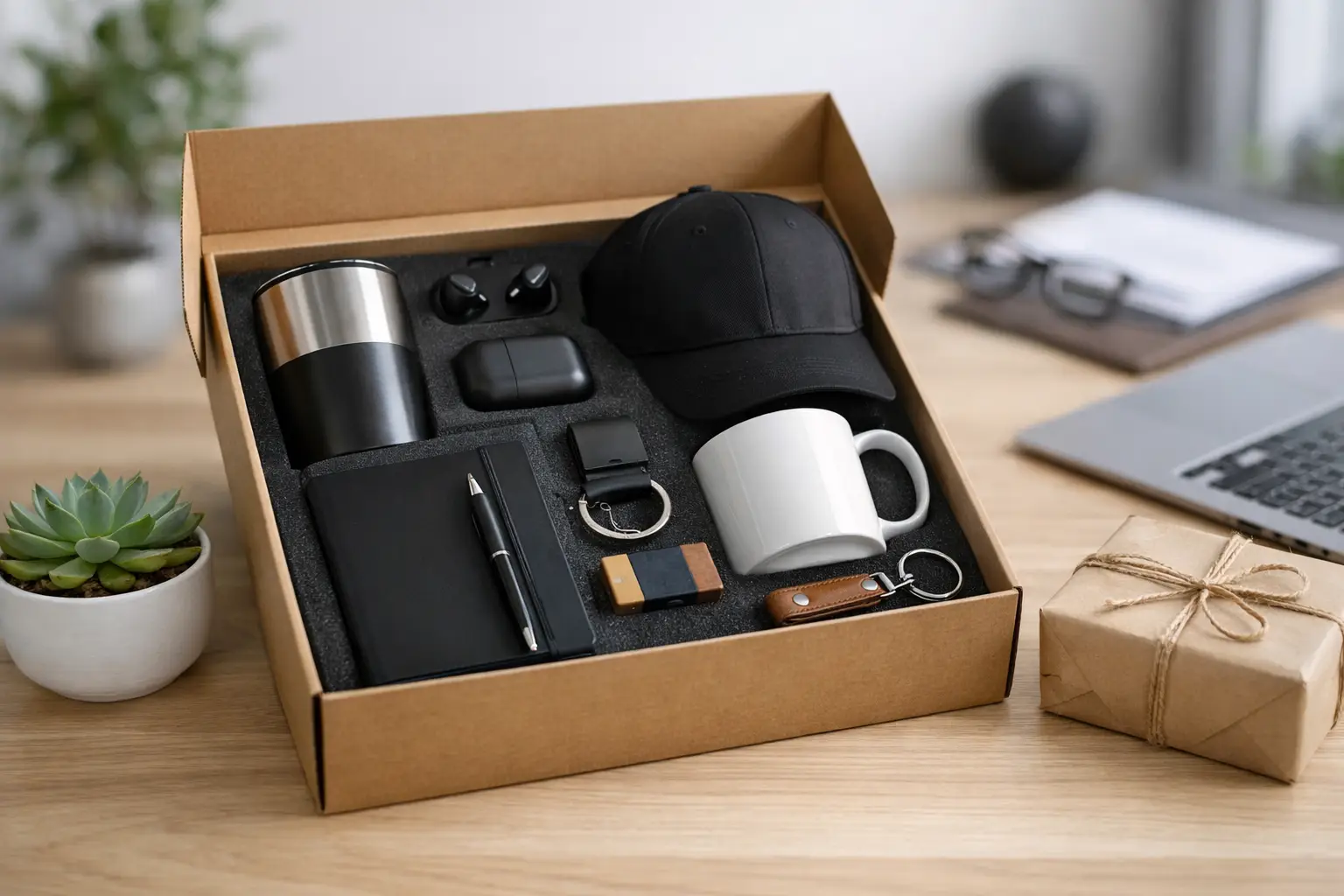
Your new hire starts Monday. HR wants the packs at each desk before 9 a.m., procurement wants cost control, and marketing wants the branding to look polished. That is usually when the real question shows up – not whether welcome kits are a good idea, but how to source corporate welcome packs without juggling five vendors, missing deadlines, or ending up with items nobody uses.
A well-sourced welcome pack does three jobs at once. It helps employees or clients feel valued, it reinforces brand standards, and it keeps operations simple for the team managing the order. The challenge is that welcome packs look straightforward from the outside, but the sourcing process can get complicated fast once you factor in budgets, printing methods, packaging, stock availability, and delivery schedules.
How to source corporate welcome packs with fewer problems
The most efficient way to approach sourcing is to start with the purpose, not the product list. A welcome pack for employee onboarding is different from one for VIP clients, channel partners, conference attendees, or school staff. When the use case is clear, the product choices become easier and the budget goes further.
For internal onboarding, practical items usually perform best. Apparel, notebooks, drinkware, lanyards, bags, and desk accessories tend to get used regularly, which means your branding stays visible after day one. For client or executive gifting, presentation matters more, so premium packaging, higher-end materials, and more selective product choices make sense.
This is also where many teams overspend. They try to create one universal pack for everyone. In practice, tiered packs often work better. A standard employee welcome pack, a manager-level pack, and a premium client version can keep spending aligned with purpose instead of forcing one bundle to do everything.
Start with audience, quantity, and timing
If you want to know how to source corporate welcome packs well, begin by locking down three variables early: who the pack is for, how many you need, and when they must arrive. Those details affect almost every sourcing decision.
Quantity changes pricing, but it also changes what is practical to customize. A run of 25 executive packs may justify more premium items or individual name personalization. A run of 1,000 onboarding kits needs stronger attention on inventory consistency, print repeatability, and packing efficiency.
Timing matters just as much. Some items are quick to produce, while others involve longer lead times because of material sourcing, imported stock, or more complex decoration methods. If your deadline is tight, choosing readily available products with proven print methods is often smarter than pushing for something highly customized that risks delays.
It also helps to think beyond the first order. If your company hires monthly or quarterly, source with repeatability in mind. A welcome pack that looks good once but is hard to reorder is not a strong operational solution.
Build the pack around useful items
The best welcome packs usually feel considered, not crowded. More items do not automatically mean more value. In many cases, five well-chosen products outperform a box filled with low-priority extras.
Useful items tend to fall into a few reliable categories: branded apparel, stationery, drinkware, bags, tech accessories, and desk essentials. The right mix depends on your audience. A sales team on the move may appreciate a backpack, tumbler, and charger more than a desktop set. An office-based onboarding kit may benefit from a notebook, pen, ID accessory, and company T-shirt.
There is always a trade-off between visual impact and practical use. Premium packaging can elevate first impressions, but if it takes too much of the budget, you may end up reducing the quality of the actual contents. In most corporate settings, buyers get better long-term value by prioritizing products people keep and use.
That does not mean presentation should be ignored. Packaging still matters because it affects perceived quality. A clean, well-packed kit with coordinated branding feels more professional than high-value items thrown together without consistency.
Choose customization methods that fit the item
One of the most common sourcing mistakes is selecting products before confirming how they will be branded. Not every item takes decoration the same way, and print quality depends on matching the right method to the material.
Apparel may use silkscreen, embroidery, heat transfer, or direct-to-film depending on fabric, quantity, and logo detail. Drinkware may require pad printing, UV printing, or engraving. Bags and notebooks also vary by surface and finish. If your logo includes fine lines, gradients, or multiple colors, some methods will reproduce it better than others.
This is where an experienced supplier adds real value. Good sourcing is not just about finding a low unit price. It is about getting guidance on which products can hold your brand well, which print methods are durable, and where visual compromises may show up.
If consistency matters across multiple products, ask to review branding placement, logo sizing, and color matching as a full set rather than item by item. A welcome pack looks stronger when every element feels like part of one system.
Work with fewer vendors when possible
Fragmented sourcing is one of the biggest reasons welcome pack projects become stressful. One supplier handles apparel, another handles tech gifts, another does packaging, and someone else packs and distributes the kits. That can work, but it also increases the risk of delays, miscommunication, and inconsistent branding.
A consolidated sourcing model is often more efficient, especially for HR, procurement, and marketing teams already managing other deadlines. When one partner can support product selection, artwork adaptation, printing, packing, and delivery, the process becomes easier to control.
This matters even more when changes happen late. A headcount update, logo revision, or shipping adjustment is much simpler to manage through one accountable supplier than across several separate vendors. For buyers handling recurring onboarding or event-related welcome packs, that operational simplicity is often just as valuable as the products themselves.
Evaluate suppliers beyond price
Price matters, but it should not be the only filter. When comparing vendors, look at how they handle consultation, artwork checks, substitution options, lead time clarity, and fulfillment support. A cheaper quote can become expensive if the print quality is inconsistent or if the order requires repeated corrections.
Ask practical questions. What items are locally available versus indent-based? What happens if stock runs out mid-project? Can the supplier recommend alternatives within the same budget and timeline? Do they support kitting and distribution, or only item-by-item production?
Responsiveness is another strong indicator. Welcome pack projects often involve revisions, especially when multiple departments are involved. A supplier who communicates clearly and flags potential issues early can save a lot of internal time.
For many organizations, this is where a one-stop partner like Global Asia Printings fits well. The advantage is not just access to a wide product range. It is the ability to align sourcing, customization, printing, and fulfillment in one workflow, which reduces friction when timelines are tight.
Plan for packing, storage, and delivery
A welcome pack is not finished when the items are printed. It still needs to be assembled, checked, and delivered properly. This final stage is often underestimated.
If the kits are for a single office, desk-drop delivery may be enough. If they are for remote hires, regional teams, or event attendees, you may need individual packing labels, courier coordination, and batch dispatch planning. Those details should be discussed before production starts, not after everything is printed.
Storage is another factor. Some buyers order in bulk to reduce unit cost, but then realize they do not have the space or system to hold and issue the packs. In those cases, staged fulfillment may be more practical than one large delivery.
This is also where standardization helps. Using a repeatable pack format makes future ordering easier, especially if your team needs a reliable onboarding process rather than a one-off campaign.
Keep the budget realistic without losing quality
Good welcome packs do not need to be extravagant. They need to feel deliberate. A realistic budget usually balances three things: a few useful core items, clean branding execution, and packaging that matches the audience.
If cost pressure is high, reduce quantity per pack before reducing quality too aggressively. One durable bottle and a well-made notebook can create a better impression than six low-cost items that feel disposable. If presentation is critical, invest in the box and one standout product, then keep the rest of the bundle simple.
It also helps to define where flexibility exists. Maybe the apparel color can vary based on stock, but the notebook must stay premium. Maybe the packaging stays standard while executive packs include one upgraded item. These decisions make sourcing faster because your supplier knows where substitutions are acceptable.
The best sourcing process is rarely about chasing the cheapest option. It is about choosing a pack that your team can reorder confidently, your recipients will actually use, and your brand will be proud to put its name on.
If you are planning your next onboarding run, client gift program, or event registration kit, the smartest move is to treat welcome packs as an operations project as much as a branding exercise. When the products, print methods, packing, and delivery are planned together, the result feels more polished and causes far fewer headaches later.