


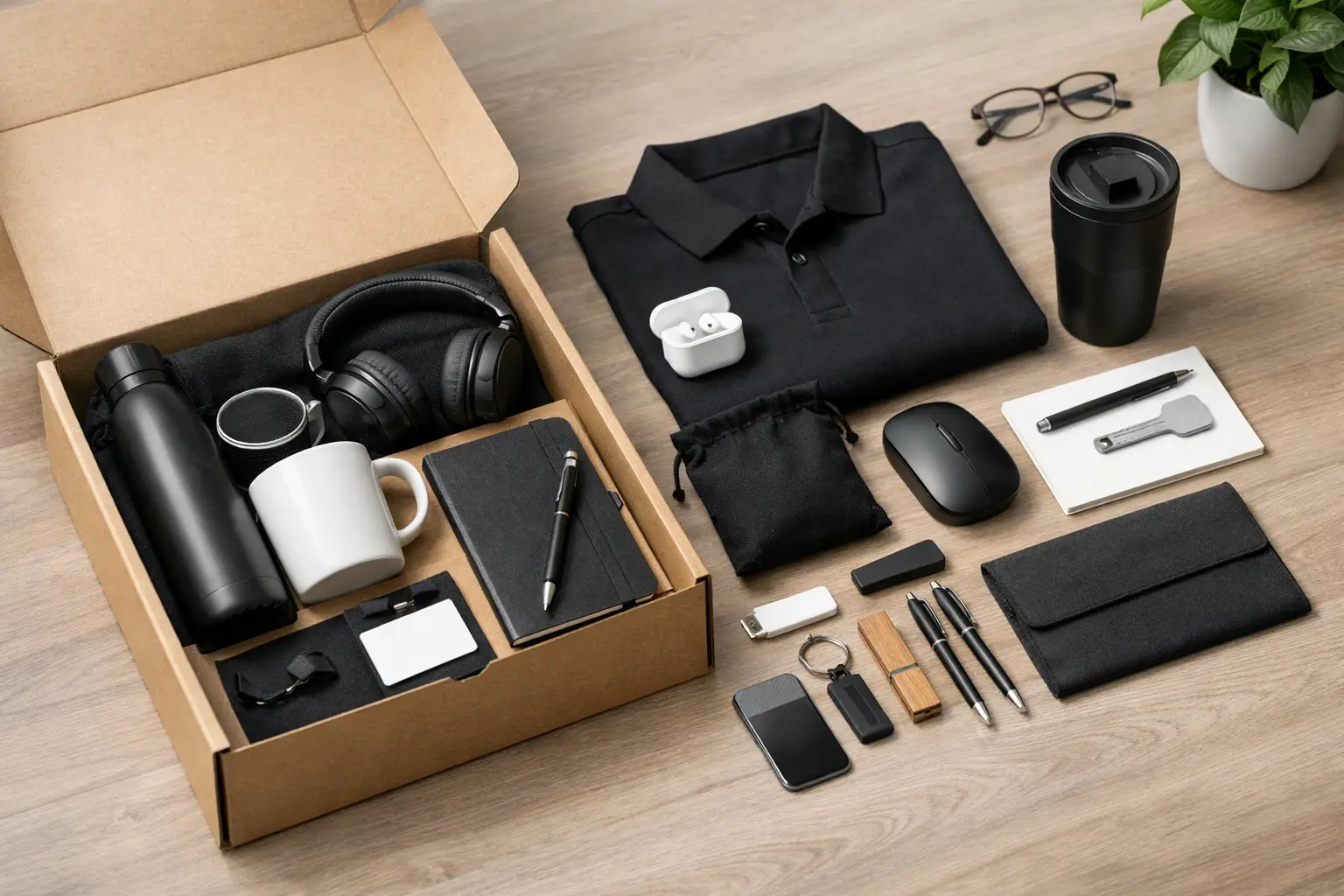
A new hire’s first week tells people what kind of company they joined. If the experience feels rushed, generic, or disorganized, that impression sticks. Strong corporate onboarding kit examples show the opposite – that the company planned ahead, values presentation, and understands how practical details support employee engagement from day one.
For HR teams, office managers, and procurement leads, the challenge is rarely whether to prepare a welcome kit. The real question is what to include, how much to spend, and how to make it useful rather than forgettable. A good kit should reflect your brand, fit your budget, and support the kind of work your employees actually do.
What makes onboarding kits work
The best onboarding kits are not built around random branded items. They are built around the employee experience. That means balancing three things: first impression, day-one utility, and brand consistency.
A premium notebook may look polished, but if your team is fully digital and works remotely, it may carry less value than a webcam cover, laptop sleeve, or wireless charger. On the other hand, if your company runs regular in-person meetings, training sessions, or site visits, practical desk and carry items can earn daily use. The right mix depends on your work environment, hiring volume, and internal culture.
Presentation matters too. Packaging, print quality, and item consistency all shape perception. When colors are off, logos are poorly placed, or kit items feel mismatched, the result can look like an afterthought. For companies managing onboarding across departments or multiple hiring waves, standardization is often what keeps the process efficient.
10 corporate onboarding kit examples for different goals
1. The essential starter kit
This is the most common format and often the most cost-effective. It usually includes a notebook, pen, employee ID holder or lanyard, mug or tumbler, and a welcome letter in branded packaging.
It works well for companies that need a reliable, scalable solution for regular hiring. The value of this kit is consistency. It covers the basics, creates a clean first impression, and is easy to reorder in volume. If your priority is building a professional onboarding process without overcomplicating approvals, this is a strong starting point.
2. The desk-ready office kit
For on-site teams, a desk-ready setup feels practical from the first hour. This version often includes stationery, a mouse pad, notebook, pen, mug, and small desktop accessories.
This format suits administrative teams, customer service departments, finance staff, and other roles that spend most of the day at a workstation. It may not feel flashy, but it supports immediate use. That matters more than novelty when the goal is a smooth first week.
3. The remote employee kit
Remote onboarding needs a different approach. Instead of office desk items, this kit focuses on home-work usability. Typical inclusions are a laptop bag, wireless mouse, webcam cover, insulated bottle, notebook, and branded apparel.
This is one of the most practical corporate onboarding kit examples because it solves a real gap. Remote employees do not benefit from office setup in the same way, so the kit has to create connection and function at home. Packaging also matters more here, since shipping becomes part of the first impression.
4. The culture-building welcome kit
Some companies want the onboarding kit to reinforce identity, not just utility. In that case, branded apparel, team stickers, a company story card, drinkware, and lifestyle items can work well.
This approach is useful for companies with strong internal culture, younger teams, or brand-led environments such as marketing agencies, tech firms, and creative departments. The trade-off is that culture-heavy kits can feel less practical if not balanced with useful items. A hoodie may be appreciated, but pairing it with workday essentials keeps the kit grounded.
5. The premium executive kit
Senior hires often call for a more elevated presentation. This might include a premium notebook, metal pen, leather card holder, travel tumbler, tech accessory, and upgraded gift box.
The purpose here is not excess. It is alignment. A leadership-level hire stepping into a strategic role should receive a kit that reflects the company’s standards. That said, premium does not have to mean expensive for the sake of appearance. Better material choices, cleaner finishing, and more refined packaging often make a bigger impact than adding more items.
6. The field team kit
Not every employee works behind a desk. For logistics teams, technicians, site crews, or event staff, the right onboarding kit should match daily conditions. Branded caps, uniforms, water bottles, drawstring bags, towels, and durable accessories often make more sense than office merchandise.
This is where many companies miss the mark. They use one onboarding format for every role, even when the work environment is completely different. A field-ready kit shows better operational understanding and usually leads to higher item usage.
7. The training and orientation kit
This format is built for structured induction programs. It can include folders, printed schedules, training manuals, notebooks, pens, lanyards, and name badges.
It is especially useful for larger onboarding sessions, graduate intakes, school staff orientation, franchise rollouts, or multi-day training events. In these cases, the kit functions as both a welcome package and an event support tool. Companies that run onboarding in batches often benefit from this model because it keeps materials organized and branding consistent across participants.
8. The wellness-focused onboarding kit
Some employers want to signal care and employee support from the start. A wellness-based kit may include a bottle, lunch container, towel, self-care item, healthy snack pack, or simple desk comfort accessories.
This can be effective for organizations that prioritize employee well-being, but it works best when the message is authentic. If the company culture does not support wellness in practice, the kit can feel performative. When the internal policy and the welcome experience match, however, it leaves a strong impression.
9. The budget-friendly volume kit
High hiring volume changes the equation. If you are onboarding large groups, the smartest option is often a lean, well-branded kit rather than a bigger package with inconsistent quality.
A compact set with a lanyard, pen, notebook, and drinkware can still feel polished if the print execution is strong and the packaging is neat. This is a practical choice for schools, large employers, seasonal staffing programs, and organizations with frequent intake cycles. Budget control matters, but cutting too far can make the kit feel disposable. The better move is to keep the item count tight and protect quality on the essentials.
10. The campaign-style branded kit
Some companies use onboarding kits as part of a wider employer branding initiative. In these cases, the kit may carry a campaign theme, a custom message, matching inserts, and coordinated merchandise such as apparel, tech items, stationery, and packaging.
This approach works well for rebrands, milestone hiring programs, leadership roadshows, and company-wide talent initiatives. It requires stronger planning because the visual system must stay consistent across every component. When handled well, it turns onboarding into a branded experience rather than a simple handover.
How to choose the right onboarding kit
The right option depends on how your company hires and what employees need during the first month. Start with role type. Office staff, remote employees, frontline teams, and senior hires should not always receive the same package.
Then look at quantity and timing. If you onboard five people a quarter, you can afford more customization. If you onboard fifty people a month, repeatability and stock planning become more important. That is where standardized sourcing, consistent decoration methods, and reliable lead times make a major difference.
Budget is also more flexible than many teams assume. A better result often comes from choosing fewer, more relevant items and presenting them well. Custom packaging, clear branding, and coordinated colors can lift a mid-range kit significantly. By contrast, adding too many low-value products usually weakens the overall impression.
Common mistakes to avoid
One common mistake is choosing items based only on trend. A popular gadget may look attractive in a catalog, but if it does not suit your workforce, it quickly becomes waste. Another issue is treating onboarding kits as separate from brand standards. Fonts, colors, print methods, and packaging details should still align with your company presentation.
Lead time is another factor that gets underestimated. Customized apparel, electronics, printed inserts, and packed sets do not all move at the same speed. If your onboarding schedule is tight, product planning needs to happen early. Companies that work with one experienced vendor for sourcing, printing, and packing usually reduce coordination risk and save time on follow-up.
For organizations that need both merchandise and rollout support, working with a supplier that understands fulfillment at scale can make the process much easier. Global Asia Printings often supports this kind of requirement by helping clients match products, branding, packaging, and delivery timelines under one workflow.
Why the best corporate onboarding kit examples feel intentional
The strongest kits do not try to impress with volume. They feel considered. Every item has a reason to be there, the presentation matches the brand, and the employee can use the contents right away.
That is what makes onboarding more than a checklist. It becomes a visible sign that your company is organized, prepared, and serious about the employee experience. If you start there, the kit does more than welcome a new hire – it supports the kind of first impression people remember for the right reasons.