


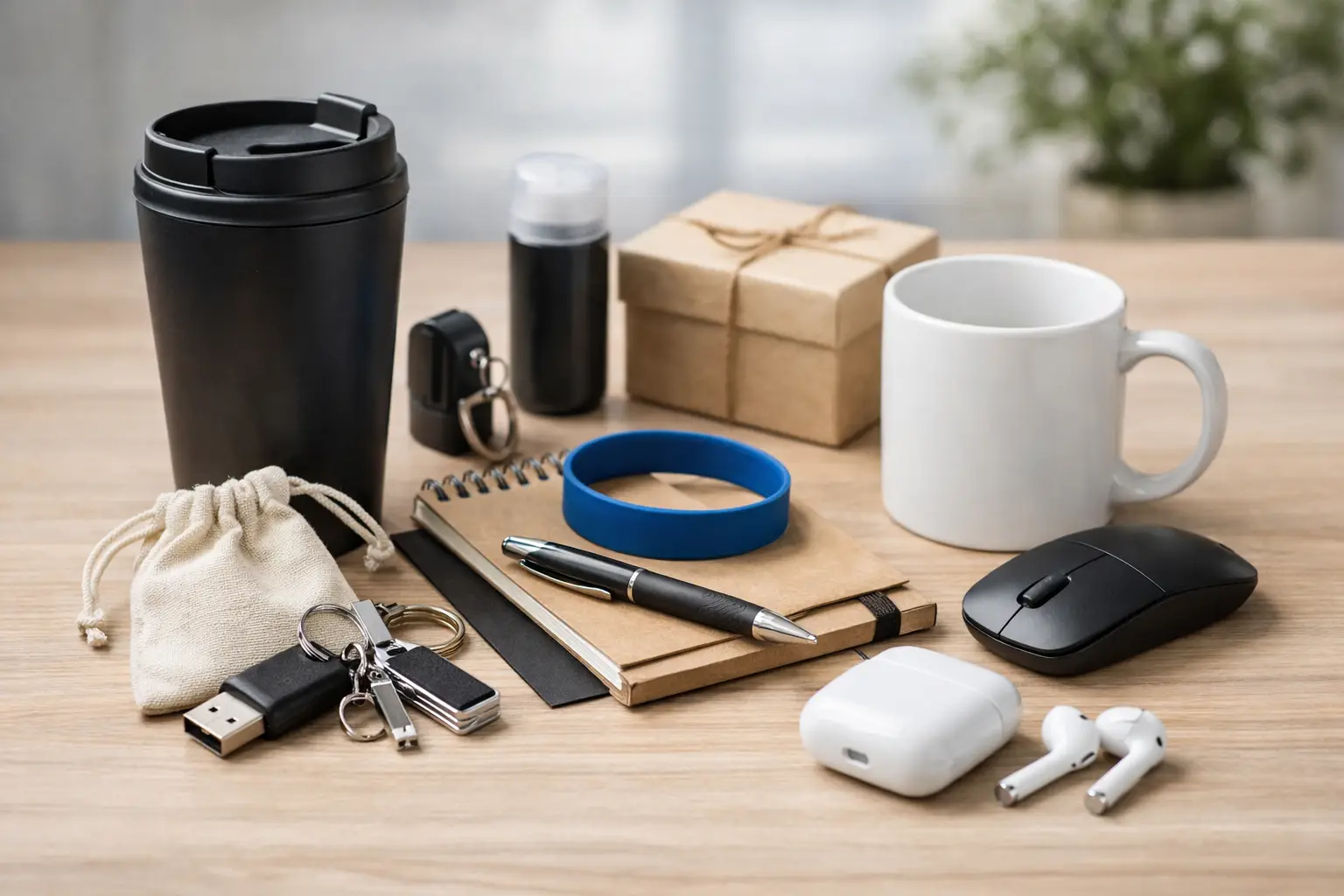
A lower unit price does not automatically mean better value. For a company event, employee program, trade show, or client campaign, promotional gifts under budget need to do more than meet a cost target. They must look credible, suit the recipient, carry your branding clearly, and arrive when the project needs them.
The strongest budget-conscious merchandise plans start with the purpose of the gift, not a search for the cheapest item. A simple, well-chosen product with clean printing will usually make a better impression than a premium-looking item with rushed artwork, poor print placement, or no practical use. The goal is to spend where recipients will notice it and avoid paying for features that do not support the campaign.
Start With the Job the Gift Needs to Do
A staff appreciation item, a conference giveaway, and a client thank-you gift should not be judged by the same standard. Before reviewing products, define the job clearly: Are you trying to attract visitors to a booth, welcome new employees, support an internal event, or thank a smaller group of valued customers?
For high-volume distribution, usefulness and visibility tend to matter most. Branded tote bags, lanyards, notebooks, pens, drinkware, and compact travel accessories can work well because people can use them during or after the event. The product does not need to be expensive, but it should feel intentional and appropriate for the setting.
For smaller recipient groups, the budget can be directed toward better materials, packaging, or a more considered gift set. This does not always mean choosing a luxury item. A practical desk accessory paired with a branded card, for example, may feel more personal than a generic premium product.
The most effective first question is simple: what should the recipient do, feel, or remember after receiving this item? That answer helps narrow the catalog quickly and prevents unnecessary spending.
How to Choose Promotional Gifts Under Budget
A workable budget is more than the product price multiplied by the quantity. Customization method, number of print colors, artwork preparation, packaging, delivery, and production lead time can all affect the final figure. A product that appears inexpensive at first may become less suitable once those requirements are included.
Start by setting a total project budget, then reserve a portion for production details and contingencies. This is especially useful for events, where quantities can change close to the date or where different groups need different items. Once the total is clear, calculate a target delivered cost per item rather than focusing only on the base product cost.
Quantity has a major effect on unit pricing. Higher-volume orders often reduce the per-item cost, but ordering far more than needed creates its own waste. Estimate attendance or recipient numbers realistically, then include a sensible buffer for event staff, late registrations, and replacement items. The right buffer depends on the program. A public giveaway may need more extra stock than a controlled employee onboarding kit.
It also helps to separate essential recipients from optional recipients. If a campaign has VIP guests, speakers, new hires, and general visitors, one product does not need to serve every group. A tiered plan can protect the budget while making each recipient group feel appropriately considered.
Choose a Decoration Method That Fits the Design
A full-color, detailed logo may look excellent on one item and be unnecessarily costly on another. Screen printing, heat transfer, embroidery, UV printing, engraving, and digital printing each have different strengths, setup requirements, and visual outcomes.
For example, a one-color logo can be a cost-effective choice for pens, lanyards, bags, and event apparel. Embroidery gives uniforms, caps, and jackets a durable finish, but small text or intricate details may not reproduce clearly. Full-color digital printing can be valuable when artwork depends on gradients, photographs, or multiple brand colors, though it may not be the best choice for every large-volume order.
The practical approach is to adapt the design to the product rather than forcing the same artwork everywhere. A simplified logo version for small print areas can reduce production issues and create a cleaner final result. Requesting a visual mockup before production is a sensible step, particularly when brand colors, placement, or sizing are important.
Spend on Usefulness Before Novelty
Novelty can attract attention, but it does not always create staying power. A useful product stays on a desk, in a bag, or at an event badge station, extending the life of the brand impression. For many business programs, utility is the safer investment.
Consider where the recipient is likely to encounter the item. For office-based teams, notebooks, pens, cable organizers, tumblers, and desk accessories are dependable options. For events and exhibitions, tote bags, lanyards, badge holders, portable fans, and drinkware can support the attendee experience while keeping the brand visible. For travel or outdoor programs, caps, umbrellas, pouches, and compact accessories may be more relevant.
Relevance should guide the choice. A reusable bottle is a stronger gift for a wellness challenge than for a formal investor meeting. A branded polo may be ideal for a service team or sports day but less practical as a mass exhibition giveaway. Matching the item to the moment makes even a modest budget feel well spent.
Use Apparel and Gift Sets Carefully
Custom apparel can deliver strong visibility, but it requires more planning than a single-size giveaway. Sizing, garment color, fabric weight, print coverage, and distribution all affect cost and execution. If your audience needs wearable items for an event, a basic T-shirt, polo, cap, or lightweight jacket can be highly effective when the design is clean and the sizing process is organized.
For a tighter budget, limit the number of garment colors and print locations. A single front print or a small chest logo is often sufficient. Large multicolor prints across multiple locations may be appropriate for a campaign launch, but they should be a deliberate choice rather than an automatic default.
Gift sets can also work well when individual items are economical but meaningful together. Pairing a notebook with a pen, or a tote bag with a small event essential, creates a more complete presentation without requiring a costly standalone item. Keep the set focused. Too many low-value pieces can make it feel promotional in the wrong way and complicate packing and distribution.
Protect the Budget With Better Planning
Rush production is one of the most common reasons a simple merchandise project becomes expensive. Short timelines can limit product availability, reduce customization options, and add expedited production or delivery charges. They can also leave less time to check artwork and samples properly.
Begin product selection as early as possible, especially for event apparel, imported items, complex printing, or large quantities. Provide the logo in a usable format and confirm the required delivery date before finalizing the item. If the deadline is fixed, be open to alternatives that are locally available or simpler to customize.
Clear approval steps also prevent costly rework. Confirm the product model, color, quantity, print area, artwork version, and delivery details in writing. For multi-item projects, a consolidated specification sheet helps marketing, procurement, HR, and event teams stay aligned. It is much easier to adjust a quantity before production than to solve a shortage on event day.
Working with one experienced supplier can reduce coordination work across sourcing, printing, packing, and delivery. Global Asia Printings supports this process by helping clients compare suitable products, match decoration methods to artwork, and coordinate branded merchandise with event requirements. That guidance matters when the real challenge is not finding an item, but getting the right item produced correctly within the available time and budget.
Measure Value Beyond the Unit Price
The best promotional gift is not necessarily the cheapest product or the most expensive one. It is the item that reaches the right people, supports the purpose of the program, and represents your organization professionally without creating avoidable production problems.
When comparing options, look at the likely life of the item, the quality of the customization, and how easily it can be distributed. A slightly higher-cost tote bag that attendees use repeatedly may provide more value than a lower-cost giveaway that is discarded before the event ends. Likewise, a reliable branded notebook for new employees can reinforce a thoughtful onboarding experience long after the first day.
Budget discipline is not about cutting every feature. It is about making each choice earn its place in the project. Select products with a clear role, simplify artwork where it improves production, allow enough lead time, and keep the recipient experience at the center of the decision. That is how a practical promotional gift becomes a credible extension of your brand.