


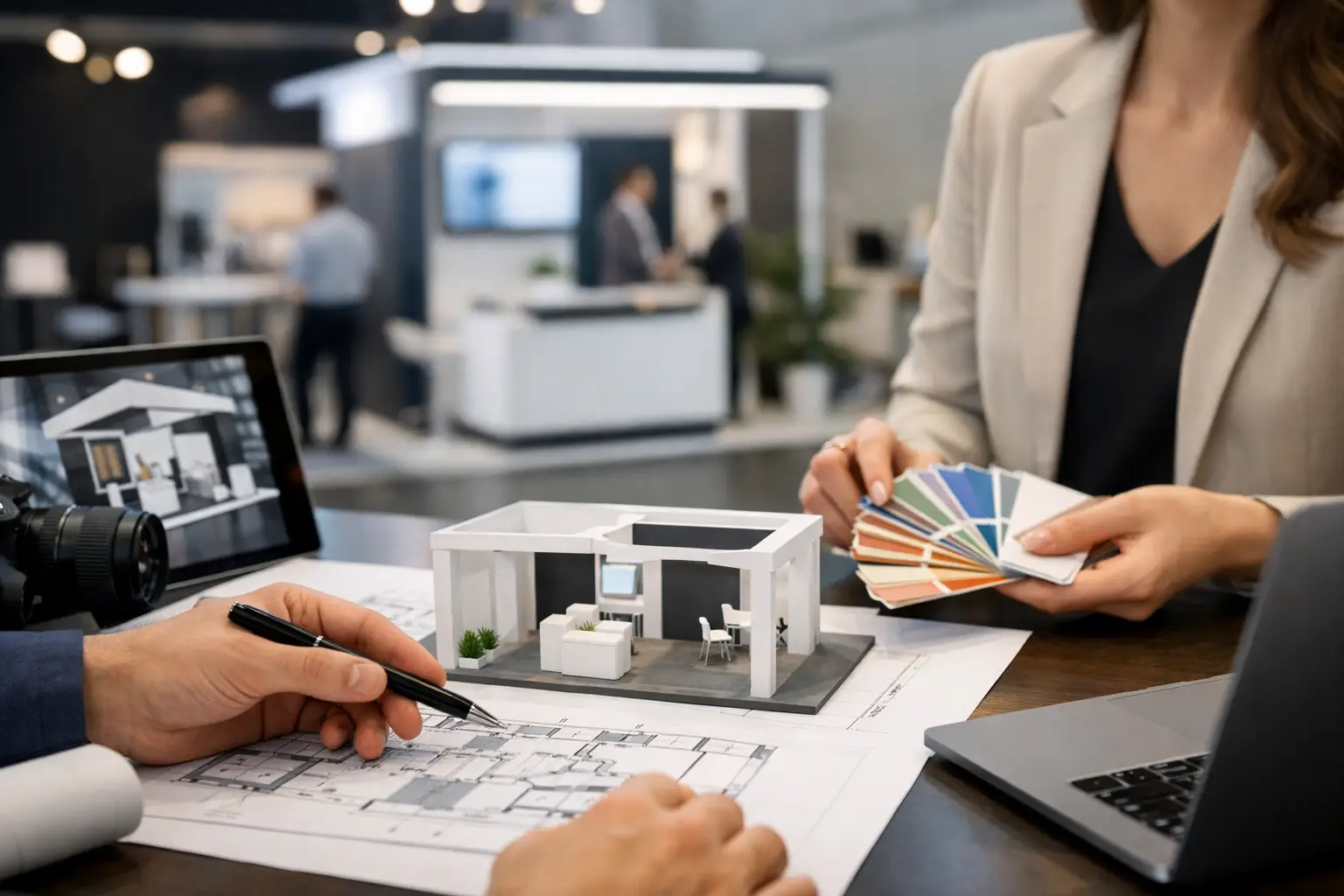
A crowded exhibition hall gives visitors seconds to decide whether your space deserves a stop. Knowing how to plan an exhibition booth means making those seconds count – with a clear message, practical layout, capable staff, and branded materials that support a real business objective.
For marketing teams, event planners, and procurement coordinators, a booth is not simply a backdrop for brochures. It is a temporary sales environment. The best plans begin before a floor plan is approved or a graphic is printed, because every design decision should help your team start better conversations with the right people.
Start With One Clear Event Objective
An exhibition booth can generate leads, introduce a new product, build awareness, recruit talent, support channel partners, or strengthen relationships with existing customers. Trying to give all of these goals equal weight usually leads to a cluttered booth and an unclear visitor experience.
Choose one primary outcome and define how it will be measured. For a lead-generation event, that may be the number of qualified conversations booked for follow-up. For a product launch, it may be demonstrations completed or samples requested. If the event is focused on employer branding, engagement with a photo activity or the number of candidate sign-ups may matter more.
Your objective also determines the right booth format. A small shell-scheme booth can work well when the goal is focused meetings and efficient lead capture. A larger custom space may be justified when you need product demonstrations, a hospitality area, or a live activation. Bigger is not automatically better. A compact booth with a strong offer and trained team often delivers more value than a large space with no clear reason for visitors to enter.
Understand the Venue Before Designing the Booth
Request the exhibitor manual and floor plan early. These documents affect far more than booth dimensions. Check ceiling height, permitted build materials, electrical points, internet access, loading schedules, storage availability, fire safety requirements, and rules for hanging signs or demonstrations.
Location changes how a booth should work. A corner space has visibility from two aisles and may need open entry points on both sides. An inline booth needs a stronger front-facing message to pull visitors in. If your booth sits near a seminar theater, food area, or main entrance, expect different traffic patterns at different times of day.
Measure the usable space, not just the space you purchased. Furniture, AV equipment, storage, staff bags, giveaway stock, and product samples all take room. If there is no back-of-house area, build discreet storage into the booth plan. Leaving cartons in view weakens even the most polished branding.
Plan the visitor journey
Think of the booth in three zones: attraction, conversation, and conversion. The outer edge needs a message that is readable from the aisle. The center should give visitors a comfortable reason to pause, whether that is a product display, screen, live demonstration, or simple consultation point. The final zone should make the next step easy, such as scanning a QR code, booking a meeting, registering for a sample, or speaking with a specialist.
Avoid blocking the entrance with a high counter, oversized stand, or a cluster of staff. Visitors should be able to understand the offer without feeling they have already committed to a sales conversation.
Build the Message Before the Graphics
A booth wall is not a company brochure. Long paragraphs, multiple campaign messages, and small logos tend to disappear in a busy hall. Start with one short headline that answers a visitor’s immediate question: what do you help with, and why should they care?
Support that headline with two or three proof points. These might be turnaround time, product range, industry experience, customization options, or a featured solution. Use simple visual hierarchy: a headline that can be read from a distance, concise supporting copy, and imagery that shows the product or outcome clearly.
Brand consistency matters, but event design also needs practical contrast. Light text on a light-colored graphic may look elegant on screen and become unreadable under exhibition lighting. Review artwork at scale, check color references, and allow enough lead time for revisions. If the booth includes printed apparel, tote bags, lanyards, or display merchandise, align them with the same campaign message rather than treating each item as a separate design exercise.
Set a Budget That Covers the Full Experience
The booth structure is only one line in the event budget. A practical plan accounts for design, printing, graphics, furniture, electrical work, AV, logistics, installation, dismantling, staffing, sample stock, branded giveaways, lead-capture tools, and contingency.
Spend according to what supports the objective. If your team needs to show a physical product range, invest in clean display systems and good lighting. If demonstrations are the main draw, prioritize reliable screens, power, and a layout that lets groups watch without blocking the aisle. For a relationship-building event, comfortable meeting furniture and hospitality may provide more value than an elaborate feature wall.
Giveaways deserve the same discipline. Low-cost items can create volume, but they may attract people who have no interest in your offer. A useful branded item connected to the event audience can create better recall and a more meaningful exchange. For example, a business conference may suit quality notebooks, cable organizers, reusable drinkware, or premium stationery, while a family-oriented public event may call for a different approach.
Build in a contingency amount for last-minute venue requirements, replacement prints, additional stock, or shipping changes. This is not wasted budget. It protects the event from small issues that become expensive under deadline pressure.
Choose Engagement That Fits Your Team and Audience
An activation should make it easier to talk about your business, not distract from it. Interactive displays, product personalization, prize draws, photo moments, and live printing can work well when they connect naturally to the brand and include a clear method for capturing consent and follow-up details.
Live on-site printing, for instance, can turn a branded T-shirt, tote bag, or item into a memorable experience while demonstrating customization capability in real time. It requires operational planning: power, equipment access, stock management, production speed, queue control, and staff assigned specifically to the activity. If the team cannot manage the expected volume, a simpler but reliable engagement idea is the better choice.
Consider the value exchange from the visitor’s perspective. They may share contact details for a useful consultation, a product sample, a personalized item, or access to a relevant resource. Make the process clear and keep forms short. Asking for too much information at the booth can reduce participation and create poor-quality data.
Prepare Staff to Deliver a Consistent Experience
Booth staff shape the event more than the structure does. Before the show, agree on the primary message, ideal visitor profile, qualifying questions, demonstration flow, and lead-handling process. Everyone should know what makes a lead qualified and what action follows after the event.
A good opening is conversational rather than scripted. Staff can ask what brought a visitor to the event, what they are currently sourcing, or what challenge they are trying to solve. From there, they can connect the booth offer to a real need. Avoid having the whole team stand at the back of the booth looking at phones, particularly during peak traffic.
Assign roles for busy periods. One person can greet visitors, another can run demonstrations, and a third can handle detailed discussions or lead capture. This prevents promising conversations from being lost while staff are trying to do several jobs at once.
Confirm Production and Installation Early
Exhibitions have fixed opening times, which makes late changes especially risky. Finalize artwork, quantities, booth specifications, and delivery details well before the venue deadline. Ask suppliers to confirm what is included in installation, when access is available, who will be on site, and how issues will be handled if something arrives damaged or does not fit the approved plan.
Working with an end-to-end partner can reduce the number of handoffs between booth fabrication, printed graphics, custom uniforms, promotional merchandise, and event setup. Global Asia Printings supports this kind of coordinated execution, helping teams align materials, branding, production, and installation around a single event plan.
Create a simple on-site checklist for the event lead: artwork placement, power and AV testing, furniture condition, stock count, cleaning materials, staff badges, lead-capture devices, and emergency contacts. Arrive early enough to test the experience as a visitor would. Stand in the aisle, read the main message, check the lighting, and walk through the path to the call to action.
Plan Follow-Up Before the Doors Open
The event is only the first stage of the campaign. Define how leads will be categorized, who owns each follow-up, and when contact will happen. A warm conversation loses value quickly if the visitor receives no relevant message for a week.
Use notes that give the sales or account team context: the visitor’s role, stated need, timeline, product interest, and agreed next step. A quick, personalized follow-up referencing the conversation is more useful than a generic email sent to every scanned badge.
After the event, compare the results with the objective you set at the beginning. Look beyond foot traffic. Which messages brought in qualified visitors? Which giveaways or demonstrations started real conversations? Which time periods had the strongest engagement? These insights make the next booth more effective and help you spend with greater confidence.
A well-planned exhibition booth gives people a reason to stop, your team a clear way to engage, and your business a practical route from conversation to action. Start early, keep the message focused, and make every element earn its place on the show floor.