


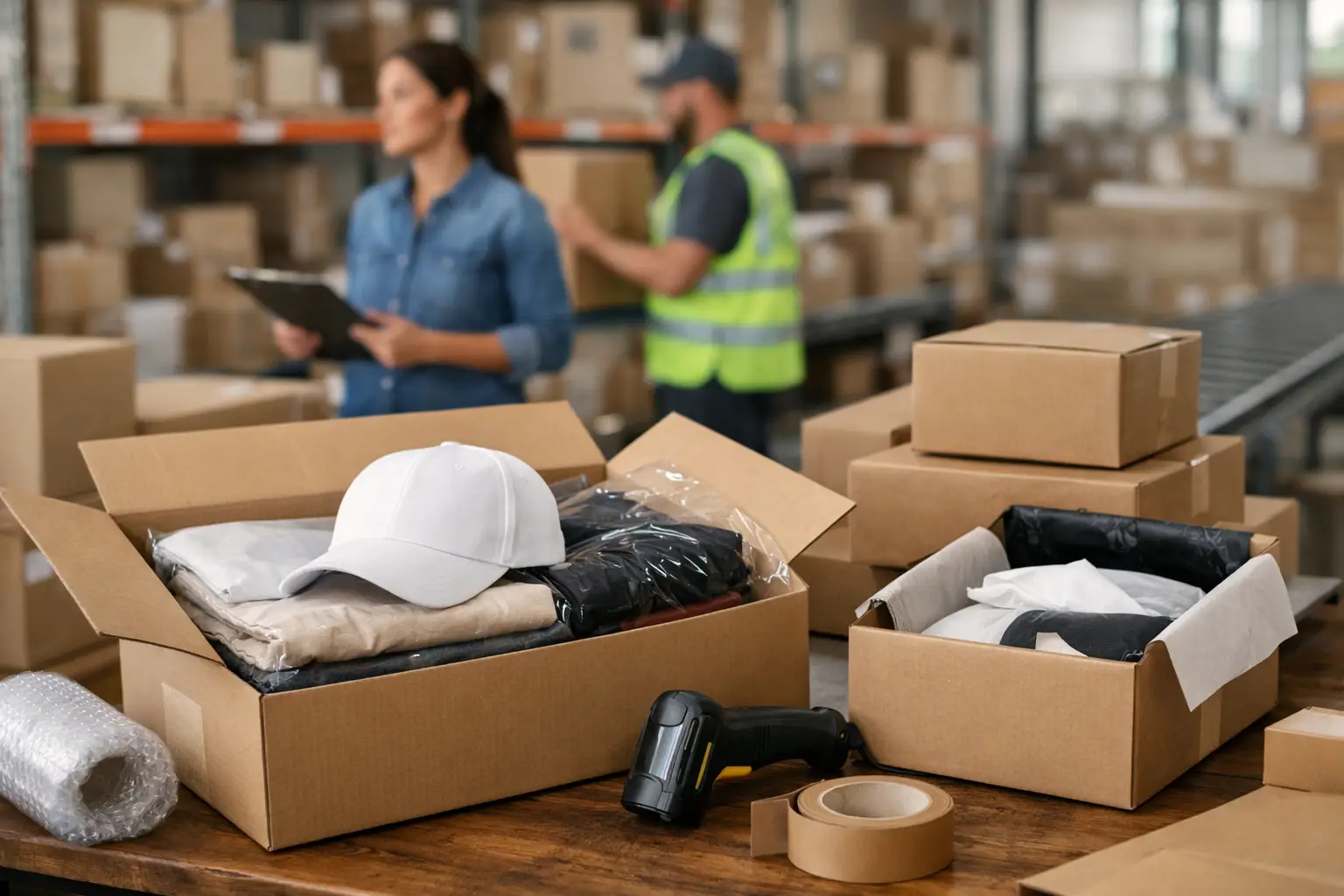
A 500-piece employee welcome kit can look simple on a purchase order. In practice, it may involve apparel sizing, multiple logo placements, individual names, gift-box assembly, venue delivery, and a hard event deadline. This bulk order fulfillment guide helps corporate buyers turn that moving set of requirements into a controlled production plan – before a small oversight becomes an expensive last-minute issue.
For marketing teams, HR departments, procurement staff, and event organizers, bulk fulfillment is not just about receiving cartons. It is about making sure every recipient receives the correct branded item in the right condition, at the right place, when it matters.
Start the bulk order fulfillment guide with the end recipient
The best fulfillment plans begin with distribution, not product selection. Before confirming T-shirts, drinkware, lanyards, notebooks, or premium gifts, establish who will receive them and how. A conference attendee collecting a badge at registration needs a different packing approach than an employee receiving a welcome kit at a branch office.
Ask whether items will be handed out at one location, delivered to multiple offices, shipped to individual recipients, or packed by department. Also confirm whether each package is identical. Once sizes, names, colors, roles, languages, or regional delivery addresses are involved, the order needs a clear data process rather than a basic quantity total.
A useful order brief should identify the final quantity, product specifications, decoration method, artwork version, recipient groups, delivery locations, packing requirements, and required arrival date. It should also state who can approve artwork and production samples. One owner for final approvals avoids conflicting instructions from several stakeholders.
For example, an internal kickoff may require 300 polo shirts sorted by size and department, 300 lanyards, and 300 notebooks packed into team-specific cartons. A client gifting campaign may instead require 300 individually addressed boxes. Both are bulk orders, but the labor, labels, quality checks, and freight requirements are very different.
Build a realistic production timeline
The delivery date is not the same as the production deadline. A reliable schedule works backward from the moment items must be ready for distribution. That means allowing time for product sourcing, artwork preparation, sampling where needed, printing or customization, quality control, packing, dispatch, and a practical buffer for changes.
Artwork approval is commonly the point where a project gains or loses time. A logo may need to be supplied in a suitable format, colors may need to be matched, and text-heavy designs may need adjustment for small print areas. Confirm the decoration location and size early, especially on apparel, bags, caps, and drinkware. A design that appears clear on screen may not read well once printed on a curved bottle or embroidered on a sleeve.
Short lead times are possible for certain stocked products and straightforward print jobs, but they involve trade-offs. Product selection may be narrower, customization options may be more limited, and changes after approval can be difficult. If the deadline is fixed, be flexible about nonessential details rather than risking the entire program for one preferred item.
For larger campaigns, it is wise to set internal approval dates that are earlier than the supplier’s final cutoff. This gives your team room to review proofs, confirm quantities, and resolve data issues without putting production under unnecessary pressure.
Plan for the details that change late
Headcount changes, newly hired employees, speaker gifts, VIP attendees, and revised event floor plans are normal. Rather than treating them as surprises, decide in advance how they will be handled. A small overage may make sense for widely distributed items such as tote bags or lanyards. For personalized goods, it may be better to hold a defined deadline for name and address data, then process later additions separately.
The right buffer depends on the product and use case. Extra event badges may be helpful. Extra engraved awards may not be, because they cannot be reassigned easily. Good budget guidance considers both the unit cost and the cost of getting the quantity wrong.
Match products and decoration methods to the job
A product should suit the recipient, the occasion, and the way it will be distributed. Event giveaways need to be portable and easy to replenish. Employee uniforms need consistent sizing, durability, and repeat-order availability. Executive gifts may need more refined packaging and a decoration method that supports the intended brand presentation.
The same principle applies to customization. Screen printing can be efficient for high-volume apparel with simple color designs. Embroidery offers a durable, textured finish for polos, jackets, caps, and uniforms. Digital printing can suit more detailed artwork or smaller runs. UV printing, laser engraving, and pad printing each have strengths depending on the material, print area, color requirement, and expected use.
There is no single best method. A low-cost option may be appropriate for a one-day campaign but less suitable for a uniform that will be washed weekly. A premium item may create a stronger impression for key clients but may not be the right use of budget for a large public event. The practical goal is to choose products and printing methods that perform well for the intended outcome.
Working with one partner that can source merchandise, guide artwork, customize items, pack orders, and support event delivery also reduces handoffs. That matters when a campaign combines apparel, promotional products, awards, and on-site activation materials.
Protect quality before, during, and after production
Quality control should not be limited to the last carton. It starts with an approved proof that confirms spelling, logo version, dimensions, placement, colors, and any personalization fields. For substantial orders, a pre-production sample or physical reference may be worthwhile, particularly when the item, fabric, finishing technique, or brand colors are critical.
During fulfillment, the production team should verify that the correct product and color are used, print placement is consistent, personalization data matches the approved file, and quantities align with the packing plan. Final checks should also look at folded apparel, carton labels, protective packaging, and visible presentation. A beautifully printed product can still disappoint if it arrives creased, mixed with the wrong department’s items, or without the required inserts.
Data accuracy deserves special attention. When preparing name lists, sizes, addresses, or employee IDs, use one clean master file and avoid editing several versions at once. Standardize abbreviations and confirm whether names should include titles, middle initials, or preferred spellings. A clear file is one of the simplest ways to prevent personalized merchandise errors.
Design packing around the distribution process
Packing is part of the experience, not an afterthought. For event distribution, carton labels should make replenishment quick: identify the product, quantity, size range, and intended station or zone. For office distribution, packs can be sorted by department, floor, or team leader. For direct-to-recipient campaigns, each package needs an address label, accurate contents, and protection suitable for transit.
Consider the handoff at the destination. Will venue staff know where cartons should go? Does the building have delivery restrictions, loading-bay booking requirements, or limited storage? Is a team member available to sign for the shipment and verify carton counts? These operational details are especially important for exhibitions, roadshows, and large company events, where delivery windows can be strict.
If an event includes live printing or personalization, the fulfillment plan needs to include more than merchandise. Equipment access, power requirements, staffing, blank-stock quantities, queue flow, and backup supplies all affect the result. On-site customization can make an activation more memorable, but it must be planned as an event operation, not simply a printing job.
Keep communication simple and accountable
Large orders move faster when the communication structure is clear. The buyer should know what is awaiting approval, what has been confirmed, what is in production, and what is scheduled for delivery. The supplier, in turn, needs timely decisions on artwork, quantities, data files, and delivery instructions.
Set one main contact on each side and keep material changes in writing. If the event date, print file, size breakdown, or delivery address changes, confirm the impact on cost and timeline before proceeding. This protects both the budget and the final result.
A dependable fulfillment partner should also be candid when a request carries risk. If a chosen item cannot meet the deadline, if an artwork detail will not reproduce clearly, or if direct shipping will increase handling time, it is better to adjust the plan early. Clear advice is more valuable than a promise that creates problems later.
Measure the order after delivery
Once the campaign is complete, review what worked. Check whether all locations received the right quantities, whether popular sizes ran short, whether packaging supported quick distribution, and whether recipients responded well to the product selection. These observations make the next order easier and more cost-effective.
For repeat programs such as onboarding kits, annual conferences, uniforms, and seasonal gifting, keep approved artwork, product specifications, size data, and packing preferences on record. Consistency speeds up future planning while leaving room to refresh the merchandise when the campaign calls for it.
Bulk fulfillment is strongest when it is treated as a coordinated delivery process, not a final step after purchasing. With clear recipient data, realistic timing, suitable products, controlled approvals, and practical packing, branded merchandise arrives ready to do its job: represent your organization well and give people something useful to take away.