


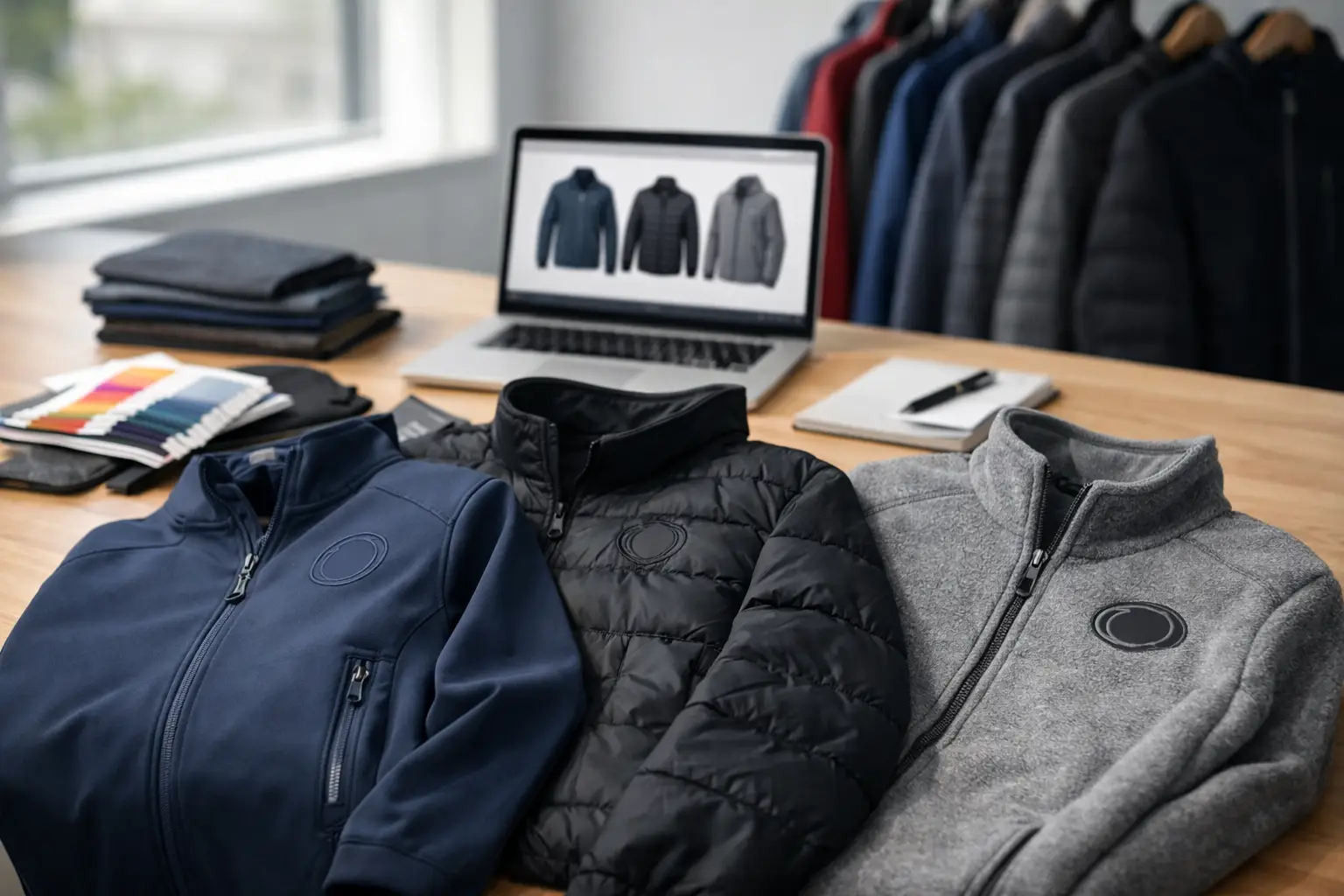
A jacket order can look straightforward until the real questions start stacking up. Do you need something lightweight for an outdoor event, or a warmer layer employees will actually wear after the campaign ends? Will your logo look better embroidered on the chest or printed large on the back? If you are figuring out how to order branded jackets, the fastest way to avoid delays, rework, and budget overruns is to make a few practical decisions early.
For most businesses, branded jackets are not just apparel. They are part uniform, part marketing asset, and part team presentation. That means the right order depends on where they will be worn, who will wear them, how long they need to last, and what kind of branding result you expect.
How to order branded jackets without costly mistakes
The first step is not choosing a color or uploading a logo. It is defining the job the jacket needs to do. A sales team working in air-conditioned venues needs something different from a logistics crew doing site work or an event team moving between indoor halls and outdoor registration areas.
When the use case is clear, product selection becomes much easier. Softshell jackets work well when you want a smart, structured look with light weather protection. Windbreakers are useful for mass event distribution because they are lightweight and usually more budget-friendly. Fleece jackets suit cooler environments and internal staff use, but they can feel too casual for some client-facing settings. Bomber and varsity styles can work for campaigns or younger audiences, though they are usually more style-driven and less universal.
This is where many buyers lose time. They start with appearance, then backtrack when they realize the fabric, print area, or unit cost does not suit the project. A dependable supplier should help narrow the range based on your purpose, target quantity, branding method, and deadline.
Start with the purpose, not the product
Before requesting a quote, outline the basics in plain business terms. Who is wearing the jacket? Where will it be used? Is this for internal staff, a client gift, an event uniform, or a promotional giveaway? Those answers affect almost everything else.
For example, employee uniforms usually need more durable fabrics, broader size runs, and a branding placement that stays professional over repeated wear. Event jackets may prioritize speed, visibility, and cost control, especially if the order volume is high. Premium client gifting often shifts the focus toward finish, packaging, and understated branding.
The same logo can feel completely different depending on the garment. A small embroidered chest logo can look polished and long-lasting. A large printed back graphic may be stronger for event visibility, but it is not always the right choice for corporate use. There is no single best option. It depends on whether you are dressing a team, promoting a campaign, or building a gift set.
Decide what matters most
Most jacket orders are driven by one primary factor: presentation, durability, speed, or budget. You can balance all four, but one usually leads the decision.
If presentation matters most, focus on fabric finish, fit, and embroidery quality. If durability is key, ask about material performance, washing resilience, and stitch quality. If speed is the priority, keep the design simple and choose styles with reliable stock availability. If budget leads, work backward from your target price and let the supplier recommend suitable options.
That clarity saves rounds of revision and keeps the order practical.
Choose the right jacket style and branding method
Once your use case is clear, the next step in how to order branded jackets is pairing the jacket style with the right decoration method. Not every logo works equally well on every fabric.
Embroidery is a strong choice for corporate jackets because it looks clean, professional, and durable. It works especially well for chest logos, sleeves, and names. However, it is less suitable for highly detailed artwork, fine gradients, or oversized designs.
Heat transfer and screen printing can handle bolder graphics, larger logos, and more complex artwork. These methods are often useful for campaign jackets and event apparel. The trade-off is that the final feel and durability can vary depending on the fabric and wash conditions.
Softshell and performance fabrics also need special attention. Some materials resist certain print methods or show heat marks if handled poorly. That is why artwork review should happen alongside product selection, not after it.
A good supplier will tell you if your preferred jacket and your preferred branding method are a poor match. That guidance matters more than a generic catalog image.
Sizing, quantity, and wearability matter more than most buyers expect
A jacket that looks good in a mockup can still fail if the fit is inconsistent. This is especially common in mixed teams where men’s, women’s, and unisex sizing all come into play.
Ask for a size chart early and check whether the cut runs slim, regular, or oversized. If the order is large or the jackets are for daily staff use, it is worth discussing sample pieces or fit references. That extra step reduces the risk of size complaints and replacement requests later.
Quantity planning also deserves more attention than buyers usually give it. Ordering too close to the exact headcount leaves no room for new hires, last-minute event crew changes, or damaged units. Ordering too many can tie up budget unnecessarily. In most cases, a small buffer makes sense, especially for uniforms or recurring programs.
Wearability is another practical concern. If the jacket is too heavy for the climate, too stiff for movement, or too flashy for the workplace, people will stop wearing it. That weakens the return on your order. The best branded jacket is usually the one that feels useful enough to wear again.
Get your artwork and approvals in order
Artwork delays are one of the most common reasons jacket orders stall. Even when the garment is in stock, production cannot move cleanly if the logo file is low resolution, the colors are unclear, or approval keeps changing between stakeholders.
Provide your logo in a print-ready format whenever possible and confirm brand colors early. If you need multiple logos, names, departments, or sponsor placements, spell that out from the start. Variable details affect setup, production time, and pricing.
Mockups are helpful, but they should not be treated as the final quality reference for texture, thread thickness, or exact print feel. They show placement and general appearance. If quality expectations are high, ask specific questions about the decoration size, finish, and limitations before approval.
This is also the stage to confirm whether you need individual packing, size stickers, custom labeling, or distribution by department. Those details are easy to add early and harder to fix late.
Budget and lead time should be discussed together
Price only makes sense when tied to delivery expectations. A low unit cost may not help if the production timeline misses your event date. On the other hand, paying for rush handling on a jacket style that could have been simplified earlier is not efficient either.
The practical approach is to share your deadline, target quantity, and budget range at the same time. That gives the supplier room to recommend options that are actually achievable. Sometimes a small change in fabric, color availability, or branding position can protect the timeline without hurting the result.
It also helps to ask what is driving the cost. Jacket pricing is shaped by garment type, order quantity, decoration method, logo size, number of print locations, and packing requirements. Once you understand the cost structure, value engineering becomes easier. You can decide what to keep, what to scale back, and where a premium upgrade is worth it.
For buyers managing multiple vendors, this is where working with one experienced partner becomes useful. A company like Global Asia Printings can guide product selection, artwork coordination, customization, and fulfillment in one workflow, which reduces handoff issues when deadlines are tight.
What to confirm before placing the order
Before you give final approval, make sure the key details are locked. Confirm the jacket model, color, size breakdown, branding method, logo placement, quantity, packing requirements, unit price, and production timeline. If there is an event date involved, state it clearly rather than assuming the deadline is understood.
You should also confirm what happens if stock changes after approval. Some styles move quickly, especially in common corporate colors and standard sizes. Checking stock commitment upfront can prevent unpleasant surprises.
The best orders are rarely the most complicated. They are the ones with clear requirements, realistic lead times, and a supplier that is willing to advise rather than just take instructions. If you approach the process that way, branded jackets stop being a sourcing headache and start becoming a practical asset your team will actually use.