


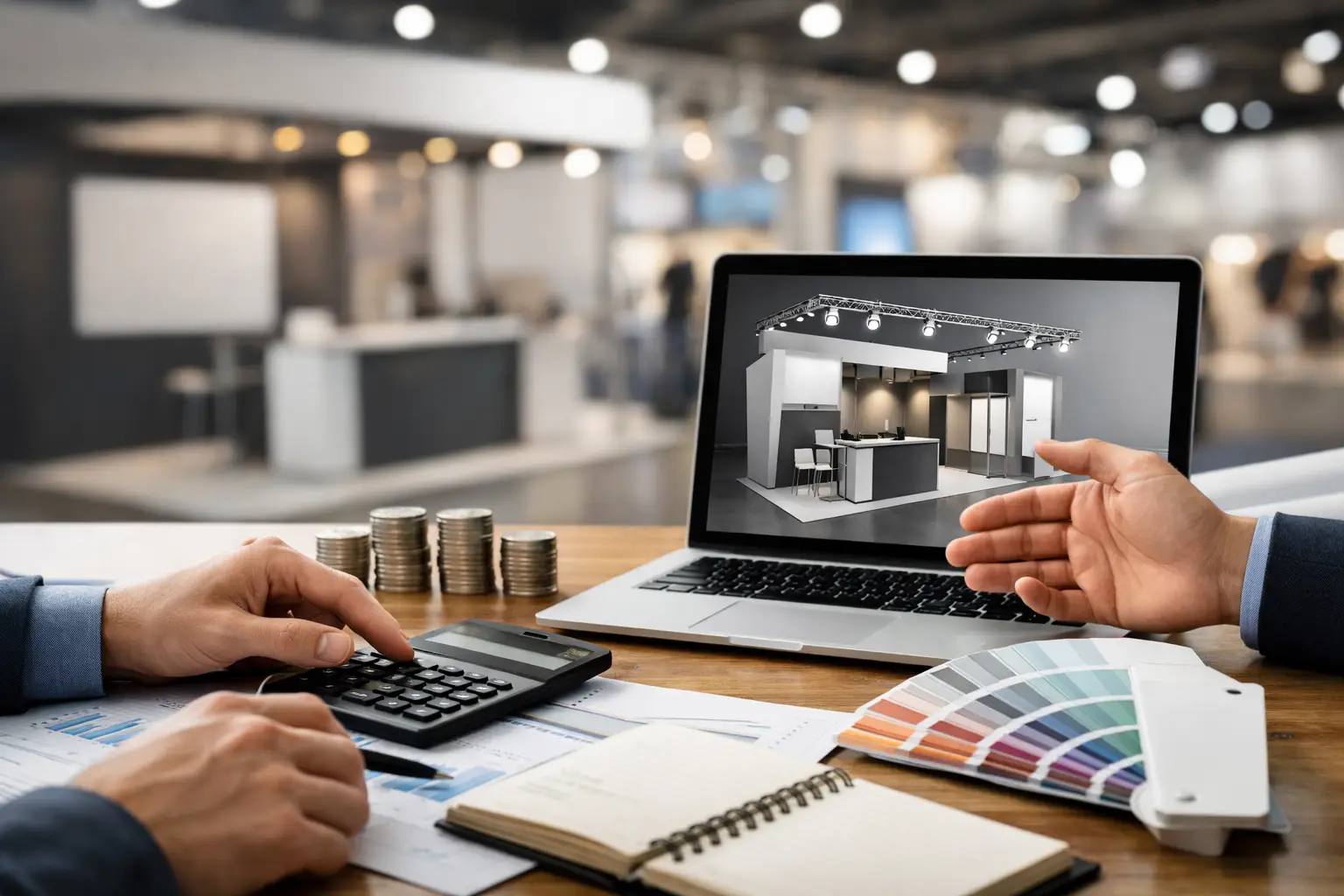
That moment usually comes fast: the event date is confirmed, the booth space is booked, and suddenly the question is not whether you need branding, but how to budget exhibition branding without overspending on the wrong things. For marketing teams, procurement staff, and event organizers, the challenge is rarely just cost control. It is deciding where branding will make the biggest impact on foot traffic, brand recall, and on-site experience.
Exhibition branding budgets often go off track for a simple reason. Too much money gets assigned by item instead of by purpose. A backdrop, a counter wrap, a stack of flyers, a set of T-shirts, and a giveaway order may all seem necessary, but not every event needs the same mix. A product launch, a recruitment fair, and a trade show for high-value B2B leads should not be budgeted the same way.
Start with the event goal before the item list
The most practical way to budget exhibition branding is to tie spending to what success looks like at the event. If your goal is lead generation, your budget should lean toward high-visibility booth graphics, clear messaging, and staff presentation. If your goal is relationship building, it may make more sense to allocate more toward premium branded gifts or a polished hospitality setup.
This sounds obvious, but many teams still begin with a shopping list. That usually leads to overbuying lower-impact items because they feel familiar or easy to approve. When the budget gets tight, the pieces that actually shape the visitor experience, such as booth visuals or live engagement elements, get reduced first.
A better approach is to separate your budget into three working categories: attract, engage, and extend. Attract covers the branded elements that pull people toward your booth. Engage includes the materials and setup that support conversations at the event. Extend refers to what people take away, whether that is a brochure, a sample, or merchandise that keeps your brand visible after the show.
How to budget exhibition branding by priority
Not every branded item carries the same weight. Your booth structure and large-format visuals usually do more heavy lifting than smaller printed pieces. People notice your space before they notice your handouts. If the booth does not look organized, relevant, and professional, even good promotional items may not get the attention you expect.
In most cases, the first budget priority should be the brand-facing surfaces people see from a distance. That includes backdrops, banners, wall panels, counters, hanging signs, or table covers, depending on your setup. These are the assets that frame your brand in the room and influence whether attendees stop.
The second priority is staff readiness. Branded apparel, name badges, and a clean presentation are often undervalued in budgeting, yet they affect credibility immediately. A consistent team appearance helps visitors identify who to approach and reinforces that your booth is professionally managed.
The third priority is collateral and giveaways. These matter, but they should be chosen with discipline. A lower volume of well-matched, useful items often performs better than a large order of forgettable products. If budget is limited, it is usually wiser to scale back quantity rather than cut the quality of your visible booth branding.
Fixed costs vs flexible costs
A useful budgeting habit is to split costs into fixed and flexible categories. Fixed costs include booth fabrication, key printed panels, essential logistics, and installation. These are the items you are unlikely to remove once the event plan is in motion.
Flexible costs include merchandise quantity, brochure volume, add-on decor, and premium finishing options. These are the areas where sensible adjustments can protect your budget without weakening the whole presentation.
When teams do not define this early, they often treat every item as equally negotiable. That creates last-minute cuts that damage the visitor experience, such as shrinking the main visual while keeping too many giveaway units.
Build around the full cost, not just printing
One common mistake in exhibition budgeting is pricing only the printed output. Printing matters, but it is just one part of the total spend. Design adaptation, material selection, fabrication, packing, transport, setup, dismantling, and rush production can shift your costs significantly.
For example, a booth backdrop may look affordable at first glance, but the total cost changes based on size, substrate, finishing, and installation method. The same applies to apparel and merchandise. Unit cost is only part of the picture. You also need to account for branding method, order quantity, artwork preparation, and delivery timeline.
This is why early scope clarity saves money. If your vendor has to revise dimensions, rework artwork files, or accelerate production because approvals came late, the budget pressure shows up quickly. A realistic budget for exhibition branding should include a buffer for these operational variables, especially if your event timeline is tight.
Match spend to event duration and reuse potential
A one-day booth and a repeat-use exhibition system should not be budgeted the same way. If you attend multiple shows each year, it often makes financial sense to invest more in reusable branded structures and less in disposable materials. Portable displays, modular panels, and adaptable counters can bring down your long-term event cost even if the initial outlay is higher.
If the exhibition is a one-off event, a leaner production route may be the better call. There is no value in paying for durability or modularity you will never use again. This is one of the clearest it-depends decisions in exhibition branding. The right budget is not always the lowest quote. It is the one that fits the lifespan of the assets you are buying.
Where giveaways fit in
Giveaways should support the event objective, not absorb the budget by default. If your audience is broad and footfall is high, practical low-cost items can work well. If your team is targeting a smaller group of decision-makers, fewer premium gifts may deliver better value.
The key is relevance. A giveaway that is useful in a work setting usually has more staying power than something novelty-driven. Budgeting improves when you choose merchandise based on audience fit, expected quantity, and post-event visibility rather than habit.
Plan for quantity carefully
Overordering is one of the easiest ways to waste budget. This is especially common with flyers, catalogs, and low-cost promotional items. Teams estimate high to be safe, but leftover stock from one event is not always usable for the next. Campaign dates change, product lines update, and messaging evolves.
A tighter quantity strategy works better. Start with expected traffic, then estimate realistic engagement, not total attendance. If ten thousand people are attending the exhibition, that does not mean you need ten thousand printed pieces. Most booths only meaningfully engage a fraction of total attendees.
For apparel, consider role-based quantities. Front-facing staff may need branded polos or jackets, while support crew may not need the same level of customization. For merchandise, think about tiered distribution. Not every visitor needs the same item.
Work backward from your non-negotiables
If you are under a hard spending cap, define what cannot be compromised. For some teams, that is a strong booth facade and professional apparel. For others, it is a premium sample kit or a branded product display. Once those non-negotiables are protected, the rest of the budget becomes easier to shape.
This also helps internal approvals. Decision-makers respond better when the budget is framed around business needs rather than a long product list. A branded counter is not just a counter if it improves presentation, storage, and interaction. A custom gift is not just an extra cost if it supports follow-up with qualified prospects.
An experienced supplier can help identify where specifications can be adjusted without weakening the result. Sometimes a material change, print method adjustment, or quantity revision can free up budget for a higher-impact element elsewhere. That kind of guidance is often more valuable than chasing the cheapest quote line by line. Companies like Global Asia Printings often support this by aligning production options with event goals, deadlines, and practical budget limits.
A simple budgeting framework that holds up under pressure
If you need a workable structure, assign your exhibition branding budget in layers. Put the largest share into booth visibility and core branded surfaces first. Next, fund staff presentation and key engagement materials. Then allocate what remains to giveaways, add-ons, and premium finishes.
That order matters because it reflects how attendees experience your brand. They see the booth before they speak to the team. They speak to the team before they decide whether to keep your brochure or gift. When the budget follows that journey, spending decisions become more rational.
A good exhibition budget is not about squeezing every line item to the minimum. It is about protecting the elements that make your brand look prepared, credible, and worth approaching. If you keep that standard in view from the start, your budget becomes a tool for better decisions, not just a cap on spending.
The best exhibition branding plans usually look simpler on paper than they feel in execution. That is a good sign. When priorities are clear, costs are easier to control, approvals move faster, and the final setup works harder for every dollar you put into it.