


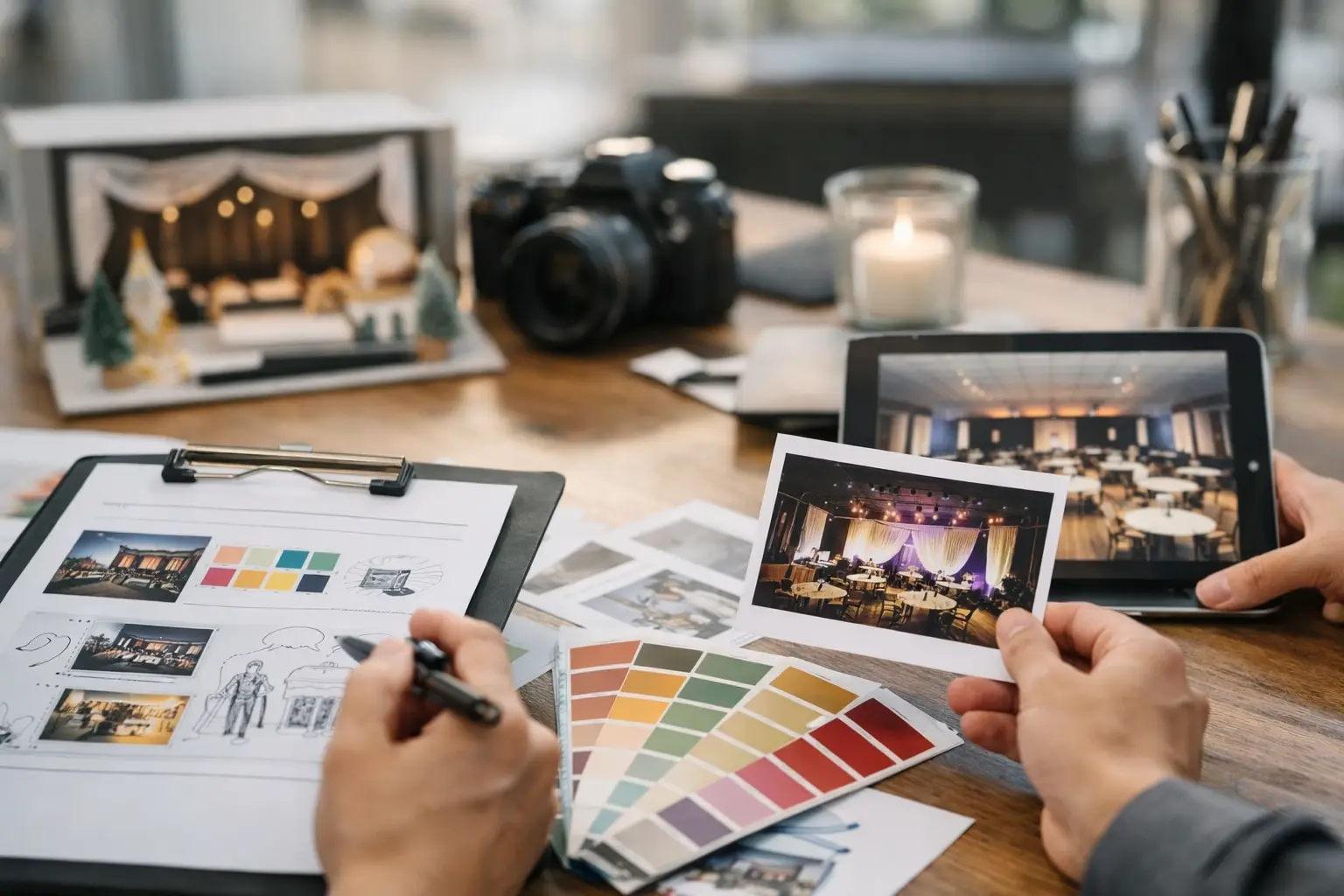
A rushed event usually shows its cracks before the doors even open. The backdrop shade is slightly off-brand, staff shirts arrive in the wrong cut, giveaway items feel disconnected from the campaign, and the booth setup looks like it came from three different vendors. A strong event branding planning guide helps prevent that kind of disconnect by treating branding as an operational plan, not just a design exercise.
For marketing teams, HR departments, procurement leads, and event organizers, that distinction matters. Good event branding is not only about making things look polished. It affects how people move through the space, what they remember, what they photograph, and whether your team feels prepared on the day itself. When the planning is right, branding supports the event. When it is rushed, branding becomes one more thing to troubleshoot under pressure.
What an event branding planning guide should actually cover
The best event branding plans start earlier than most teams expect. They are built around the event objective first, then translated into physical assets, printed materials, apparel, signage, and on-site experience details. That sounds straightforward, but this is where many events get fragmented.
One team is focused on the campaign message. Another is buying gifts. Another is arranging booth construction. Someone else is handling artwork approvals. If those workstreams are not connected, the event ends up visually inconsistent and harder to execute.
A practical event branding planning guide should cover five core areas: audience, message, branded assets, production timing, and on-site delivery. If one of those is unclear, the rest usually suffers. For example, a premium client appreciation dinner needs a very different product mix than a campus roadshow or a trade show booth collecting leads all day. The same logo can appear in both settings, but the materials, finish, quantity, and brand tone should not be identical.
Start with the purpose before you choose products
This is the step buyers often want to skip because selecting products feels more tangible than aligning strategy. But the right merchandise, signage, and apparel depend on what the event is trying to do.
If your goal is lead generation, the branding should prioritize visibility, booth recognition, and practical takeaways people are likely to keep. If your goal is employee engagement, branded apparel, welcome kits, and live printing may create stronger participation than formal display materials alone. If the event is internal, the tone may be more culture-driven. If it is client-facing, presentation and finish matter even more.
That is why budget planning also has to start here. A limited budget can still produce a strong result when it is focused on the assets that carry the most value. Trying to spread a small budget across too many categories often creates a weaker impression than investing in fewer items done properly.
Build the event branding system, not just individual items
An event does not feel branded because every item has a logo on it. It feels branded when the pieces work together. That includes the visual identity, messaging hierarchy, product choices, and environmental setup.
Think about how a guest experiences the event from arrival to exit. They might first see pre-event invitations or registration graphics, then entry signage, staff apparel, stage visuals, tabletop displays, badges, lanyards, and branded gifts. Each touchpoint should feel connected. Colors, typography, logo usage, and tone should stay consistent, but the application should still fit the item.
This is also where trade-offs come in. Not every surface needs heavy branding. In some settings, subtle placement on premium apparel or gifts can feel more professional than oversized logos. In high-traffic public events, however, bolder branding may be necessary for visibility. It depends on the setting, viewing distance, and purpose of the item.
Planning merchandise that supports the event
Branded merchandise works best when it has a role to play. Some items are there to draw traffic, some support operations, and some extend the brand after the event.
For example, lanyards, badges, uniforms, and directional signage help the event function. Tote bags, notebooks, drinkware, and tech accessories often support recall after the event. Premium gifts may be better suited for VIPs, speakers, or key clients rather than a general audience. Event apparel can build team presence, but only if sizing, comfort, and print quality are handled properly.
This is where practical planning matters more than trend-chasing. A popular item is not always the right item. If attendees are traveling, bulky giveaways may be left behind. If your audience is executive-level, novelty products may weaken the brand impression. If your event is outdoors, material durability becomes part of the branding decision because faded or damaged displays reflect poorly on the brand.
Event branding planning guide for timelines and approvals
Most event branding problems are timing problems in disguise. The design may be fine, but artwork was approved too late. The merchandise may be suitable, but quantities changed after production started. The booth concept may be strong, but fabrication had no room for revision.
That is why an event branding planning guide needs a realistic production schedule, not just a target event date. Teams should work backward from the event and allow time for concept alignment, product selection, artwork preparation, sampling if needed, production, packing, delivery, and setup.
Short lead times are sometimes unavoidable, but they reduce flexibility. You may need to simplify product choices, use standard materials instead of custom builds, or prioritize the most visible assets first. There is nothing wrong with making those calls as long as they are made deliberately. What causes issues is pretending a compressed timeline can still support unlimited revisions and fully custom sourcing.
Approvals also need a clear owner. Too many event projects stall because everyone has input but no one has final sign-off authority. That creates version confusion and avoidable delays. A single point of approval keeps branding consistent and production moving.
Artwork preparation affects the final result
This is one of the most underestimated parts of event execution. Good branding can be weakened by low-resolution files, inconsistent logo versions, unclear print placement instructions, or color expectations that were never specified properly.
Different products and print methods also behave differently. Apparel printing, embroidery, UV printing, large-format signage, and engraved corporate gifts all have different technical requirements. A design that looks sharp on a digital mockup may need adjustments to work well on fabric, curved surfaces, or oversized display panels.
That is why supplier guidance matters. An experienced production partner should flag issues early, recommend suitable print methods, and help match the design to the item rather than forcing one artwork style across everything.
Managing the venue and on-site brand experience
Branding does not stop at what gets printed. It also includes how the event environment is assembled and how consistently the brand is presented on-site.
A booth that looks excellent in a mockup can still fail if the layout blocks movement, signage is placed too low, or the handout table creates congestion. Staff uniforms can strengthen the brand, but only if the team receives them on time and knows how they fit into the event presentation. Live customization stations can create strong engagement, but they need enough space, power access, queue management, and clear messaging.
On-site execution is where centralized coordination becomes especially valuable. When merchandise, printed materials, apparel, signage, and installation are handled in separate silos, small issues multiply quickly. Packaging gets misplaced, setup timing slips, and no one is certain who owns the final visual check. A more coordinated process reduces those handoff risks and makes the event easier to manage.
When to simplify and when to invest more
Not every event needs a full-scale branding rollout. Sometimes a clean booth setup, strong staff apparel, and a few well-chosen giveaway items are enough. In other cases, especially launches, exhibitions, and large internal campaigns, a more immersive branded environment is worth the investment.
The right level depends on audience size, visibility, business stakes, and repeat value. If the event is a one-day internal function, overspending on custom structures may not make sense. If it is a flagship trade show where your team is meeting buyers and partners, stronger environmental branding can directly support credibility and lead quality.
A dependable planning process helps teams make those decisions with more confidence. That is part of the value of working with an experienced supplier that can guide product selection, align the budget with the event goal, and manage execution from print production to setup. For companies juggling deadlines and multiple stakeholders, that kind of support is often what keeps branding practical instead of stressful.
The best event branding does not call attention to how hard it was to produce. It simply feels organized, intentional, and ready. If your planning gets that right, the brand has already started working before the first conversation at the event begins.