


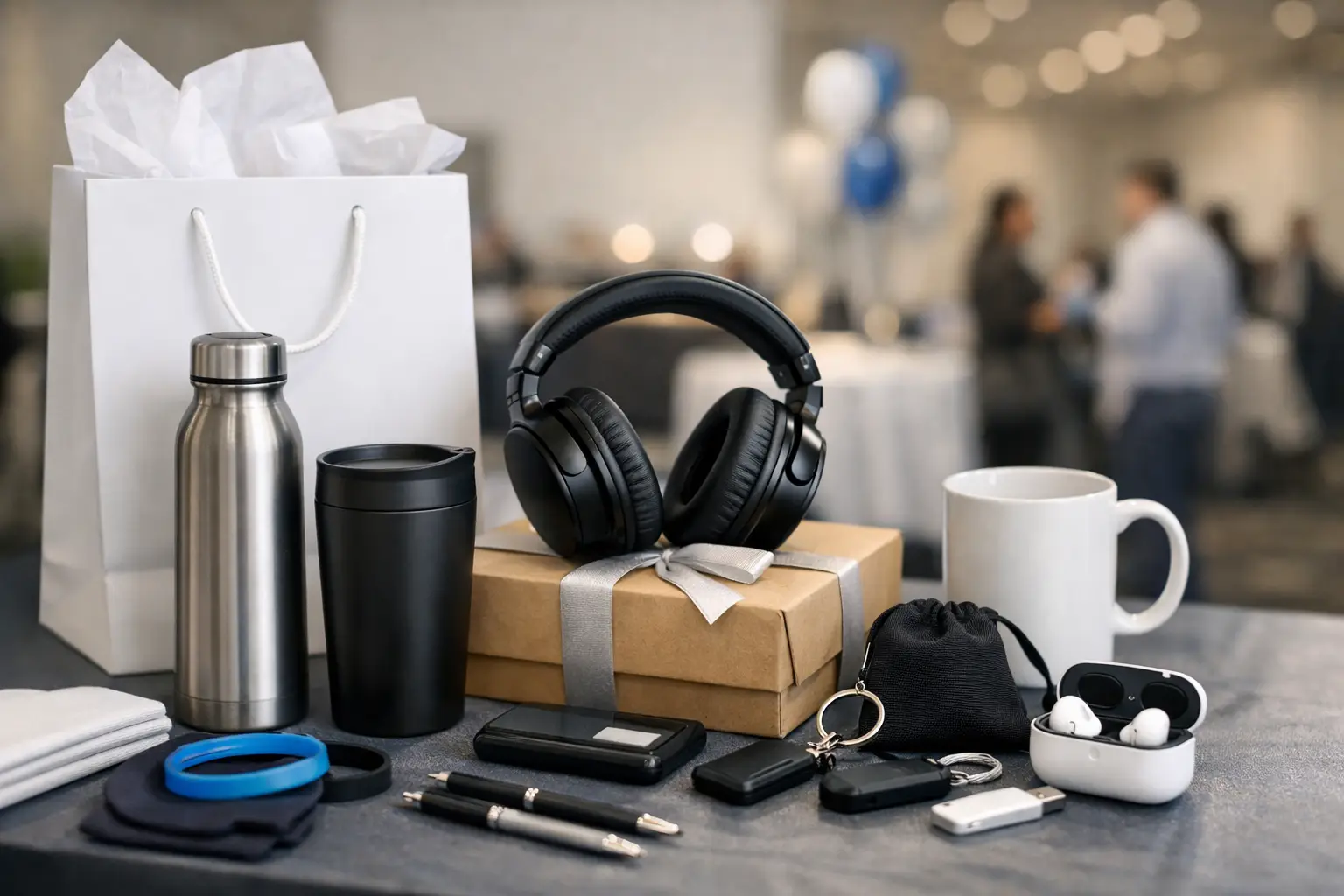
You can spend thousands on an event booth, a product launch, or an internal campaign and still have people walk away remembering only the coffee. That is usually the moment teams start asking what makes a good giveaway – not in theory, but in a way that supports the brand, fits the budget, and actually gets used.
For most businesses, the best giveaway is not the cheapest item you can buy in bulk or the most expensive product you can afford once. It is the item that matches the audience, carries the brand well, and makes sense for the setting. A good giveaway earns attention in the moment and keeps working after the event, meeting, or campaign ends.
What makes a good giveaway in practice
A good giveaway does three jobs at once. It attracts interest, represents the brand properly, and provides enough real value that the recipient keeps it instead of tossing it into a drawer or bag of forgotten freebies.
That value can come from utility, appearance, novelty, or timing. A branded umbrella handed out during rainy season feels useful immediately. A well-made notebook at a conference still works because people need it on the spot. A custom T-shirt can perform well too, but only if the design is wearable beyond the event itself.
The mistake many buyers make is treating giveaways as a generic category. They are not. The right item for a university open house may be a poor fit for a finance conference. A premium executive gift for clients may be completely wrong for mass event traffic. What makes a good giveaway depends on who receives it, why you are giving it out, and what you want it to achieve.
Start with the audience, not the product
When teams shop too early, they often begin with the catalog instead of the use case. That usually leads to safe but forgettable choices, or trendy products that do not suit the audience.
A better starting point is to ask who the giveaway is for. Prospects at a trade show want something easy to carry and easy to use. Employees at a company event may appreciate items with more personality or team identity. Students tend to respond well to practical everyday products like bottles, lanyards, pouches, and stationery. VIP clients usually expect better finishing, more premium materials, and packaging that feels considered.
The same branded item can also perform differently depending on the environment. At a crowded exhibition hall, people favor compact, lightweight products. At a company family day, apparel and lifestyle gifts may land better because people have time to engage. For roadshows and public activations, speed matters, so the giveaway should be simple to distribute and easy to explain.
Utility usually beats novelty
There is nothing wrong with creative merchandise, but usefulness tends to win over time. People keep items that solve small daily problems. That is why products like tote bags, drinkware, pens, notebooks, cables, lanyards, and travel accessories continue to perform well across industries.
Novelty can still work when it is tied to a campaign idea, but it has a shorter shelf life. If the item only makes sense inside the event theme, its branding value often ends there too. Utility extends the life of the giveaway because it creates repeated exposure. Every reuse becomes another brand impression.
This is also where quality matters. A useful item that breaks quickly becomes a bad brand experience. A bottle with a leaking lid or a tote bag with weak stitching sends the wrong message, even if the original concept was sound. In B2B environments especially, buyers are not just handing out objects. They are putting their company name on a product that reflects operational standards.
Branding should be visible, but not heavy-handed
One of the clearest answers to what makes a good giveaway is balanced branding. If the logo is too small, the item loses promotional value. If the branding is too large or aggressive, people may avoid using it.
This is especially true for apparel, bags, and desktop items. Recipients are more likely to keep and use products that look clean and professionally designed. Good placement, readable print, and sensible color choices often matter more than making the logo as large as possible.
Different products also call for different branding methods. Some items look better with subtle one-color printing, while others benefit from embroidery, engraving, heat transfer, or full-color digital print. The product and print method should support each other. A premium gift with low-grade finishing will feel mismatched. A simple item with a clean logo can look far more polished than an overdesigned one.
Budget fit is part of what makes a good giveaway
There is no single ideal giveaway budget. A good giveaway is one that achieves the goal without wasting spend. For broad distribution, lower-cost items with strong practical value often make the most sense. For top clients, award ceremonies, or executive gifting, the budget can justifiably increase because the audience is smaller and the expected standard is higher.
The important thing is to think in tiers. Not everyone at an event needs the same item. Many successful campaigns use a mix of mass giveaways, mid-tier engagement gifts, and premium items for selected recipients. That approach gives you better control over cost while matching product value to audience value.
Lead time also affects budget more than many teams expect. Rush production, urgent sourcing, and split delivery requirements can quickly increase costs or reduce product options. If you want better product choices and stronger print results, earlier planning helps.
Timing and context matter more than people think
Even a strong product can underperform if the handout moment is wrong. Giveaways work best when they connect naturally to the setting.
At exhibitions, items should be easy to hand over during short conversations. During training sessions or seminars, products that participants can use during the program tend to feel more relevant. In employee onboarding, practical welcome kits create a stronger first impression than random branded merchandise. For festive campaigns or appreciation gifts, presentation carries more weight because the item is part of a broader experience.
This is also where on-site customization can make a difference. Live printing or personalization creates engagement because people are not just receiving a product – they are participating in the brand moment. That can be especially effective for launches, roadshows, and corporate events where interaction matters as much as the item itself.
Common giveaway mistakes to avoid
The biggest mistake is choosing based on price alone. Low unit cost can look efficient on paper, but if the item is ignored or discarded, the campaign value disappears with it.
Another common issue is poor audience fit. A premium leather item may be wasted at a public fair, while a basic plastic freebie may feel too weak for a major client event. There is also the problem of overordering the wrong item. If the product is highly specific to one campaign theme, leftover stock becomes difficult to reuse.
Branding mistakes are also costly. Wrong artwork setup, poor color matching, or selecting the wrong print area can make even a good product feel rushed. That is why supplier guidance matters. The item, branding method, quantity, packaging, and delivery plan all need to work together.
How to choose a giveaway that performs
A practical way to decide is to look at five questions. Who is receiving it? Where will it be given out? What should people do or feel after receiving it? How long do you want them to keep using it? And what level of brand impression are you trying to create?
If the goal is reach, choose broad-appeal utility items. If the goal is engagement, consider products with better presentation or customization. If the goal is retention or appreciation, move toward higher quality materials and more polished finishing.
This is where working with one experienced production partner can save time. Instead of managing separate vendors for product sourcing, artwork, print, packing, and event support, buyers can make better decisions when those pieces are planned together. For companies handling exhibitions, campaigns, staff events, and client gifting across the year, that coordination often matters just as much as the item itself.
At Global Asia Printings, we see this often: the most effective giveaway is rarely the most complicated one. It is the one that fits the audience, arrives on time, carries the brand properly, and supports the event objective without creating extra friction for the team managing it.
A good giveaway should feel easy for the recipient and easy for your business to stand behind. If it is useful, well-branded, and chosen for the right moment, it does more than fill a swag bag – it keeps your brand in circulation long after the event is over.