


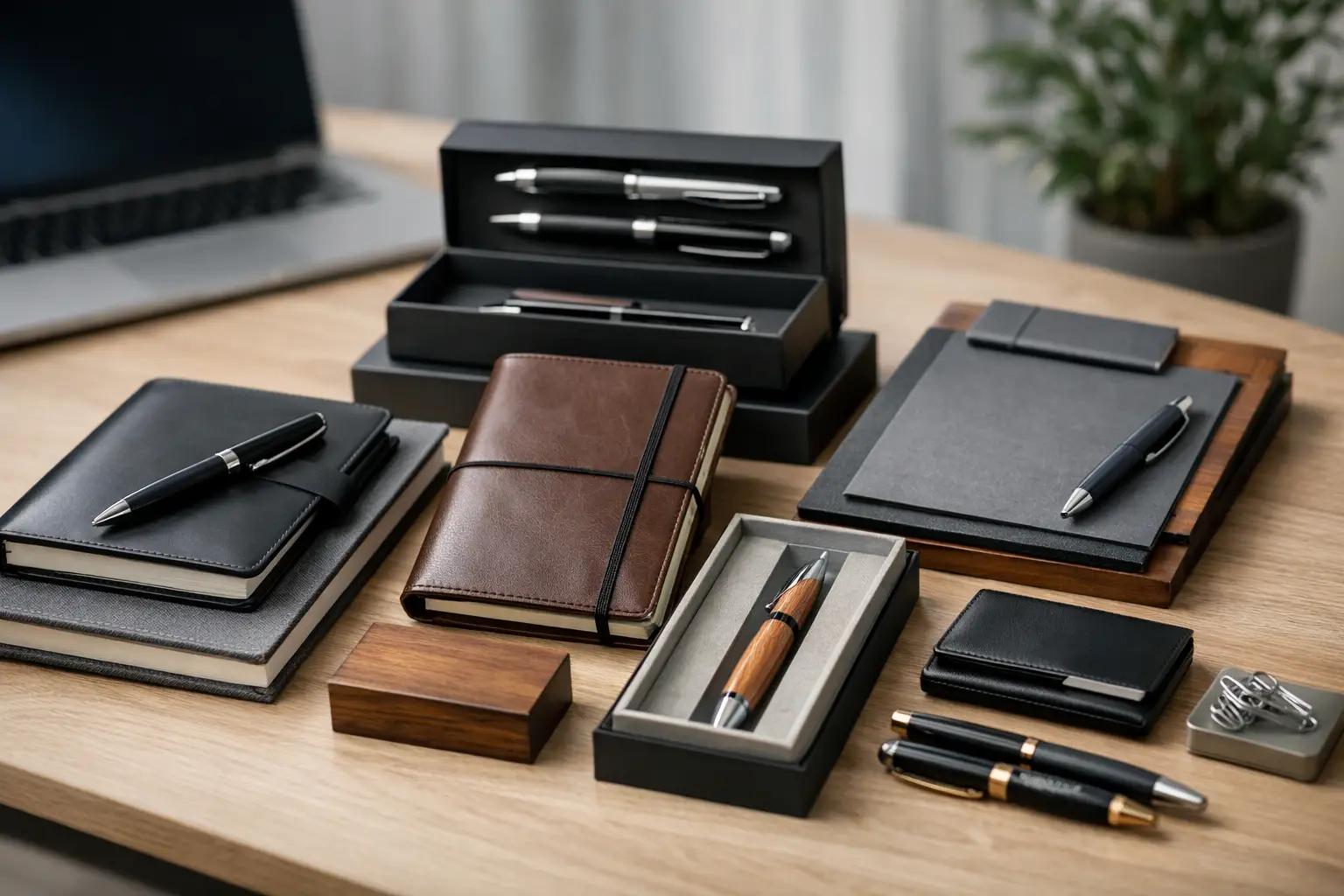
A gift that gets used beats a gift that gets stored. That is why Custom Stationery as Corporate Gifts continues to work so well for businesses that care about brand visibility, client relationships, and practical value. In a market crowded with generic giveaway items, well-made stationery stands out because people keep it on desks, carry it into meetings, and return to it every day.
For marketing teams, HR departments, procurement staff, and event organizers, that matters. A corporate gift should do more than fill a bag or check a box. It should reflect your brand properly, fit the occasion, and justify the budget. Custom stationery does that when it is selected with purpose and produced to a professional standard.
Why stationery still works in a digital-first workplace
It is easy to assume notebooks, planners, folders, and writing sets matter less because so much work happens on screens. In practice, that is not what most offices look like. People still write meeting notes, sketch ideas, organize training materials, and keep printed documents close at hand. A good notebook on a desk is not outdated. It is part of how many teams still work.
That makes stationery different from novelty merchandise. It has a clear use case in offices, schools, conferences, onboarding packs, and executive gifting. When an item serves an existing habit, it has a better chance of being used consistently. That repeated use gives your branding more staying power than many lower-value promotional items.
There is also a perception advantage. Custom stationery feels organized, polished, and business-appropriate. A branded pen paired with a notebook, presentation folder, or desk planner sends a different message than a random giveaway. It shows attention to detail and makes the gift feel intentional rather than leftover.
Where Custom Stationery as Corporate Gifts fits best
Stationery is flexible, which is one reason buyers return to it across different campaigns. It works well for client appreciation, internal welcome kits, training programs, board meetings, seminars, school events, and exhibition giveaways. The same product category can be adapted to very different audiences depending on materials, finishing, and packaging.
For client gifting, premium notebooks, executive pens, leather-look organizers, and well-finished folders tend to perform best. These items support a more formal brand image and are suitable when the relationship matters more than broad reach. For employee onboarding or company anniversary packs, practical items such as notebooks, memo pads, pens, and document folders are often a better fit because they support day-to-day work.
For large events, budget and quantity usually shape the decision. In those cases, simple branded notebooks, sticky note sets, writing pads, and pens can still create a cohesive and useful gift set without pushing costs too high. The key is matching the product level to the setting. A low-cost seminar giveaway and an executive appreciation gift should not look the same.
The real benefits go beyond branding
Brand exposure is the obvious benefit, but it is not the only one. Good stationery supports business operations, improves presentation, and helps teams stay consistent. A branded folder at a pitch meeting or a company notebook in an onboarding pack does practical work while reinforcing identity.
There is also an efficiency benefit when stationery is planned properly. Instead of sourcing welcome gifts, training materials, event giveaways, and meeting collateral from multiple vendors, many organizations prefer to build a coordinated set. That keeps design, print quality, color consistency, and delivery timelines easier to manage. For busy corporate teams, convenience is not a minor benefit. It reduces errors and saves time.
Another advantage is cost control. Stationery can be scaled more easily than many premium gift categories. You can create a modest, useful set for high-volume distribution or a more elevated package for selected clients and stakeholders. That range makes it easier to serve different departments and occasions without changing product categories entirely.
What to customize for a stronger result
The most effective stationery gifts are not always the most heavily branded ones. Oversized logos and crowded artwork can make an item feel promotional instead of professional. In many cases, subtle branding creates better long-term use.
A clean logo placement, consistent corporate colors, a quality cover material, and thoughtful print finishing often do more for perceived value than adding extra graphics. If the item is meant for clients or senior staff, understated branding is usually the safer choice. If it is designed for a campaign, conference, or school event, a more visible design can make sense.
Customization options also affect how the gift is received. A notebook can be standard, or it can include details that make it more useful: ruled or plain inner pages, date pages, pockets, pen loops, elastic bands, bookmarks, or matching sleeves. Folders can be produced for presentation use or daily document handling. Pens can move from basic giveaway quality to premium executive styles quickly, so the product choice should match the audience.
Packaging matters too. A stationery item handed over loose feels very different from the same item presented in a box, sleeve, or curated set. If the gifting moment is important, presentation should be part of the planning from the start.
Choosing the right stationery for the occasion
The biggest mistake buyers make is choosing based only on price per piece. That is understandable, especially for high-volume orders, but it can lead to gifts that do not match the purpose. A better approach is to start with the occasion, the audience, and the expected level of use.
If the goal is broad exposure at an event, choose items people can carry easily and use immediately. Notebooks, pens, memo pads, and compact desk items usually make sense. If the goal is relationship-building, select stationery that feels more durable and gift-worthy. A better cover material, more refined printing, or a coordinated set can change the impression significantly.
Lead time should also influence selection. Some custom stationery products allow quick branding and faster fulfillment. Others need more production steps, especially if they involve special materials, gift box sets, or detailed finishing. If your event date is fixed, product decisions should align with the timeline rather than the ideal concept alone.
Budget planning is another area where practical advice matters. It is often smarter to simplify the item and protect print quality than to overdesign a low-cost product. A clean, well-produced notebook will usually perform better than a heavily customized item that feels flimsy.
Common use cases for corporate teams
HR teams often use stationery in onboarding kits, staff appreciation packs, and internal milestone programs. These items help create a more put-together first impression and give employees something immediately useful on day one.
Marketing teams typically look at stationery from a brand exposure and campaign support angle. They need items that fit product launches, roadshows, customer engagement programs, or conference giveaways. In those cases, consistency across merchandise, print materials, and event branding becomes especially important.
Procurement teams are usually balancing unit cost, reliability, and fulfillment. They need products that can be reordered, branding that stays consistent, and a supplier who can manage quantity changes or urgent timelines without creating avoidable problems.
Event planners and administrators often need stationery as part of a bigger delivery scope. A single event may involve lanyards, booth graphics, apparel, welcome packs, printed materials, and gift items at the same time. That is where working with one experienced vendor can make a major difference, because coordination matters as much as the products themselves.
How to avoid the usual gifting mistakes
The safest stationery gift is not always the cheapest or the most premium. It is the one that matches the recipient and the setting. A very expensive executive notebook can be unnecessary for a mass seminar. A low-grade pen can undermine a client gift set.
Artwork is another common issue. Designs that look acceptable on screen may not translate well onto textured covers, small print areas, or certain materials. Color consistency, logo sizing, and print method should all be checked before production. This is where proper guidance saves both budget and embarrassment.
Quantity planning also deserves attention. Ordering too close to event dates leaves less room for revisions, packaging updates, or split deliveries. For recurring needs such as onboarding kits or annual conference packs, planning ahead usually creates better options and fewer compromises.
For businesses in Singapore managing campaigns, internal programs, or event gifting, custom stationery remains one of the most dependable categories because it is practical, brand-friendly, and easy to adapt. The best results come from treating it as part of a larger business objective, not just a last-minute giveaway. When the product, branding, and delivery plan are aligned, stationery does what a good corporate gift should do – it stays useful, represents your company well, and keeps your brand in sight long after the event is over.