


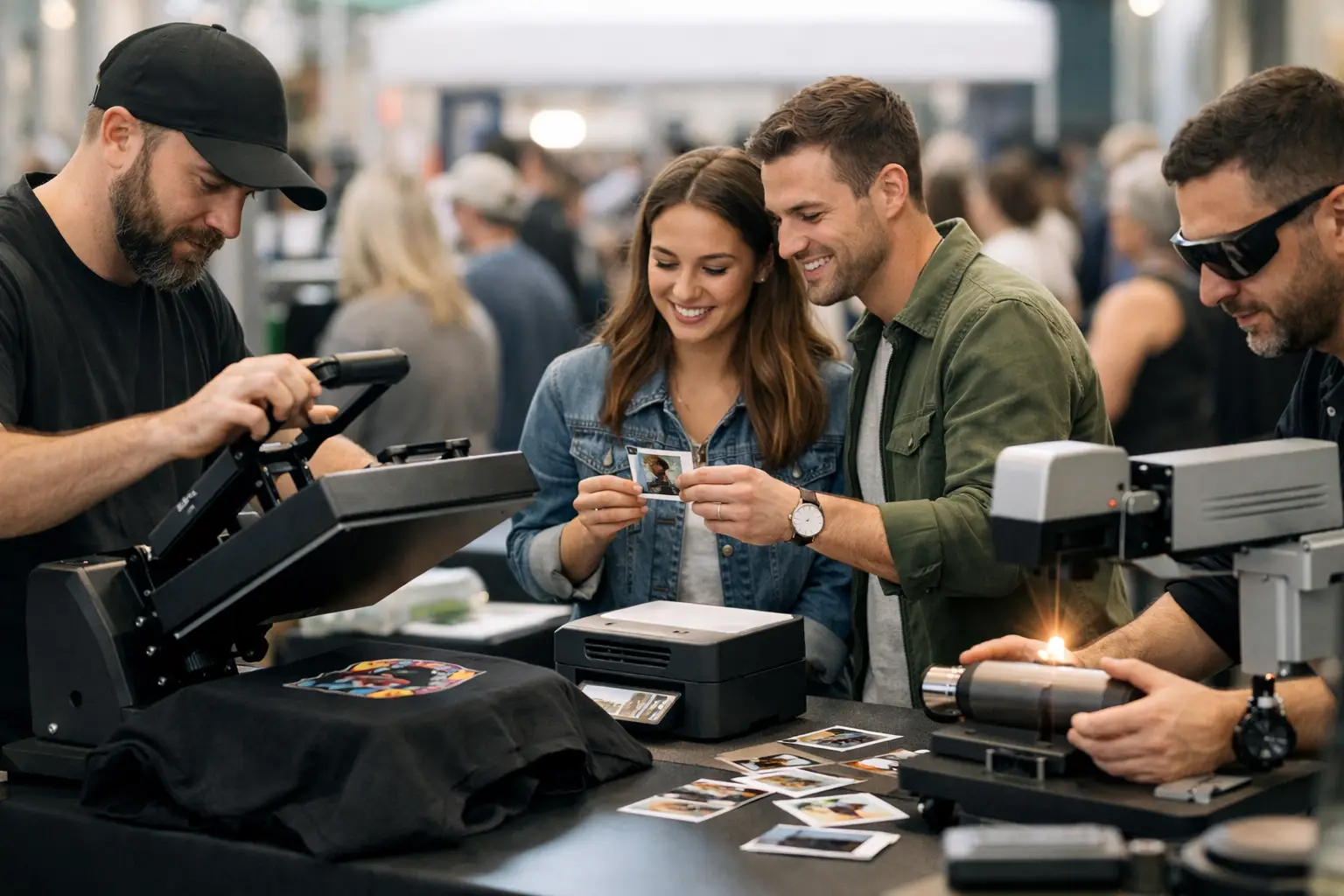
A blank T-shirt table rarely attracts attention. A station where attendees choose a design, watch it being printed, and leave wearing it creates a reason to stop, share, and remember the brand. The best event live printing examples turn merchandise into an active part of the program rather than another giveaway at the bottom of a tote bag.
For marketing teams, HR coordinators, and event planners, the appeal is practical as well as creative. Live customization can increase booth traffic, give guests a useful item, and make a campaign feel more personal. The right format depends on your venue, audience size, branding goals, product choice, and the time available for each guest.
8 Event Live Printing Examples for Business Events
1. On-site T-shirt printing at trade shows
Trade show visitors make quick decisions about where to spend their time. A live T-shirt printing station gives them a clear reason to enter the booth and stay long enough to engage with the team. Guests can select from a small set of event-exclusive graphics, add a name or short message, and collect their shirt after a brief production window.
This format works especially well when the artwork is bold and easy to recognize from a distance. Keep the choice simple: two or three design variations, a controlled color palette, and a pre-approved range of shirt sizes. Too many options can slow the line and create unnecessary artwork questions during peak traffic.
For a B2B exhibition, the printed design can combine the company logo with a campaign phrase, industry reference, or limited-edition event graphic. The goal is not just to put a logo on apparel. It is to give attendees a shirt they will actually want to wear after the show.
2. Personalized tote bags for conference registration
Conference tote bags are common, but a personalized version is far more likely to be retained. At registration or during a designated networking break, attendees can choose a graphic and add their name, initials, or a short role-based phrase to a canvas tote.
This is a strong choice for conferences with schedules that allow attendees to move between sessions. Rather than creating one long queue at the opening rush, the station can operate throughout the day. It also gives sponsors a visible branding opportunity without making the bag feel like a generic advertisement.
Tote bag printing is particularly useful when the event involves handouts, catalogs, samples, or welcome packs. The product has a clear function from the moment it is collected, then continues to carry the event identity beyond the venue.
3. Live cap customization for product launches
Caps suit product launches with a younger audience, an active lifestyle theme, or an urban retail feel. Guests can select patches, printed elements, or a short personalized detail that relates to the launch campaign. The result feels more like a collectible than a standard promotional item.
The trade-off is production speed. A cap may require more careful positioning than a flat T-shirt or tote, so organizers should plan for a managed queue and realistic output targets. A streamlined design system helps. For example, offer one central campaign badge plus a choice of three side details rather than fully open-ended customization.
This approach is effective for media previews, influencer events, retail activations, and brand anniversaries. It gives guests content worth photographing while keeping the product aligned with the campaign visual identity.
4. Employee appreciation shirts at company days
Internal events benefit from merchandise that builds belonging without feeling forced. Live printing at a company town hall, family day, milestone celebration, or team-building program allows employees to choose a design that reflects their department, service year, or event activity.
A company can prepare a core design and several optional add-ons, such as team names, regional offices, or achievement icons. This keeps the branding consistent while giving staff a sense of ownership. For larger organizations, pre-sorting blank apparel by size and using a collection time can prevent congestion.
This is also a practical alternative to ordering one fixed design for everyone weeks in advance. When headcount changes close to the event, on-site printing offers more flexibility, provided there is enough stock and an agreed production plan.
5. School and campus event merchandise stations
Open days, orientation programs, alumni gatherings, and student festivals are ideal settings for live printing because participants enjoy showing affiliation. Custom T-shirts, drawstring bags, and pouches can feature faculty colors, club graphics, graduation year marks, or event slogans.
For schools and institutions, it is wise to balance creative freedom with brand guidelines. Approved artwork, font choices, and logo placement should be established before the event. This protects the institution’s identity while still allowing students and alumni to select a version that feels personal.
A station can also support participation. For example, attendees who complete an activity trail, visit designated booths, or join a campus tour receive access to a special print design. That makes merchandise part of the event journey instead of a simple handout.
6. Client gifting at appreciation events
Client appreciation dinners and partner sessions require a more polished approach than a high-volume public activation. Rather than focusing on speed, live printing can be used to personalize premium items such as jackets, travel pouches, notebooks, or selected apparel with discreet initials or event artwork.
The experience should feel considered. A dedicated personalization corner, quality packaging, and a limited product range are usually more appropriate than a noisy open station. Guests may provide their preferred initials or select a detail during RSVP, allowing the production team to prepare elements in advance.
This model works best when the item itself has lasting value. A personalized gift can reinforce the relationship long after the dinner or business forum has ended.
7. Sports days and wellness event apparel
Live printing is a natural fit for charity runs, corporate sports days, fitness challenges, and wellness campaigns. Participants can collect a team shirt, add a bib number, or choose a motivational graphic after completing an activity. The process creates energy before the event and a sense of achievement afterward.
For these programs, fabric selection matters. Performance shirts need printing methods suited to the material, and design placement must remain comfortable during movement. Organizers should also consider weather, changing facilities, and whether participants need their shirts before or after the activity.
A useful approach is to print the main event branding before the program, then add the participant-specific element on-site. That shortens turnaround time while preserving the live experience.
8. Pop-up retail and mall activations
A mall pop-up or retail activation needs to win attention from people who did not plan to visit. Live printing does that well because the production process is visible. Shoppers can see color applied, artwork transferred, and a finished item handed over within minutes.
For this setting, choose products that are easy to carry and easy to understand: T-shirts, tote bags, pouches, and caps are reliable options. Clear signage should show the available designs, any purchase or participation requirement, expected waiting time, and collection process.
The best activations also connect the printed item to a simple action, such as trying a product, joining a membership program, posting event content, or completing a campaign challenge. The merchandise then supports measurable engagement rather than functioning as a standalone attraction.
How to Make Live Printing Work Operationally
Great event live printing examples look effortless from the guest’s perspective because the planning behind them is detailed. Start with attendee volume and peak periods, not only total event attendance. A station that can handle a steady flow may still struggle when 150 guests arrive during a 20-minute lunch break.
Product selection should match production capacity. Flat items such as T-shirts and tote bags generally allow a quicker workflow than products with curved surfaces, multiple decoration areas, or complex personalization. If the event requires individual names, decide whether names will be submitted in advance, entered at the station, or selected from a preloaded list.
Artwork needs the same attention. Designs should be approved at final print size and tested on the actual product material. Fine details that look good on screen may not reproduce clearly on textured fabric or a small pouch. A dependable production partner will advise on print methods, color behavior, stock planning, and practical alternatives when an original concept risks slowing the event.
Venue conditions matter too. The printing area needs adequate power, working space, ventilation where required, access for setup, and a layout that keeps guests away from production equipment. A clear queue, collection point, and backup stock plan protect the guest experience when traffic increases.
Choose the Experience Before the Product
The strongest live print activation begins with one question: what should guests feel when they walk away? It may be team pride, excitement around a launch, recognition for a milestone, or a closer connection to the brand. Once that outcome is clear, the product, artwork, staffing, and setup become easier to plan.
Global Asia Printings helps organizations coordinate these moving parts, from selecting suitable merchandise and preparing artwork to producing on-site and supporting the event setup. A well-planned live printing station does more than produce branded items. It gives people a small, visible moment of participation that they are likely to carry with them.