


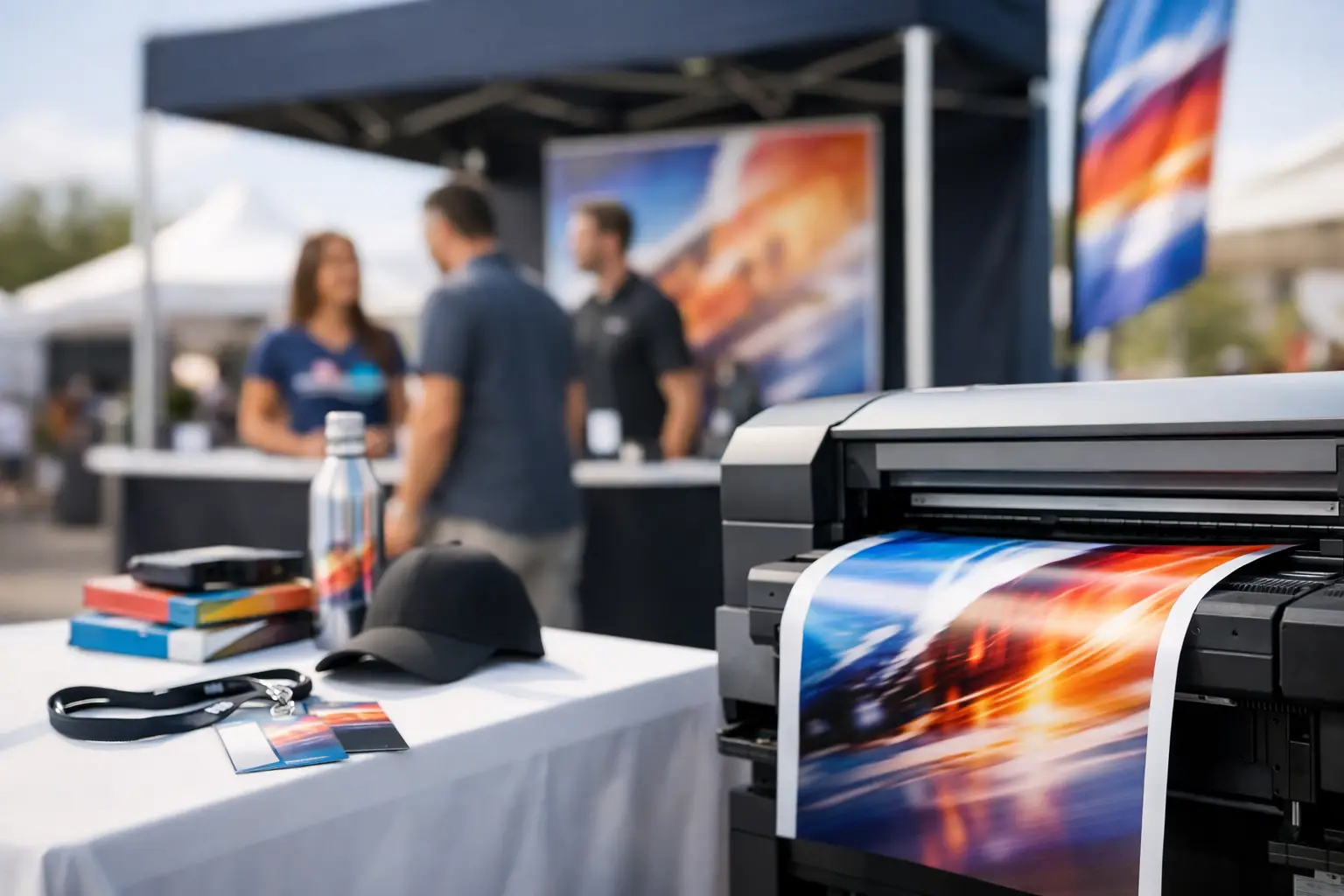
A registration table can set the tone before a guest says a word. A crisp event badge, well-made lanyard, and staff shirt in the right brand colors signal that the experience has been planned properly. That is what effective event printing does: it turns practical event materials into visible proof of a brand that is organized, welcoming, and ready to deliver.
For marketing teams, HR departments, procurement teams, and event coordinators, the challenge is rarely finding one item to print. The real challenge is coordinating every branded touchpoint under a deadline while keeping quality, cost, and consistency under control. From a small internal town hall to a large exhibition, the strongest results come from planning printed materials as one connected event system.
Event Printing Starts With the Guest Journey
Before choosing a print method or requesting quotes, consider what attendees will see, wear, carry, and take home. A guest may first encounter a directional sign, then receive a badge and lanyard, speak with a staff member in branded apparel, and leave with a useful gift. Each item has a different purpose, but together they create one brand impression.
This approach helps avoid a common issue: ordering promotional items independently and discovering that colors, logos, or production finishes do not match. A navy blue T-shirt that differs noticeably from a booth backdrop, for example, can make a well-funded event feel pieced together. Sharing approved artwork, color references, and brand guidelines with one production partner helps maintain a more consistent presentation.
The audience also matters. For an employee appreciation event, comfortable custom apparel and useful gifts may carry more value than large-format display materials. For a trade show, booth graphics, lead-collection tools, staff uniforms, and attention-grabbing giveaways are often higher priorities. For schools and community programs, clear identification items such as lanyards, shirts, and bags can make operations easier while building a sense of belonging.
Choose Products Based on What the Event Needs
Not every branded item needs to do the same job. Event materials usually fall into three practical categories: operational essentials, brand visibility pieces, and take-home merchandise.
Operational essentials keep the event running. These can include name badges, lanyards, wristbands, signage, table materials, staff shirts, and directional displays. They may not be the most glamorous part of the order, but they often have the biggest impact on guest flow and staff coordination. If people cannot find the registration counter or distinguish event crew from attendees, the experience becomes harder than it needs to be.
Brand visibility pieces create a stronger physical presence. Exhibition booth graphics, backdrops, banners, display counters, and branded uniforms help a business stand out in busy venues. Their purpose is not simply to place a logo in a room. They should make it easy for visitors to understand who you are, what you offer, and where to engage with your team.
Take-home merchandise extends the event after it ends. Tote bags, drinkware, notebooks, electronics accessories, travel items, and premium gifts can all work well when chosen with the audience in mind. A useful item used repeatedly can generate more ongoing exposure than a novelty giveaway that is discarded after the event. The right choice depends on the campaign, the recipient profile, and the budget available per person.
Balance Appeal With Practicality
The most expensive item is not automatically the best giveaway. A premium gift may suit a client appreciation dinner or executive program, while a high-volume public event may benefit more from a durable, cost-effective item with broad appeal. Quantity, audience size, delivery method, and storage requirements should shape the decision.
It is also worth considering how guests will carry the item. Large or fragile gifts can create friction at a convention or roadshow. Compact items, wearable products, and reusable bags are often easier to distribute. A knowledgeable supplier can help compare options before production begins, rather than after a budget has already been committed.
Select the Right Print Method for the Item
Print quality is influenced by more than the artwork file. The product material, logo size, number of colors, order quantity, and intended use all affect which customization method is most suitable.
Screen printing is often a strong choice for larger runs of T-shirts, tote bags, and fabric items with bold designs. It delivers durable color coverage and can be cost-efficient at volume. However, complex artwork with many color changes may require a different approach.
Embroidery gives polos, jackets, caps, and uniforms a professional, textured finish. It is particularly suitable for corporate apparel that will be worn repeatedly. Fine details and very small text can be challenging in embroidery, so artwork may need to be adjusted for clarity.
Heat transfer and digital printing can be useful when artwork includes detailed graphics, gradients, photographs, or smaller order quantities. They can also support faster customization for selected event applications. The best option depends on the garment or product, as well as how long the finished item needs to last.
For premium gifts, printing may involve engraving, UV printing, pad printing, or other specialized methods. These finishes can elevate an item, but they also have different limitations around surface shape, print area, and color reproduction. Asking for guidance early prevents avoidable compromises later in the process.
Plan for Artwork, Quantities, and Lead Times Early
Event schedules have little room for production delays. An approved design that arrives late can affect not only printed merchandise but also packaging, delivery coordination, booth installation, and on-site preparation. The earlier a team can confirm core details, the more choices it will have.
Start with the event date, required delivery date, venue requirements, and distribution plan. Then confirm product quantities, sizes for apparel, artwork placement, and whether names or individual details need to be personalized. Personalized badges, apparel, and gifts require accurate data collection and usually need additional checking before production.
Artwork should be supplied in a high-resolution, production-ready format whenever possible. Vector files are typically preferred for logos because they can be scaled cleanly across a small pen, a polo shirt, and a large booth panel. If the only available artwork is a low-resolution image, it may need to be recreated or refined before printing.
Build a buffer into quantity planning. For staff shirts, ordering a small number of extra pieces in common sizes can be useful when team members change or new helpers are added. For registration items, a reasonable allowance for walk-ins, replacements, and last-minute attendees can prevent an awkward shortage at the event.
When Live Event Printing Makes Sense
Live on-site printing changes merchandise from a giveaway into an activity. Guests can choose a design, add a name, or watch an item being customized in front of them. This creates a reason to stop at a booth, start a conversation, and share the experience with others.
It is especially effective for roadshows, retail activations, campus events, product launches, and exhibitions where engagement matters as much as distribution. A customized shirt, tote bag, or other item generally feels more personal than a pre-packed giveaway.
There are trade-offs. Live printing requires space, power access, event approvals, operating time, stock management, and a process for managing queues. Not every venue or campaign needs it. If the priority is distributing thousands of items quickly, pre-printed merchandise may be more efficient. If the priority is attracting attention and creating a memorable interaction, on-site customization can justify the added planning.
A capable event partner should assess the venue layout, expected foot traffic, product choices, and turnaround expectations before recommending a setup. The goal is a positive guest experience, not a crowded activation area with long waits.
Reduce Risk With One Coordinated Production Partner
Managing separate suppliers for apparel, gifts, lanyards, signage, and booth setup can create avoidable pressure. Every additional handoff introduces another proofing process, another delivery schedule, and another point where brand details can be missed.
A one-stop approach gives coordinators a clearer view of the full order. It also makes it easier to align product recommendations with budget, confirm artwork across multiple items, and coordinate delivery or installation around the event timeline. Global Asia Printings supports this kind of end-to-end planning, from product sourcing and customization through event branding and on-site execution.
That does not mean every item must come from one catalog. The right partner should still advise when a simpler option is better, when a premium product is worth the investment, and when an alternative print method will produce a stronger result. Good guidance protects both the budget and the brand.
The best event materials do more than display a logo. They help people navigate, connect, participate, and remember the experience. Start with the moment you want guests to have, then build the printed details around it.