


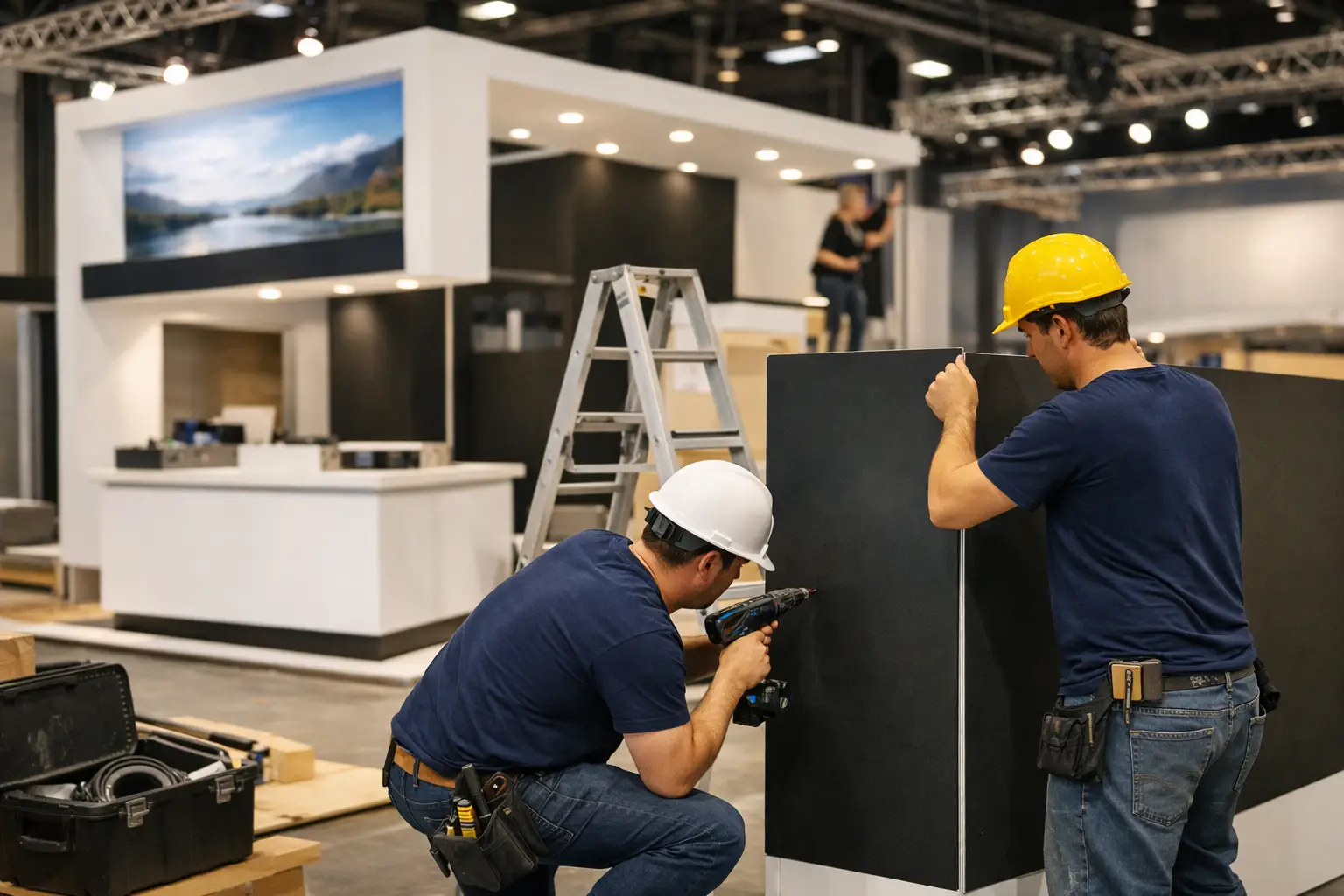
When booth components arrive late, graphics do not line up, or setup crews are waiting on missing instructions, the cost shows up fast – in overtime, rushed fixes, and a brand presence that feels improvised. That is why event booth installation services matter well before show day. For marketing teams, procurement leads, HR organizers, and event planners, installation is not a last-minute task. It is part of the event strategy.
A booth may look simple in a mockup, but the real work happens in sequencing, measurements, transport coordination, onsite handling, graphic placement, lighting checks, and teardown planning. If any one of those steps breaks down, the exhibit suffers. A well-managed installation service protects the investment already made in printing, fabrication, branded merchandise, and event staffing.
What event booth installation services actually cover
Many buyers assume installation means sending a crew to assemble a booth. In practice, the scope is broader. Reliable event booth installation services usually start with pre-event planning. That includes reviewing booth dimensions, confirming venue rules, checking loading dock schedules, aligning setup windows, and making sure the booth design can be installed within the allotted time.
From there, the service often includes logistics handling, onsite assembly, placement of printed branding, testing visual elements, and coordinating adjustments if conditions on the floor differ from the plan. In some projects, teardown and post-event packing are just as important as the build itself, especially when structures or graphics will be reused across multiple shows.
This is where experience matters. A booth is rarely just a backdrop. It may include counters, product display areas, banner stands, shelving, lightboxes, live demo zones, or branded apparel and giveaway distribution points. Each part affects traffic flow and brand presentation. Installation teams need to understand both the physical setup and the business purpose behind it.
Why installation quality affects brand perception
Visitors do not separate booth construction from your brand. If the structure looks uneven, graphics wrinkle, or the space feels cluttered, they read that as a reflection of the company itself. On the other hand, a booth that is clean, well-fitted, and ready before opening creates confidence before a single conversation starts.
This is especially true at trade shows, school fairs, recruitment events, conferences, and corporate roadshows where many brands compete for attention in the same hall. Your team may have strong messaging and quality promotional materials, but if the booth setup is rushed or incomplete, the presentation loses impact.
There is also a practical side. A correctly installed booth helps staff work better. Storage is where it should be, counters are stable, displays are visible, and merchandise can be handed out efficiently. Good installation supports operations, not just appearance.
The biggest risks of managing booth setup without proper support
Some businesses try to split event responsibilities across multiple vendors or internal teams to save money. Sometimes that works for a very simple display. Often, it creates more room for mistakes.
One common problem is fragmented responsibility. The printer handles graphics, another supplier delivers the structure, and a separate crew does the setup. If the final dimensions are off or artwork does not fit the frame correctly, each party may point elsewhere. The buyer is left solving the issue onsite, usually under time pressure.
Another risk is venue compliance. Different exhibition halls and event spaces have specific rules on setup hours, material restrictions, rigging access, power use, and dismantling schedules. Missing these details can delay entry or force changes on the day itself.
There is also the problem of underestimating timing. A booth that looks compact on paper can take longer to install than expected if it includes custom-printed panels, electrical components, or multiple branded sections. When schedules are tight, experienced coordination becomes more valuable than low headline pricing.
How to evaluate event booth installation services
Not all providers offer the same depth of support, so it helps to look beyond whether they can physically assemble a booth. A stronger partner will ask practical questions early. What are the venue requirements? Is the booth one-time use or reusable? Are there printed backdrops, counters, product displays, or live activation elements that need alignment? Who is responsible for teardown, repacking, and storage?
A dependable provider should also be comfortable advising on trade-offs. For example, a custom setup may create more visual impact, but a modular booth can be easier to transport, faster to install, and more cost-effective across repeated events. Neither option is automatically better. The right choice depends on frequency of use, budget, and how much flexibility the brand needs.
Responsiveness matters too. Event work runs on deadlines, approvals, and moving parts. If communication is slow before the event, it rarely improves during setup week. Buyers should look for teams that can give clear timelines, explain what is included, flag possible risks, and confirm installation requirements without excessive back-and-forth.
When bundled support makes more sense
For many organizations, the most efficient option is to work with one vendor that can manage printing, branded materials, and booth setup together. This reduces handoff errors and shortens the path between design approval and onsite execution.
If the same partner is handling event branding, there is better control over output consistency. The team installing the booth already understands the dimensions of the printed graphics, the placement of brand elements, and the purpose of each section. That saves time and avoids the common mismatch between concept and final installation.
This approach is especially useful for businesses running product launches, roadshows, internal campaigns, recruitment events, or trade fairs with multiple deliverables. Booth graphics, staff shirts, lanyards, promotional giveaways, and signage all need to look coordinated. Managing those items through separate vendors may appear flexible, but it often introduces unnecessary delays.
For companies that want both production support and onsite execution, a provider like Global Asia Printings can be valuable because the service model is built around end-to-end event delivery rather than isolated print jobs. That matters when deadlines are short and brand consistency needs to hold across every touchpoint.
Planning details that save time and budget
The best event booth installation services do not wait until setup day to solve problems. They reduce avoidable issues during planning. Accurate artwork preparation is one example. Graphic files need the right dimensions, safe areas, and production settings before they ever reach the venue. A small mismatch in file setup can become a visible problem on a large display wall.
Transport planning is another. Booth components should be packed and labeled according to the installation sequence, not simply boxed for shipping convenience. This speeds up unloading and makes onsite assembly more efficient.
Budget control also benefits from early planning. Last-minute labor extensions, urgent reprints, and onsite corrections are usually more expensive than doing the groundwork properly. Buyers often focus on the installation fee itself, but the bigger savings come from preventing disruptions that affect the whole event.
Event booth installation services for different event types
A trade show booth usually prioritizes visibility, fast visitor engagement, and repeatable setup across venues. A corporate internal event may need cleaner wayfinding, branded stage elements, and spaces that support staff interaction rather than lead capture. School and institutional events may require practical durability, straightforward messaging, and tighter budget control.
That is why installation planning should match the event objective. A large custom structure is not always the right answer. Sometimes a compact, well-branded setup with efficient counters, strong print visibility, and easy movement performs better than a more complicated design.
Experienced providers recognize this early. They help buyers avoid overbuilding for small spaces and underpreparing for high-traffic events. The goal is not to install the biggest booth. The goal is to install the right one, correctly, on time, and in a way that supports the event outcome.
What a strong setup partner should leave you with
By the time your team arrives, the booth should feel ready, not fragile. Graphics should be fitted correctly, surfaces should be clean, key brand elements should be visible, and the layout should support conversation and movement. If adjustments are needed, they should be manageable rather than chaotic.
That level of readiness comes from preparation, technical experience, and accountability. It also comes from treating installation as part of brand execution, not just manual labor. For buyers juggling procurement timelines, event approvals, and stakeholder expectations, that distinction makes a real difference.
If you are planning an upcoming exhibit, roadshow, or branded activation, the right installation support will do more than put structures in place. It will give your team room to focus on the event itself, which is where the real value begins.