


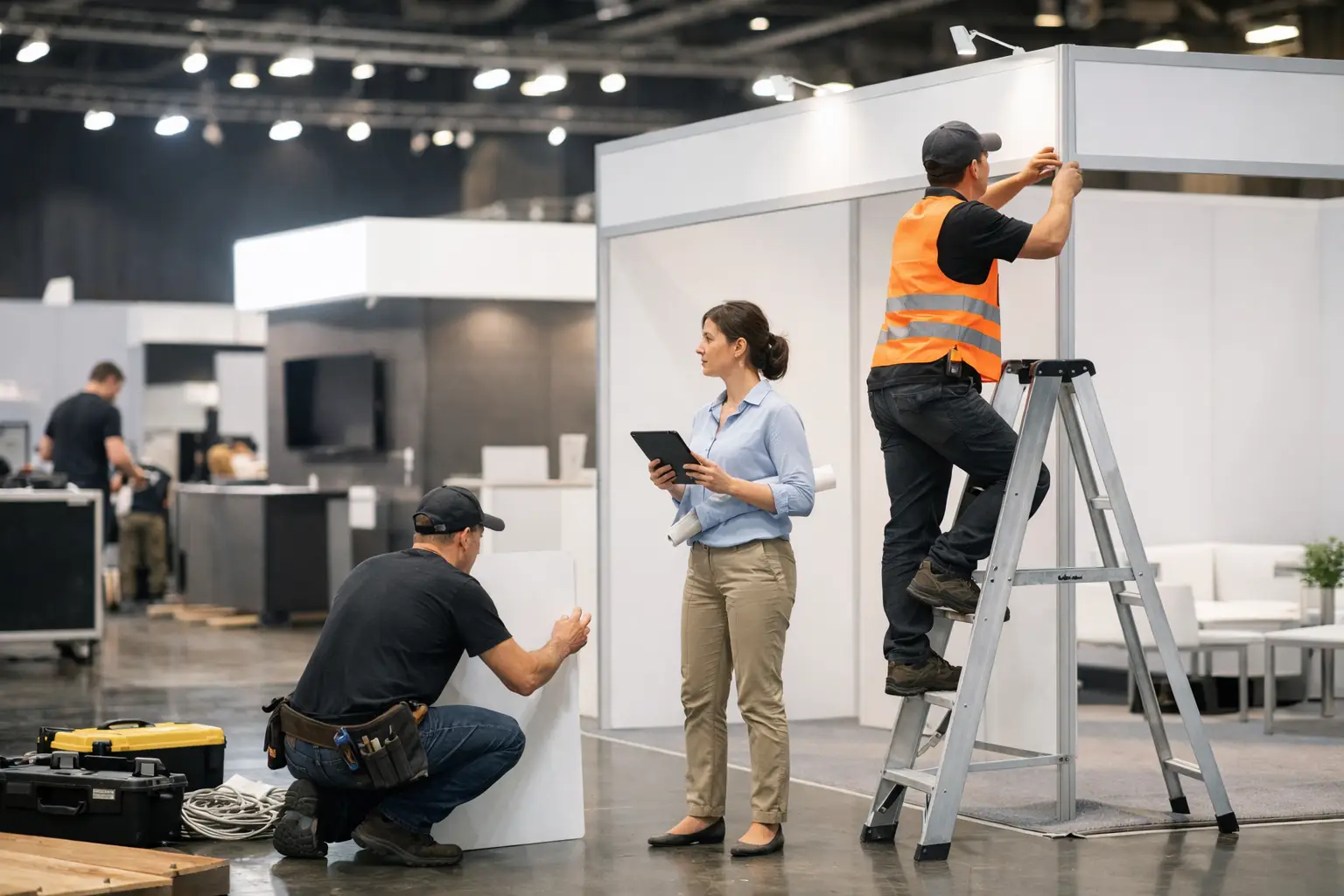
The difference between a busy booth and an ignored one is usually decided before the event hall opens. A strong exhibition booth setup guide helps teams avoid the common problems that cost time and results – poor traffic flow, missing print materials, weak branding, and last-minute scrambling on show day.
For marketing teams, event planners, procurement leads, and administrators, booth setup is not just a design task. It is an operational project with moving parts: print production, hardware, staffing, giveaways, installation timing, electrical planning, and on-site troubleshooting. When those pieces are managed together, the booth feels polished and the team can focus on conversations instead of corrections.
What an exhibition booth setup guide should actually solve
A useful exhibition booth setup guide should do more than tell you where to place a backdrop. It should help you connect event goals with physical decisions. If your goal is lead generation, your booth layout should make it easy for visitors to stop, speak, and leave their details. If your goal is product education, you may need demo space, printed handouts, and a clearer messaging sequence.
This is where many teams lose efficiency. They approve graphics first, then think about furniture, then realize the product samples have nowhere to go, then discover the power points are in the wrong location. Booth setup works best when design, production, and event execution are planned as one project.
Start with the event objective, not the booth size
A 10×10 booth can outperform a larger space if the setup matches the purpose. Before choosing walls, counters, screens, or promotional items, define what success looks like. Some exhibitors want maximum foot traffic. Others want scheduled meetings with qualified prospects. Some need a strong brand presence for recruitment, trade associations, or internal showcases.
Once the objective is clear, the setup becomes easier to prioritize. A lead-focused booth often benefits from open access, simple messaging, and a quick interaction point. A product-driven booth may need shelving, sample display, and room for longer discussions. A brand-awareness booth may lean more heavily on visual impact, apparel, and coordinated printed materials.
Booth layout: make entry easy and messaging obvious
Visitors make decisions fast. If the booth looks crowded, confusing, or too sales-heavy from a distance, many will keep walking. The layout should invite entry without making people guess where to stand or what your business offers.
Keep the front of the booth open where possible. Tall structures, tables, or product stacks placed directly at the edge can create a visual barrier. Counters work well, but they should support interaction rather than block it. If you need storage, plan concealed space instead of letting extra boxes, bags, or staff items spill into visitor view.
Your main message should be readable in seconds. That usually means one clear headline, supported by a few concise benefit statements. Trying to explain every service on the backdrop often weakens the whole presentation. If you offer a broad range of products or services, use the top-level message to attract interest, then let brochures, conversation, or screens handle the detail.
Think about movement inside the booth
Good booths have a natural flow. People should know where to look first, where to stand, and what to do next. If there is a demo, create enough space around it so people can pause without blocking traffic. If there is a registration or lead capture station, place it where staff can engage visitors without causing a queue at the aisle.
This is also where trade-offs matter. An open booth can feel welcoming, but it may reduce wall space for graphics. A large demo area can increase engagement, but it may limit room for private conversations. The right balance depends on the event audience and the type of interaction you want.
Branding should be consistent across every visible touchpoint
A polished booth is rarely built by the backdrop alone. Visitors notice the full environment: counters, table covers, posters, staff apparel, name badges, handouts, packaging, and giveaways. When those pieces match in color, tone, and print quality, the booth feels credible and well-managed.
Inconsistent branding usually happens when materials are sourced separately or approved too late. One vendor handles the backdrop, another prints flyers, someone else orders shirts, and the final result looks disconnected. For companies managing real deadlines, it is often more efficient to coordinate printing, customization, and setup through one experienced partner that can check artwork consistency across all items.
Print readiness matters more than most teams expect
Booth graphics are unforgiving. Low-resolution files, incorrect dimensions, and unclear brand guidelines become very visible at large scale. The same applies to brochures, table signage, and branded merchandise. Before production starts, confirm artwork sizing, bleed requirements, color expectations, and logo placement.
This step is especially important when multiple stakeholders are approving assets. Marketing may focus on message accuracy, procurement may focus on budget, and event teams may focus on deadlines. Someone still needs to confirm that all files are actually production-ready.
Plan the operational details early
The strongest booth designs can still fail on setup day if logistics are treated as an afterthought. Confirm what the venue provides and what you need to bring in. That includes booth dimensions, access times, loading rules, power supply, internet availability, lighting restrictions, and any rigging or height regulations.
Delivery timing also matters. If printed graphics, hardware, apparel, and giveaway items arrive separately with no coordinated schedule, setup becomes harder to control. Build a simple production timeline that includes design approvals, printing lead time, packing, delivery, installation, and a buffer for changes.
For many businesses, this is where a practical supplier relationship becomes valuable. A company such as Global Asia Printings can support not just printed output but the coordination around it, which reduces the back-and-forth that often happens when event materials and booth execution are split across multiple vendors.
Staff the booth for the experience you want visitors to have
Even the best booth setup cannot compensate for an unprepared team. Staff should know the event objective, key talking points, lead capture process, and who handles different visitor types. They should also understand the physical setup so they can work with it properly.
If there are samples, showpieces, or merchandise packs, decide who replenishes them. If there is a screen or interactive element, make sure someone owns it. If there are premium prospects expected, assign a point person in advance. Booth staffing works best when it is treated like part of the setup, not an entirely separate issue.
Presentation matters too. Coordinated branded apparel can make a booth look more organized and help visitors identify the team quickly. It is a small detail, but at crowded exhibitions, small details influence first impressions.
Use promotional items carefully
Giveaways can increase booth traffic, but they need to fit the event and the audience. A branded item should support recall, not just create clutter. Useful products such as drinkware, bags, stationery, tech accessories, or event essentials often perform better than novelty items with no clear value.
The right choice depends on budget and event context. High-volume public expos may call for cost-efficient items with broad appeal. Client-facing trade shows may justify fewer but better-quality gifts. It also helps when the giveaway ties back to your industry, campaign, or message rather than feeling random.
Test the booth on paper before show day
One of the simplest ways to avoid setup issues is to review the full booth plan in advance. That means checking where each element goes, what arrives when, who installs it, and what could go wrong. Walk through the visitor journey from the aisle to the conversation to the follow-up.
Ask practical questions. Can staff reach storage without stepping through the main interaction area? Is the lead capture device charged and visible? Are brochures easy to grab without making the counter messy? Do the signs still make sense from ten feet away? These checks take less time than fixing mistakes on site.
Build for efficiency, not just appearance
A booth should look good, but it also needs to function under event conditions. That means handling foot traffic, surviving a long day, supporting staff movement, and keeping materials tidy. The best setups are usually the ones that look composed because the operational decisions were made early.
That is why a practical exhibition booth setup guide is less about decoration and more about coordination. When layout, branding, print production, merchandise, staffing, and installation are aligned, the booth becomes easier to manage and more effective for the business behind it.
The smartest booth setup is the one that lets your team show up prepared, stay focused, and make the most of every conversation on the floor.