


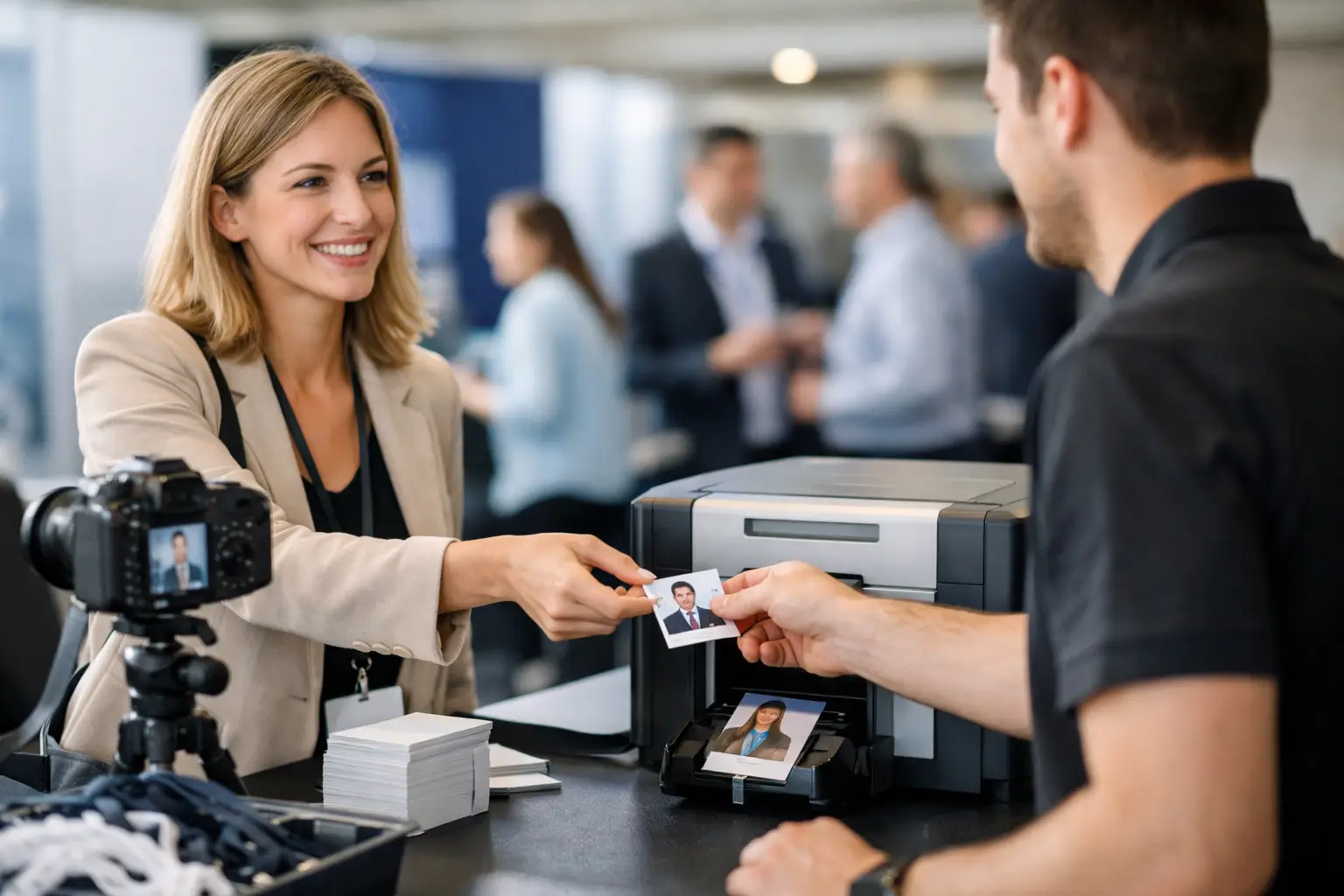
A crowded conference floor gives you only a few seconds to earn attention. A strong conference live printing example shows why static giveaways often get ignored while personalized items create a line, a conversation, and a reason for attendees to stay at your booth longer.
What a conference live printing example actually looks like
Picture a two-day B2B conference with 1,500 attendees, multiple sponsors, and a steady flow of traffic between keynote sessions and networking breaks. One exhibitor decides not to rely on pre-printed giveaways alone. Instead, they set up a live printing station inside the booth and offer on-demand customization for event T-shirts and tote bags.
Attendees can choose from three approved design layouts, add their first name or company name, and watch the item being printed on the spot. The print area is visible from the aisle, so the production process becomes part of the attraction. What starts as a merchandise activity quickly becomes a crowd magnet.
That is a practical conference live printing example because it does three jobs at once. It draws people in, gives booth staff an easy opener for conversation, and sends attendees away with something more memorable than a standard brochure or generic gift.
Why live printing performs differently at conferences
Most conference giveaways fail for a simple reason. They are easy to take and just as easy to forget. When an item is personalized in front of the attendee, the value changes. It feels less like a handout and more like a limited event experience.
From a marketing point of view, that changes booth behavior. People stop to watch. Others ask what is happening. Staff have more time to qualify visitors while they wait. The branded item becomes proof that the booth offered something worth engaging with, not just collecting.
There is also a practical business advantage. Personalized printing can reduce waste when compared with large volumes of pre-printed stock that may not all be used. You still need event-ready quantities and good forecasting, but on-site production gives you more control over what actually gets produced.
Breaking down the setup behind this conference live printing example
For most corporate events, the best live printing activations are simple enough to run under pressure. That usually means selecting one or two item categories, limiting design choices, and setting a clear workflow before the event starts.
In this conference live printing example, the exhibitor chose cotton tote bags for general attendees and premium T-shirts for qualified leads, media guests, and scheduled partners. That decision helped control cost while still creating a strong perceived value.
Product choice matters more than novelty
Not every printable product works well in a conference setting. The best options are useful, quick to customize, and easy for attendees to carry through the venue. T-shirts, tote bags, pouches, notebooks, and selected fabric items tend to work well because they balance visibility with practicality.
A flashy product can attract attention, but if it slows down production or creates quality issues, it becomes a liability. Conference environments are fast-moving, and activation teams need items that can be printed consistently over many hours.
Artwork needs to be prepared for speed
Good live printing is not improvised design. The graphics, print placements, name fields, and approval rules should be settled before move-in day. If the event team has to redesign every item at the booth, lines get longer and production errors increase.
The better approach is to pre-build a small set of approved templates. Attendees then personalize within those boundaries. This keeps branding consistent while still delivering the customization they want.
Booth design should support the printing experience
One mistake companies make is treating live printing as a side table. It works better when the production process is visible and integrated into the booth layout. People are naturally curious when they can see a product being made.
The print station should be accessible without blocking the rest of the booth. You need space for waiting, collection, equipment handling, and staff conversations. If the queue cuts across the aisle or interferes with sales discussions, the activation creates friction instead of value.
What attendees experience on the day
The attendee journey is where a live printing concept succeeds or fails. In a well-run setup, the process feels quick, organized, and worth the wait.
A visitor walks up after seeing someone collect a freshly printed tote bag. A staff member explains the offer in one sentence, confirms the available item options, and asks for a name. While the order is queued, another team member starts a short conversation about the attendee’s company, role, or buying timeline.
A few minutes later, the item is printed, checked, and handed over. The attendee leaves with a customized product and a much stronger memory of the brand than they would get from taking a standard flyer.
That is the real value of a conference live printing example. The printed item is only part of the result. The bigger gain is the added dwell time and the improved quality of booth interaction.
Operational realities that decision-makers should plan for
Live printing can be highly effective, but it is not a fit for every event in the same way. The right solution depends on venue rules, event duration, target audience, staffing, and expected traffic volume.
If your booth is likely to see light traffic, a full-scale live printing setup may be more than you need. In that case, a smaller personalization station or scheduled print sessions might make more sense. If your booth is expected to be very busy, then speed and queue management become critical from the start.
Power access, floor space, ventilation, setup timing, and equipment transport also need early confirmation. Conferences often have tight exhibitor move-in windows, and any activation that requires technical preparation should be planned alongside the booth build, not added at the last minute.
Staffing is another common pressure point. You need more than an operator. A successful setup usually requires a production specialist, a front-of-booth coordinator, and booth staff who can convert the extra traffic into real conversations. Without that structure, the activation may look busy but produce limited business value.
How to measure whether the activation worked
The simplest way to judge live printing is by crowd size, but that is not enough for business events. A better evaluation combines engagement, lead quality, and post-event usefulness.
Start with dwell time. If visitors stay longer because they are watching or waiting for production, your team has more room to qualify them. Then look at the number of meaningful conversations started through the activation rather than around it. If staff are too busy managing the line to engage prospects, the setup needs adjustment.
You should also compare item redemption with lead capture. A good activation gives people a reason to share their details or participate in a campaign without making the process feel transactional. Finally, consider the after-event effect. If attendees continue using the tote bag or wearing the shirt, the brand exposure extends beyond the conference floor.
Common mistakes in conference live printing
The most frequent issue is trying to offer too many options. More designs, more products, and more personalization fields may sound appealing, but they slow everything down. At a conference, speed is part of the experience.
Another mistake is choosing items based only on budget. Low-cost products that print poorly or feel disposable can weaken the activation. The goal is not just to produce volume. It is to give attendees something they actually want to keep.
There is also the problem of separating the activation from the event objective. If the live printing station draws a crowd but does not support lead generation, sponsor visibility, or attendee engagement goals, it becomes an expensive attraction rather than a smart event tool.
For companies managing merchandise, printing, and booth execution through one partner, these issues are easier to control because product selection, artwork planning, and on-site logistics can be aligned from the beginning. That is where an experienced event production team adds real value.
When this approach makes the most sense
A conference live printing example is most effective when you need to stand out in a crowded exhibitor hall, increase booth interaction, or give sponsors and attendees a more memorable branded experience. It works especially well for product launches, partner showcases, recruitment events, internal corporate conferences, and large trade show booths where engagement matters as much as foot traffic.
For some events, pre-produced merchandise is still the better option. If the venue is restrictive, the program is very short, or the audience is highly time-sensitive, a simpler giveaway strategy may be more practical. The point is not to force live printing into every conference plan. The point is to use it when the experience itself supports your event goals.
At its best, live printing turns merchandise into a reason to stop, interact, and remember the brand later. If you are planning an event where attention is expensive and first impressions happen fast, that is a smart place to start.