


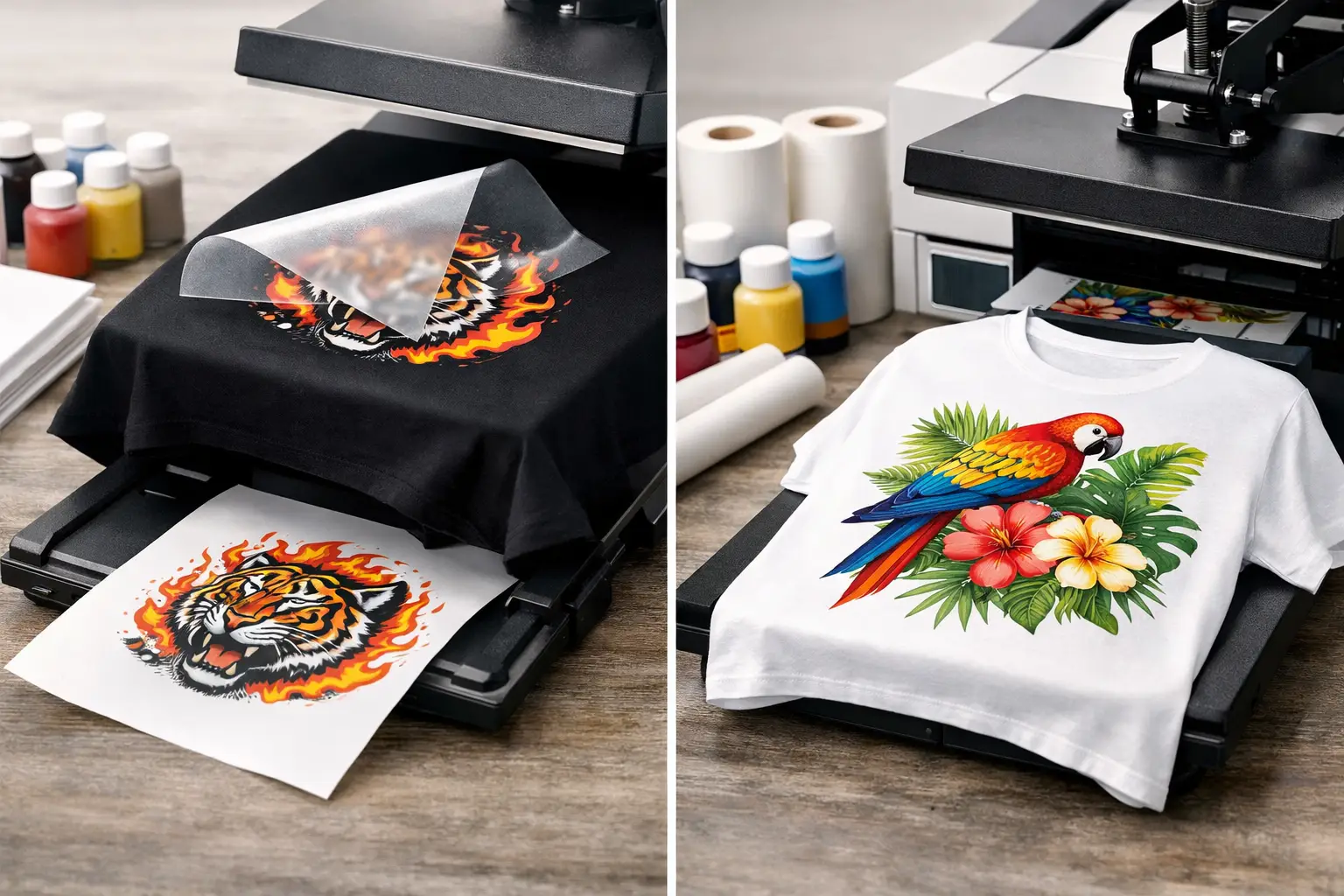
If you are pricing a run of branded shirts for a campaign, staff event, or client giveaway, the question usually comes up fast: dtf vs sublimation printing – which one actually makes sense for the job? The right answer depends less on trends and more on what you are printing, how the item will be used, and how much flexibility you need across sizes, fabrics, and artwork.
For corporate buyers, this choice affects more than print appearance. It influences garment selection, budget control, lead time, and whether the finished item still looks presentable after repeated wear and washing. When you are ordering for teams, events, schools, or promotional programs, those details matter.
DTF vs sublimation printing at a glance
DTF stands for direct to film. The design is printed onto a special film, coated with adhesive powder, then heat pressed onto the garment. It works well on a wide range of fabrics and is often chosen when artwork is detailed, colorful, or needed across mixed garment types.
Sublimation printing uses heat to turn dye into gas, bonding it directly into polyester fibers. Instead of sitting on top of the fabric, the print becomes part of the material itself. That gives sublimation a very smooth feel and strong color performance, but it comes with stricter material requirements.
On paper, both can produce full-color graphics. In practice, they solve different business needs.
The biggest difference is fabric compatibility
If your order includes cotton T-shirts, cotton-rich polos, canvas bags, or mixed-fabric apparel, DTF is usually the more flexible choice. It can be applied to cotton, polyester, blends, and many common promotional textiles without forcing you into one narrow product category.
Sublimation is much more selective. It performs best on white or very light-colored polyester. If you want a dark navy team shirt, a black event tee, or a cotton uniform top, sublimation is generally not the right route.
This is where many buyers lose time. They choose a print method first, then realize it limits the products they can use. A better approach is to start with the item requirement. If your campaign needs moisture-wicking polyester jerseys, sublimation may be ideal. If you need flexibility across multiple garment styles, DTF often gives you more room to move.
When sublimation has the advantage
Sublimation is especially strong for sportswear, performance tees, and lightweight polyester apparel where all-over color, gradient effects, and soft hand feel matter. Because the dye penetrates the fibers, the print does not create a layer on top of the fabric.
That matters when comfort is part of the brief. For activewear, roadshow uniforms in warm weather, or event shirts worn for long hours, that lighter feel can be a real advantage.
When DTF is the safer business choice
DTF is often the practical answer for company merchandise programs because it handles variety better. If your order includes cotton tees for staff, tote bags for giveaways, and a few different apparel colors, DTF can simplify production without forcing a full product redesign.
For procurement teams and event organizers, that flexibility can reduce back-and-forth and keep the order moving.
Print feel, appearance, and brand presentation
Sublimation has one of the softest finishes available because the ink becomes part of the fabric. There is no raised texture, and large printed areas still feel breathable. On the right polyester garment, this produces a clean and premium look.
DTF creates a transfer layer on the material. Modern DTF can still look sharp and professional, especially for logos, illustrations, and full-color artwork, but it does have more surface presence than sublimation. On some applications, that is not a problem at all. For promotional tees, event shirts, staff apparel, and branded merchandise, the result can be excellent.
The decision comes down to what your audience will notice. If the garment itself is part of the brand experience, such as a premium sports jersey or retail-style polyester piece, sublimation may look and feel more refined. If the priority is getting strong branding across practical garment options, DTF is often the more balanced choice.
Color performance and artwork detail
Both methods can reproduce vibrant artwork, but they behave differently.
Sublimation is known for bright, saturated color on white polyester. It handles gradients, photo-style graphics, and large edge-to-edge designs very well. Because the dye fuses into the fibers, the finish can look especially smooth.
DTF also performs well with complex artwork, including multicolor logos, fine lines, and detailed illustrations. It is a strong option for businesses that need sharp brand marks without the setup complexity of more traditional methods.
The trade-off is background control. Sublimation does not print white ink, so the garment color affects the final result. DTF can maintain design visibility on a much wider range of apparel colors, including black and darker corporate shades. If brand consistency matters and your logo must appear clearly on dark garments, DTF usually has the edge.
Durability in real-world use
For repeated washing and daily wear, both methods can hold up well when produced correctly and matched to the right application.
Sublimation has a durability advantage on polyester because the print becomes part of the fabric. It is highly resistant to cracking and peeling. That makes it well suited for sportswear, active uniforms, and garments that will be washed often.
DTF durability has improved significantly, and a well-produced transfer can last very well under normal use. Still, because it sits on top of the garment, the long-term performance depends heavily on print quality, pressing conditions, and care instructions. On heavily stretched areas or lower-quality garments, wear can become more visible over time.
For one-off event apparel, promotional shirts, and general branded merchandise, DTF durability is usually more than sufficient. For high-use polyester uniforms where wash performance is critical, sublimation may offer more peace of mind.
Cost and order planning
There is no universal winner on price because costs depend on fabric, quantity, artwork size, and garment type.
DTF can be cost-effective for short to medium runs, especially when the same artwork needs to go on different apparel types. It is also useful when you want full-color prints without adding setup complexity for every design variation.
Sublimation can be efficient when the order is already built around polyester products and light-colored garments. If you are customizing performance apparel at scale, the process can make strong commercial sense.
Where budgets often get affected is not the print itself but the product restriction. If sublimation forces you into specific garments that do not fit your price point or brand brief, the total project cost may rise. If DTF lets you use a broader apparel range that already fits your event plan, it may be the more economical path overall.
Turnaround and operational flexibility
For businesses working against launch dates and event deadlines, flexibility matters as much as print quality.
DTF is often easier to deploy across mixed orders. That makes it helpful for campaigns where product choices shift, staff counts change, or last-minute top-ups are likely. If you need branding across several apparel categories without redesigning around fabric limitations, DTF keeps the operation simpler.
Sublimation works best when the order is clearly defined from the start – typically polyester, light base colors, and artwork planned for that format. When those conditions are met, it can run efficiently. But it is less forgiving if the brief changes halfway through.
For many corporate orders, the simplest production path is the one that prevents delays.
How to choose between DTF and sublimation printing
If you need cotton or mixed fabrics, choose DTF. If you need dark garments, choose DTF. If your order includes multiple product types and you want one practical solution, DTF is usually the better fit.
If you need lightweight polyester apparel with a soft feel, bright all-over graphics, and strong wash durability, sublimation is often the better option. It is especially effective for sportswear, performance uniforms, and polyester event apparel designed around white or light-colored garments.
For many organizations, the decision is not really about which method is better in general. It is about which one supports the actual use case with fewer compromises.
The best print method starts with the brief
A marketing team ordering campaign tees, an HR department planning onboarding kits, and an event organizer sourcing staff uniforms may all get different answers to the same dtf vs sublimation printing question. That is normal. The right recommendation should come from garment type, artwork style, wear conditions, and timeline – not from a one-size-fits-all preference.
At GAPS, that is how we approach production decisions: start with the application, align it with budget and lead time, and recommend the method that will hold up where it counts. A print method should make your order easier to execute, not harder to manage.
If you are unsure which direction fits your project, the most useful next step is to compare your fabric, logo treatment, and deadline before choosing the print process. That one decision can save rework later and help the final product do its job well.