


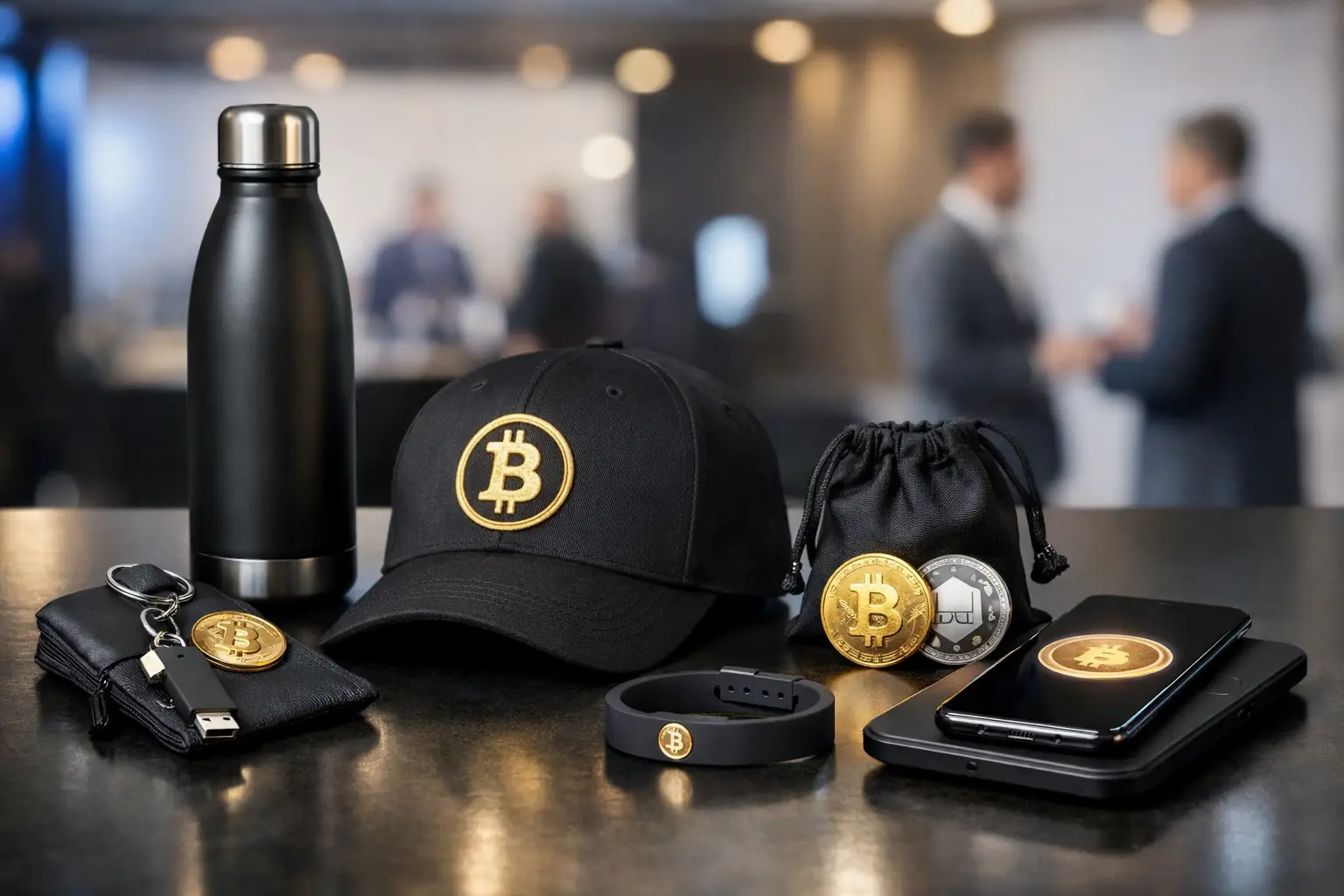
Most event giveaways get ignored within hours. At cryptocurrency conferences, token launches, exchange meetups, and Web3 networking sessions, that problem gets worse because the audience is already overloaded with brands competing for attention. The right promo gifts for cryptocurrency events need to do more than carry a logo. They need to feel relevant, useful, and credible in a space where innovation matters and low-effort branding stands out for the wrong reasons.
For marketing teams, procurement staff, and event organizers, the challenge is practical. You need merchandise that fits the audience, matches the event format, and can be produced on time without turning vendor coordination into another project. That means choosing items that align with crypto culture while still delivering the basics every event brand needs – visibility, recall, and value for money.
What makes promo gifts for cryptocurrency events different
Crypto audiences tend to be highly digital, highly mobile, and often skeptical of anything that feels generic. A basic pen may still have a place at some trade shows, but it rarely becomes memorable at a blockchain event where every exhibitor is trying to appear future-facing. Your merchandise has to bridge two priorities at once: practical use and brand relevance.
That does not mean every item needs to look flashy or expensive. In fact, overdesigned gifts can miss the mark if they feel gimmicky. The stronger approach is to choose products that support how attendees actually move through the event. They carry devices, scan QR codes, take notes, travel between venues, and continue conversations after the conference ends. Promo items that fit those behaviors tend to perform better than novelty pieces with no clear use.
There is also a trust factor. In crypto, perception matters. If your giveaway feels cheap, attendees may apply that same judgment to your platform, token, fund, or technology. Print quality, packaging, and presentation matter more than many teams expect.
The best gift categories for crypto audiences
Useful technology accessories are usually one of the safest choices. Power banks, charging cables, webcam covers, RFID card holders, and branded phone stands match the daily habits of a digitally engaged audience. These items are also easy to customize with clean artwork and can be tiered by budget. A compact phone accessory may work for mass booth traffic, while a higher-value power bank can be reserved for VIP guests or investor meetings.
Travel-friendly products also make sense because cryptocurrency events often attract regional and international attendees. Luggage tags, passport holders, travel adapters, pouches, and reusable drinkware can carry your branding well without feeling forced. If the event runs across multiple days, these items become even more useful because attendees are actively commuting, networking, and moving between sessions.
Apparel can work very well, but only when the design is strong. A standard event T-shirt with oversized branding may get worn once, if at all. A more thoughtful approach is to create wearable pieces with subtle placement, better garment quality, and event-specific graphics that people would choose outside the venue. Caps, jackets, and premium tees often outperform low-cost shirts because they feel less disposable.
Desk and workspace merchandise is another good option, especially for B2B crypto brands speaking to founders, developers, analysts, or institutional partners. Notebook sets, mouse pads, cable organizers, and laptop sleeves connect well with work routines. The key is to avoid making them look like old-fashioned corporate handouts. Minimal branding and quality materials usually deliver a better result.
How to match the gift to the event format
Not every crypto event needs the same type of merchandise. A product launch, a blockchain expo booth, and a closed-door investor roundtable all call for different gifting strategies.
At large exhibitions, you generally need two levels of merchandise. The first is a broad-reach giveaway for traffic generation. This should be affordable, easy to distribute, and genuinely useful, such as lanyards, tote bags, stickers, badge holders, or small tech accessories. The second is a more selective gift for qualified leads, speakers, or partners. This is where premium notebooks, power banks, apparel, or curated gift sets can make more sense.
For VIP networking events or private blockchain briefings, the expectations are different. Guests are not collecting large volumes of free items. They are evaluating the professionalism of the host. Here, presentation matters as much as product choice. A boxed set with a premium pen, notebook, and small tech item can feel far more appropriate than several unrelated giveaways.
At hackathons and developer-focused events, function should lead. Participants value items they can use immediately, such as drinkware, charging accessories, comfortable apparel, notebooks, and backpacks. These environments are active and long-hour by nature, so practical gifts tend to get used on-site, which increases brand visibility throughout the event.
Avoid the common mistakes
The biggest mistake is choosing merchandise based only on unit cost. A cheaper product that gets discarded quickly is often worse value than a slightly better item that creates extended brand exposure. Cost still matters, of course, especially for large volumes, but price should be weighed against usability, print finish, and how well the item fits the audience.
Another common issue is putting too much branding on the product. In crypto, many attendees prefer clean, understated design. If the item looks like an obvious ad, its chances of being reused drop. Small logos, sharp print execution, and smarter placement usually outperform oversized artwork.
Timing is another risk area. Event merchandise projects often run into delays because artwork approval, sourcing, and print production are treated as separate tasks across multiple vendors. That is where a coordinated production partner becomes valuable. When sourcing, customization, and delivery are managed together, it is much easier to avoid last-minute substitutions or quality surprises.
Finally, teams sometimes choose novelty crypto-themed items that have little practical use. A branded coin token or gimmick gadget may attract a few quick comments, but it rarely provides long-term value unless it ties clearly into your campaign. Practical items with strong execution usually win.
Budget planning without weakening the brand
A good gifting plan starts by segmenting the audience. You do not need one item for everyone. A tiered approach is often the most efficient way to control cost while improving impact.
For general booth traffic, lower-cost items with strong volume appeal are ideal. For booked meetings or qualified prospects, mid-range products make more sense. For speakers, sponsors, investors, or strategic partners, premium gifts can support relationship-building more effectively. This approach helps you avoid overspending on mass giveaways while still creating a strong brand experience where it matters most.
Packaging also deserves a line in the budget. A simple pouch, sleeve, or box can raise the perceived value of a product significantly. This is especially relevant for cryptocurrency brands that want to appear polished and credible. Good presentation supports that message without requiring the most expensive item in the catalog.
Branding and customization choices that look current
For cryptocurrency events, design direction matters almost as much as the product itself. Minimal graphics, monochrome palettes, metallic accents, and precise logo placement often suit blockchain, fintech, and Web3 branding better than loud promotional styling. If your campaign identity is bold, that can still work, but it needs discipline.
Print method should match the item. Screen printing may be fine for some apparel and bags, while engraving, UV print, embroidery, or heat transfer may deliver a cleaner result on premium products. The wrong print choice can make even a good item look rushed.
This is also where end-to-end support becomes useful. Buyers often know the event date and budget but are less certain about product pairing, artwork setup, and the best branding method for each item. A supplier that can advise on product fit, customization technique, and event execution reduces that decision pressure. For businesses planning crypto conferences, exhibitions, or launch activations in Singapore, that practical guidance can save both time and budget.
When live event personalization adds value
One strategy that fits especially well at high-energy crypto events is live on-site customization. Personalized printing on T-shirts, tote bags, or accessories can increase booth traffic and create stronger attendee engagement because the giveaway becomes part of the event experience rather than just another free item.
This approach works best when the event itself is designed for interaction. If your booth is focused on demos, sign-ups, or community activation, live printing can support those goals well. If the event is more formal or time-limited, pre-produced merchandise may be the better route. It depends on space, queue management, and how much emphasis you want to place on experience versus simple distribution.
Global Asia Printings supports both traditional merchandise production and live event printing, which is useful for organizers who want the flexibility to combine branded products with a more interactive booth presence.
Choosing gifts that still matter after the event
The best promo gifts for cryptocurrency events are the ones that continue working after attendees leave. A charger used during travel, a notebook carried into meetings, or a jacket worn beyond the conference floor keeps your brand present in a way disposable items never will.
That is the real test when choosing merchandise. Not whether it is trendy for a day, but whether it supports the event objective and gives people a reason to keep it. When product choice, branding, and execution are aligned, your giveaway stops being a handout and starts doing its job.