


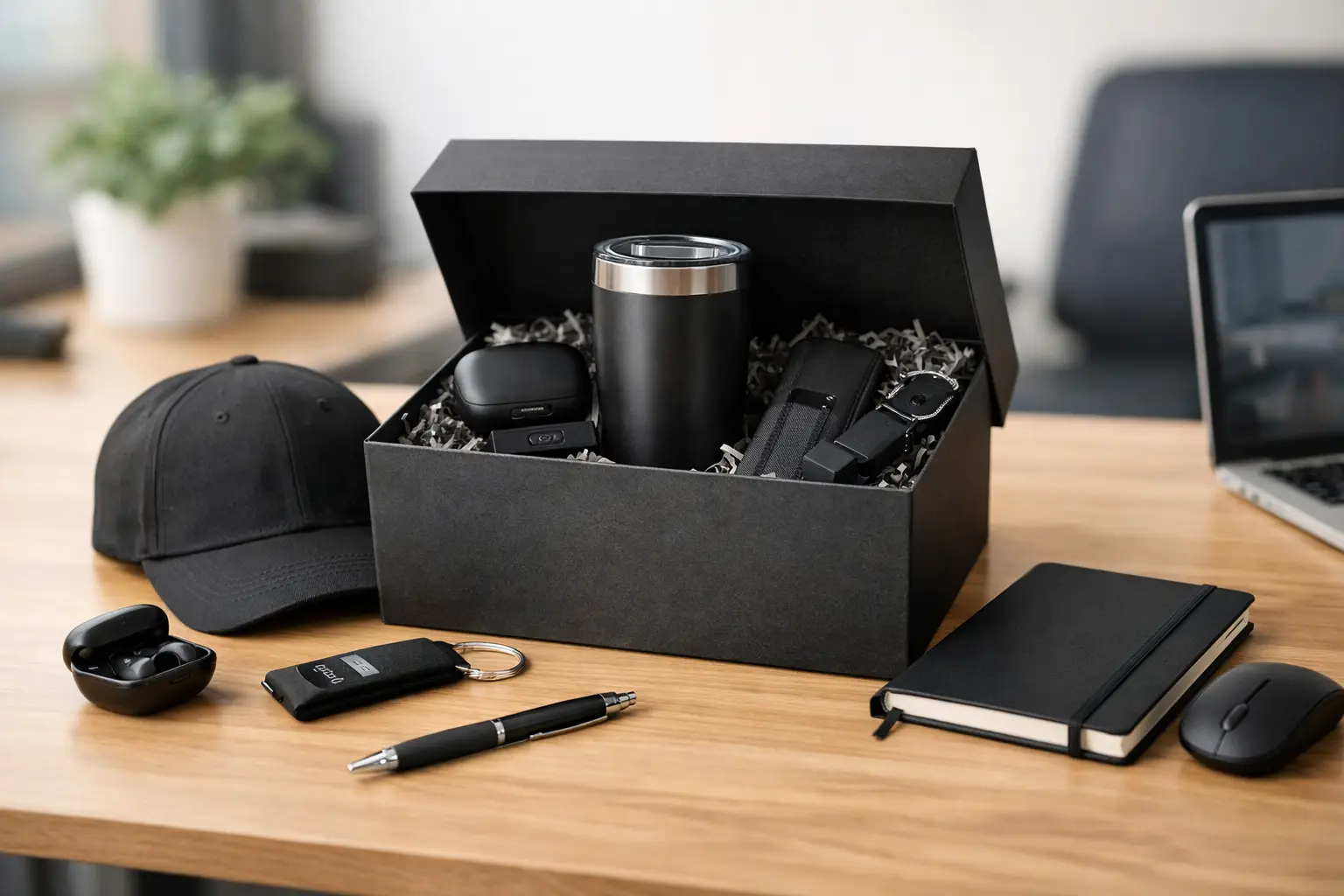
A new hire’s first day tells them a lot before anyone starts the orientation deck. If their badge is delayed, their notebook is generic, and their workspace feels unprepared, the message is clear even if nobody says it. That is one reason why use branded welcome kits is a question more companies are asking – because first impressions inside a business matter just as much as first impressions outside it.
For HR teams, marketing departments, procurement leads, and event organizers, welcome kits are not just a nice extra. Done well, they support onboarding, reinforce brand standards, and make coordination easier across multiple touchpoints. Done poorly, they become a box of random items with no real purpose. The difference comes down to intent, product choice, and execution.
Why use branded welcome kits in the first place?
A branded welcome kit helps turn a process into an experience. Whether you are welcoming employees, clients, conference attendees, or school stakeholders, the kit gives people something immediate and tangible that reflects your organization.
That matters because people form impressions quickly. A thoughtful kit signals preparation, consistency, and attention to detail. It shows that your organization did not leave the experience to chance. For internal teams, that can support a stronger sense of belonging from day one. For external audiences, it can improve recall and make the brand feel more credible.
There is also a practical side. Welcome kits can reduce last-minute scrambling by bundling essential items in one place. Instead of chasing different suppliers for apparel, drinkware, stationery, bags, lanyards, tech accessories, and printed inserts, teams can build a set that fits the occasion and budget. That saves time, especially when onboarding in batches or preparing for a large event.
Branded kits make onboarding feel organized
Most organizations want onboarding to feel smooth, but the employee experience often depends on small operational details. If basic items are missing, people notice. A welcome kit helps close that gap.
For employee onboarding, useful items usually outperform novelty products. A quality notebook, pen, ID holder, bottle, laptop sleeve, polo shirt, or desk accessory can all serve a real function while carrying the company brand in a polished way. These items do not need to be expensive to be effective. What matters is that they feel relevant and well produced.
The kit also gives HR and admin teams more control over consistency. Every new hire receives the same core brand presentation, regardless of department or start date. That consistency is useful for growing companies, multi-site teams, and businesses that want a more standardized onboarding process.
There is one trade-off to keep in mind. If the kit is overloaded with items people will not use, it can feel wasteful instead of thoughtful. A leaner set with better item selection usually performs better than a larger box built around filler products.
They reinforce culture without saying too much
Culture is often communicated through experience more than language. A welcome kit cannot build culture on its own, but it can support the kind of environment a company wants to create.
If your business values professionalism and readiness, the kit should reflect that through practical, durable items. If your organization has a more energetic event-driven identity, apparel, accessories, and presentation can carry that tone. If sustainability matters to your audience, product selection should reflect it in a credible way rather than as an afterthought.
The point is alignment. Branded welcome kits work best when the products, print quality, packaging, and message all point in the same direction. When they do, people read the brand more clearly.
Why use branded welcome kits for clients and events?
This is where many companies miss an opportunity. Welcome kits are often associated with new staff, but they can be just as useful for client onboarding, partner programs, roadshows, conferences, and corporate events.
For clients, a branded kit can help make the relationship feel intentional from the start. A professionally assembled set with premium stationery, drinkware, a thank-you card, event materials, or useful tech accessories can raise the perceived value of the interaction. It shows care, and it helps your brand stay visible after the meeting ends.
For events, kits also help solve logistics. Registration packs, speaker gifts, exhibitor sets, and VIP welcome bags all need coordination. When these are planned as branded kits rather than one-off items, teams gain better control over presentation and delivery. The result is usually cleaner execution and fewer last-minute substitutions.
This is especially relevant when multiple branded elements need to work together, such as apparel, bags, printed inserts, booth visuals, badges, and giveaways. A coordinated approach makes the entire experience look more professional.
The value is not just branding – it is operational efficiency
A lot of companies focus on the logo placement and forget the workflow behind the order. But one of the strongest reasons to use branded welcome kits is operational simplicity.
When kits are sourced and assembled properly, they reduce internal coordination. Marketing does not have to source one item, HR another, and procurement a third. Artwork stays more consistent. Budget decisions are easier to manage. Delivery timelines are clearer. That matters when the deadline is tied to a joining date, campaign launch, or event opening.
It also helps with scaling. If you onboard ten people this month and fifty next quarter, or if you need kits for one office now and several regions later, it is easier to expand a format that has already been planned around approved products and print methods.
For buyers, this is usually where vendor capability starts to matter more than item count. A supplier that can guide product selection, branding methods, packaging, and fulfillment will often create a better result than a vendor that simply provides merchandise one piece at a time.
Choosing the right items matters more than choosing more items
Not every welcome kit should look the same. The best set depends on who it is for, how it will be distributed, and what the recipient is likely to keep using.
For employee kits, everyday work items tend to make sense. For client gifting, perceived quality and presentation often matter more. For events, portability and broad usefulness are key. For schools and institutions, budget control and durability may take priority.
A good rule is to balance three things: function, brand fit, and cost. If an item looks great but has no use, it will likely be ignored. If it is useful but poorly branded, it does not help much with recall. If it fits both but pushes the budget too far, it may not be practical for larger rollouts.
This is why consultation matters. Product recommendations should reflect the purpose of the kit, the audience, and the deadline rather than a fixed package that gets reused for every project.
Quality affects the message
Recipients may not know the production process behind a kit, but they will notice the outcome. Print alignment, material feel, packaging condition, and color consistency all shape how the brand is perceived.
That is particularly important for businesses that care about presentation. A poor print on a shirt or a low-quality logo application on a bottle does more than disappoint the recipient. It can make the company look less prepared than it actually is.
On the other hand, good execution creates confidence. Clean branding, coordinated product selection, and reliable fulfillment show that the company pays attention. For corporate gifting and onboarding, that trust carries value.
When branded welcome kits may not be the right move
There are cases where a welcome kit should be simplified or skipped. If the audience is extremely price-sensitive and the budget only allows for low-quality items, it may be better to choose fewer pieces or one useful item instead of forcing a full kit. If the recipient group is highly varied, a very specific set may not work well for everyone.
Timing also matters. If the event is too close and product lead times are unrealistic, rushing the order can create more risk than value. In those cases, it is better to adjust the kit scope than to compromise quality across every item.
The right approach is not always the largest package. It is the one that fits the objective and can be delivered properly.
A good welcome kit should feel planned, not promotional
The strongest kits do not feel like leftover merchandise placed in a box. They feel curated for a reason. The recipient understands why each item is there, and the brand presence feels confident rather than excessive.
That is where experience helps. A supplier that understands product combinations, print methods, event timelines, and budget ranges can help businesses avoid common mistakes early. For organizations managing multiple priorities at once, that kind of guidance is often the difference between a rushed order and a kit that actually supports the broader program. Companies like Global Asia Printings often see this firsthand across onboarding sets, event packs, and branded corporate gifting projects where speed, consistency, and presentation all matter at once.
If you are considering branded welcome kits, the real question is less about whether they look good and more about what they help your business do. When they are planned well, they help people feel expected, informed, and connected from the start. That is a strong place for any professional relationship to begin.