


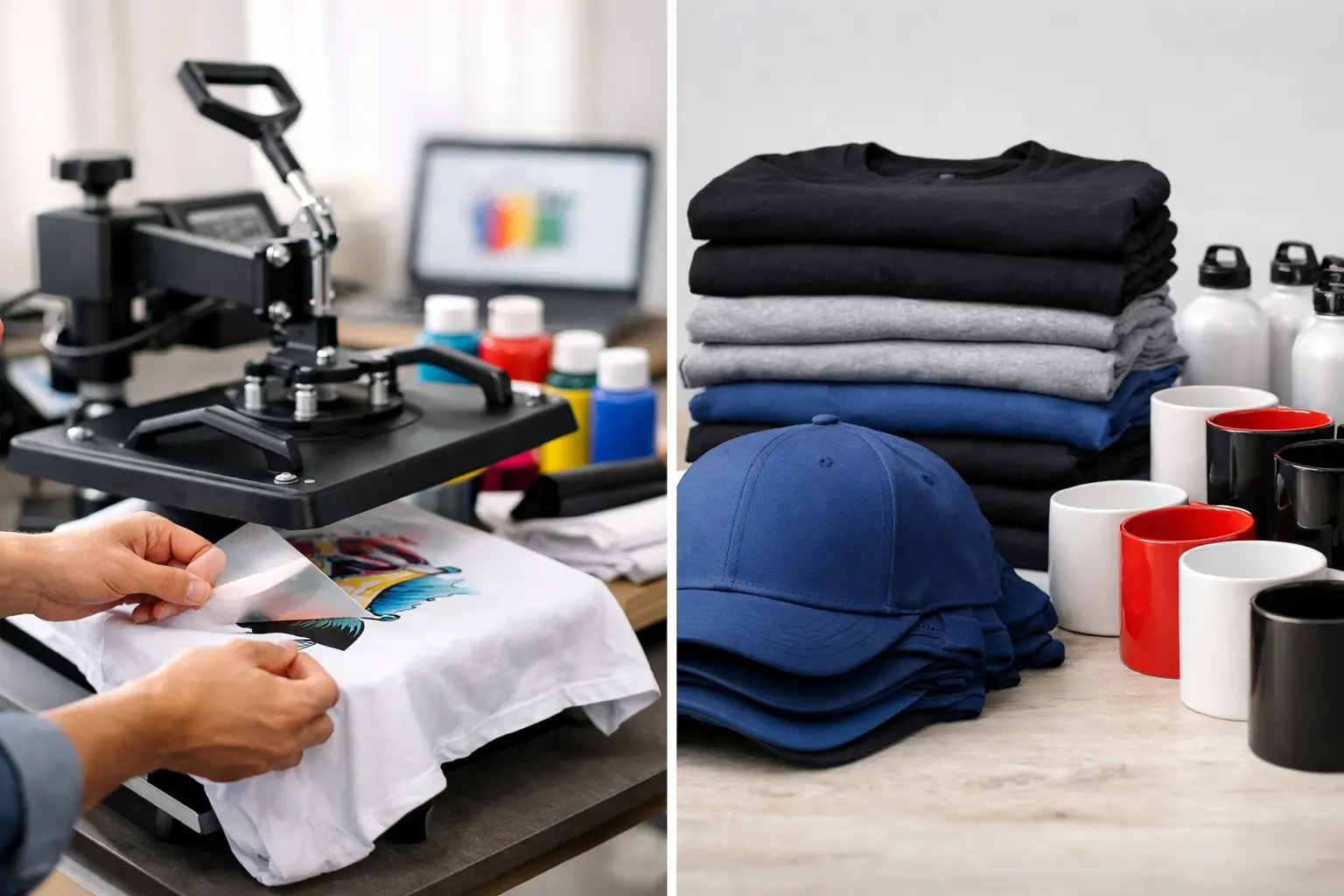
A conference tote handed out at registration has one job: carry the brand beyond the venue. A tote printed live after a guest chooses a design has another: turn the tote itself into part of the event. That difference is at the center of live printing vs preprinted merchandise. Both can be highly effective, but they solve different business problems.
For marketing teams, HR departments, and event planners, the better choice is rarely about printing alone. It comes down to audience size, lead time, desired interaction, item selection, venue conditions, and budget certainty. Choosing early helps avoid rushed artwork approvals, unsuitable products, and event-day surprises.
Live Printing vs Preprinted Merchandise: The Core Difference
Preprinted merchandise is customized before the event and delivered ready for distribution. This is the familiar option for branded T-shirts, lanyards, notebooks, drinkware, bags, uniforms, and corporate gifts. Every item is produced to an approved design and packed for a planned handout, welcome kit, campaign launch, or employee program.
Live printing takes place at the venue. Guests may select from prepared artwork, add a name or chosen detail, or watch a design applied to an item such as a T-shirt, tote bag, cap, or pouch. The printing station becomes an activation point, supported by the right equipment, trained crew, production planning, and booth setup.
Preprinted merchandise prioritizes scale and predictability. Live printing prioritizes participation and memorability. Neither is automatically the premium choice. A well-produced preprinted executive gift can feel far more valuable than a rushed live-print item, while a thoughtfully planned print station can create stronger engagement than another standard giveaway.
When Preprinted Merchandise Is the Better Business Decision
Preprinted items are usually the practical choice when quantity is high, designs are fixed, and every attendee needs to receive the same product. Think annual dinners, large seminars, school orientations, employee onboarding, product roadshows, and appreciation campaigns. Items can be checked for print placement and finish before delivery, then packed by department, size, or registration group.
This approach also gives organizers more freedom with product types. Many premium items are not suited to live customization because their print process requires curing time, specialized machinery, or controlled production conditions. Preprinting opens the door to a broader range of apparel, electronics, stationery, travel accessories, awards, and gift sets.
Better control over cost and volume
For a known quantity, preprinted merchandise is generally easier to cost accurately. Unit pricing is based on the item, print method, number of colors, print locations, and order volume. There is no need to account for an event crew, on-site equipment, power requirements, setup hours, or a production rate that may vary with guest choices.
It is especially efficient when the order is large. If 2,000 attendees need a branded T-shirt in their event pack, producing all shirts ahead of time is faster and less expensive than asking guests to queue at a live station. For procurement teams working against a fixed budget, this certainty matters.
Stronger consistency for formal branding
Brand-sensitive campaigns often benefit from preproduction checks. A company anniversary gift, a client welcome pack, or a uniform program may require exact color matching, consistent sizing, and careful packaging. Producing in advance allows time for artwork review, samples where needed, and quality control before the items reach recipients.
Preprinted merchandise is also the safer route when an event schedule has little room for disruption. Registration desks, presentations, meal service, and sponsor areas already compete for floor space. A ready-to-distribute item keeps the program moving.
When Live Printing Creates More Value
Live printing earns its place when the experience is as important as the product. Guests do not simply collect an item. They choose, watch, photograph, and carry away something connected to a moment. For a brand launch, mall activation, employee carnival, university open house, or customer appreciation event, that interaction can increase dwell time and make the giveaway feel personal.
Personalization is a major advantage. Adding a guest name, team identity, event date, or selected graphic can turn a practical item into a keepsake. It can also reduce the common problem of generic merchandise being left behind at the venue or forgotten in a drawer.
A built-in engagement point
A live print station can create a natural reason for attendees to approach a booth and start a conversation. Sales teams gain a warmer opening than they would with a passive product display. Event organizers gain visible activity in a space that might otherwise feel quiet between program segments.
The most effective stations are designed around a simple guest journey: choose an approved design, submit any permitted personalization, watch the item being printed, and collect it within a clear waiting time. Too many options can slow down the line. Too few can make the activation feel generic. The right balance depends on expected foot traffic and available event hours.
Best suited to controlled quantities
Live printing works best when attendance, operating hours, and output targets are realistic. A station may be ideal for 150 guests over a half-day activation but not for 2,000 people arriving within one hour. Production speed varies based on the item, artwork, print method, and whether personalization is involved.
Organizers should plan for peak periods, not just total attendance. If everyone visits the booth during a lunch break, even a capable crew can face long queues. In some cases, a limited allocation works well: the first 200 guests receive live-customized items, while preprinted merchandise covers the wider audience.
Compare the Practical Trade-Offs Before You Commit
The decision becomes clearer when the project is evaluated beyond the item cost. Consider these operational questions before selecting either model:
- Timeline: Preprinted orders need production and delivery lead time before the event. Live printing requires pre-event preparation as well as on-site setup, testing, and teardown.
- Audience flow: A distribution table can serve large crowds quickly. A live station needs enough space and time for guests to participate without blocking walkways.
- Design flexibility: Preprinted items can support more complex finishes and a wider product range. Live events work best with artwork that prints efficiently and remains clear at viewing distance.
- Venue readiness: Live activation may require power access, a sheltered workspace, loading arrangements, tables, and venue approval. These details should be confirmed early.
- Inventory risk: Preprinting requires forecasting quantities and sizes. Live printing can reduce excess stock when production is based on actual participation, though blank-item inventory still needs careful planning.
The product itself matters, too. Apparel is popular for both approaches, but size selection must be managed. Tote bags and pouches are easier for fast event printing because they are generally one-size items. Premium drinkware, wireless accessories, and curated gift sets often make stronger preprinted choices because their customization processes benefit from controlled production.
A Hybrid Approach Often Delivers the Best Result
The choice does not have to be all or nothing. Many corporate events benefit from a hybrid plan: preprinted essentials for every attendee, plus a live-print experience for selected items or VIP engagement. A branded lanyard, notebook, and event bag can be ready at registration, while guests visit a print station later to customize a T-shirt or tote.
This structure protects the core event requirement. Every guest receives useful branding even if they do not visit the activation. At the same time, the live station creates a reason to explore the venue, engage with campaign messaging, or return during quieter periods.
A hybrid model can also help manage cost. Instead of live printing for all attendees, organizers can set a defined quantity or use it as a reward for completing a survey, attending a session, or participating in a game. The activation becomes intentional rather than an expensive add-on.
Plan Earlier Than You Think
Whether merchandise is preprinted or produced live, artwork approval is where many projects gain or lose time. Finalize logos, required text, brand colors, print locations, and any personalization rules before production is scheduled. If multiple stakeholders need approval, build that into the timeline rather than treating it as a last-minute step.
For live activations, conduct an event-specific review. Confirm the venue layout, access hours, power availability, loading route, staffing plan, and expected crowd pattern. For preprinted orders, confirm quantities, size breakdowns, packaging requirements, and distribution points. These details are what turn a good merchandise idea into dependable event delivery.
Global Asia Printings helps organizations assess both routes, from product sourcing and artwork preparation to printing, packing, and on-site event support. The aim is not to push a single format, but to match the production plan to the real objective, deadline, and guest experience.
Choose preprinted merchandise when every recipient needs a polished item without delay. Choose live printing when you want the act of customization to become part of the event. And when the event needs both reliable coverage and a memorable moment, build the program around each format’s strength rather than asking one to do the other’s job.