


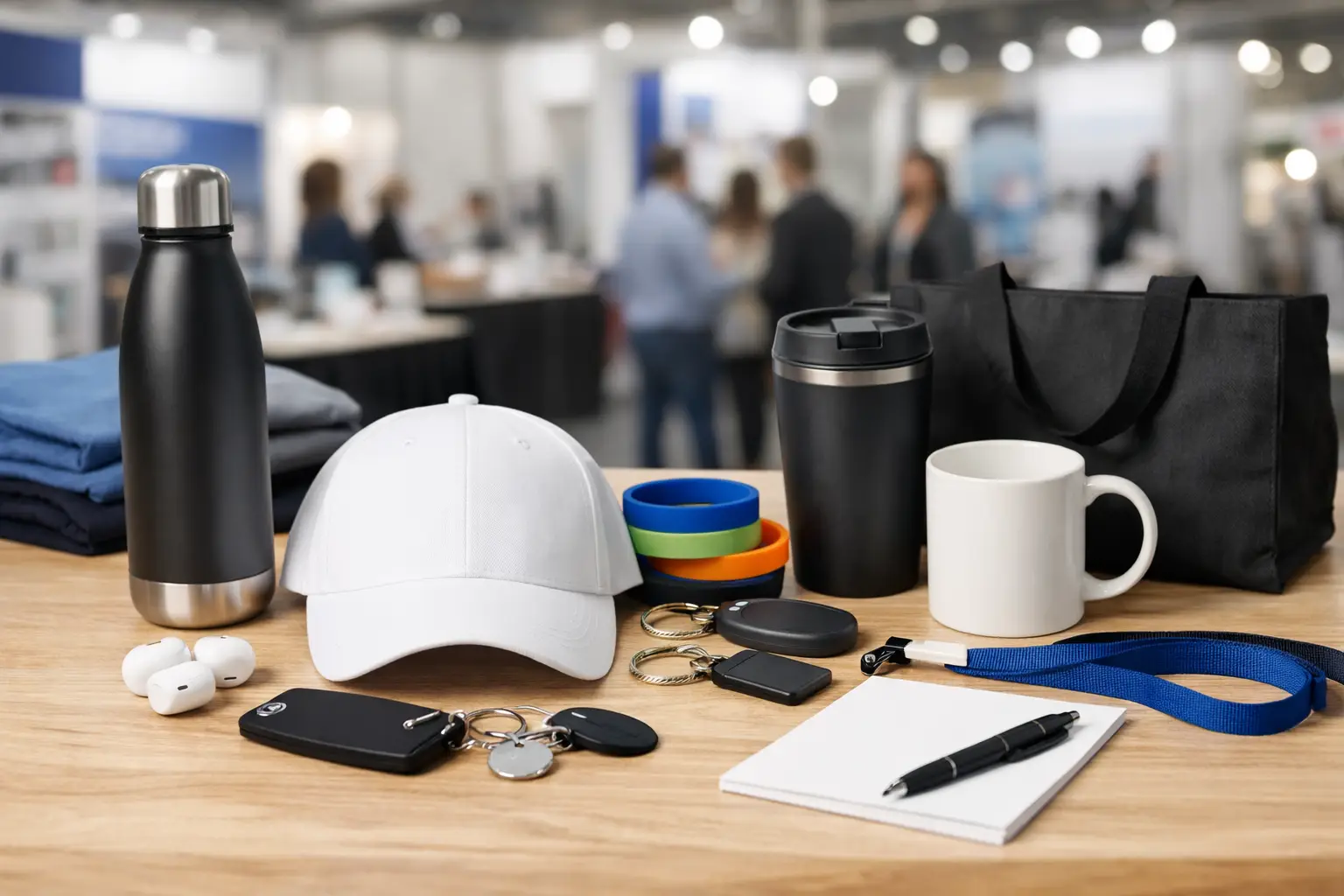
A table full of giveaway items can look impressive and still do very little for your event. The difference usually comes down to fit. Promotional merchandise for events works best when each item matches the audience, the event format, the budget, and the brand experience you want people to remember after they leave.
For corporate teams, school organizers, HR departments, and event planners, that sounds obvious until the timeline gets tight. Then the pressure shifts to what is available fast, what can be branded quickly, and what seems safe to order in volume. That is where many event merchandise decisions go off track. The good news is that a better approach does not need to be complicated.
What promotional merchandise for events should actually do
Event merchandise is often treated as a nice extra. In practice, it has a job to do. It can attract booth traffic, support registration flow, reinforce sponsor visibility, welcome attendees, improve staff presentation, or give guests something useful to carry home. The right product depends on which of those goals matters most.
If your event is an exhibition, visibility and quick engagement usually come first. Lanyards, tote bags, and practical desk accessories tend to perform well because people use them immediately on-site or at work later. If your event is an internal company program, the priority may be unity and professionalism. In that case, coordinated apparel, badges, notebooks, and drinkware often make more sense than novelty items.
There is also a difference between merchandise that gets picked up and merchandise that gets kept. Low-cost handouts can increase volume, but they may not leave much of an impression. Premium items can create stronger recall, but they only make sense when the audience is targeted and the value of that relationship justifies the spend. Neither option is automatically better. It depends on the event objective.
Start with the event type, not the catalog
One of the most common planning mistakes is choosing products before defining the event environment. A product that works well for a conference welcome kit may not suit an outdoor roadshow. Items for a recruitment fair are different from items for a client appreciation event.
Indoor business events usually benefit from practical merchandise that fits into the workday. Pens, notebooks, laptop sleeves, charging accessories, and insulated bottles are familiar choices because they are easy to distribute and useful beyond the event itself. They also offer steady brand visibility without feeling excessive.
Outdoor events call for a different mindset. Weather matters, mobility matters, and durability matters. Caps, quick-dry shirts, drawstring bags, handheld fans, umbrellas, and water bottles tend to hold up better in those settings. If attendees are moving between activity stations, bulky or fragile items become a burden.
For exhibitions and trade shows, the best choices often support movement and quick conversations. Lanyards, tote bags, and compact tech accessories work because they fit the pace of the environment. For VIP events or executive gifting, presentation becomes more important. Premium packaging, elevated materials, and cleaner branding usually matter more than quantity.
Practical beats clever most of the time
There is always a temptation to choose something unusual so the brand stands out. Sometimes that works. More often, practical products outperform creative ones because they remain in use longer.
A well-made tote bag may not feel exciting during product selection, but it can be carried repeatedly after the event. A decent insulated tumbler may look simple, yet it can keep your logo in front of the user for months. Compare that with novelty items that get attention for five minutes and then disappear into a drawer.
This does not mean every item should be plain. It means utility should lead the decision. If you want merchandise to support recall, choose something people can use naturally. Good design can still make it feel polished and distinctive.
Branding quality matters as much as product choice
Even the right item can underperform if the execution is weak. A useful bag with a poor print finish reflects differently on your brand than the same bag produced cleanly with the right placement and color treatment. Buyers often focus on product type first, but print quality, logo size, and artwork suitability have a direct effect on how professional the final result looks.
Not every branding method suits every product. Screen printing works well for many fabric items, while embroidery can elevate uniforms, jackets, and caps. Heat transfer may be suitable for certain apparel runs or detailed graphics. UV printing, engraving, and other methods can make more sense for hard goods and premium items. The best choice depends on the material, quantity, artwork, and budget.
This is also where early artwork review saves time. Small logos, fine lines, and complex gradients do not always reproduce well across every merchandise type. It is better to adapt the design for the product than to force the product to carry artwork it cannot present properly.
Budget planning is not just about unit price
When buyers compare options, unit cost is usually the first number on the page. It is important, but it is not the full picture. Setup charges, print method, packaging, lead time, quantity breaks, and distribution needs all affect the real cost of promotional merchandise for events.
A cheaper item can become less efficient if it requires multiple print positions or if the finish looks weak at scale. A slightly more expensive item may provide better value if it delivers stronger perceived quality and fewer quality control issues. There is also the question of audience relevance. Ordering a large volume of low-cost items that nobody wants is not budget friendly.
A more useful way to plan is to group merchandise into roles. Some products are mass giveaway items. Some are registration pack components. Some are staff essentials. Some are premium gifts for speakers, sponsors, or key clients. Once those categories are clear, the budget can be allocated more intelligently instead of spread evenly across everything.
Lead time can change the best option
In event work, timing is often the deciding factor. A product may look ideal on paper but become risky if sourcing, customization, and delivery windows are too tight. That does not mean last-minute orders always lead to poor outcomes. It means product selection should respect the production schedule.
In shorter timelines, proven items with reliable stock availability are often the safer choice. Standard apparel, lanyards, bags, notebooks, and drinkware usually offer more flexibility than highly specialized products. If the event date is fixed, consistency and delivery confidence matter more than chasing an item that may introduce delays.
This is one reason many buyers prefer working with a single production partner that can advise on alternatives, manage branding methods, and coordinate fulfillment in one place. It reduces the friction that comes from splitting sourcing, printing, and event preparation across multiple vendors.
How to choose the right mix
Most successful event merchandise programs use a mix rather than a single hero item. That mix should reflect the attendee journey.
Think about what people need when they arrive, what they carry during the event, and what remains useful afterward. A lanyard may support access and identification. A tote bag helps carry materials. A notebook or pen supports note-taking. A branded shirt helps staff look organized. A premium gift can be reserved for selected guests or partners.
That approach also helps with cost control. Not every attendee needs the same level of merchandise. Broad distribution items can stay simple and practical, while high-value recipients can receive something more premium. This keeps the experience organized without overspending in the wrong areas.
If you need guidance, a partner like Global Asia Printings can help map products to event goals instead of just offering a list of items. That matters when the order includes multiple categories, different branding methods, and a fixed event date.
Common mistakes to avoid
The first mistake is choosing merchandise based only on trend. Popular items can be effective, but only if they fit the audience. Tech gifts may appeal at a client conference and fall flat at a school event. Premium stationery may suit executive meetings and feel unnecessary at a roadshow.
The second mistake is underestimating quantities and logistics. Distribution plans matter. If welcome kits need assembly, or staff uniforms need size collection, those details should be decided early. Merchandise planning is not just product selection. It is operational planning.
The third mistake is treating branding as an afterthought. Product color, print placement, packaging, and consistency across categories all shape how the event feels. When these details are aligned, the merchandise supports the event identity rather than looking like separate purchases.
The best event merchandise feels intentional
People notice when merchandise has been chosen with care. It matches the event, supports the experience, and reflects the brand in a practical way. That is what turns branded products from a routine expense into something useful for engagement, presentation, and recall.
If you are planning your next event, the smartest starting point is not asking which product is most popular. It is asking what attendees need, what your team needs, and what your brand should look like in the room. Once that is clear, the right merchandise becomes much easier to choose.