


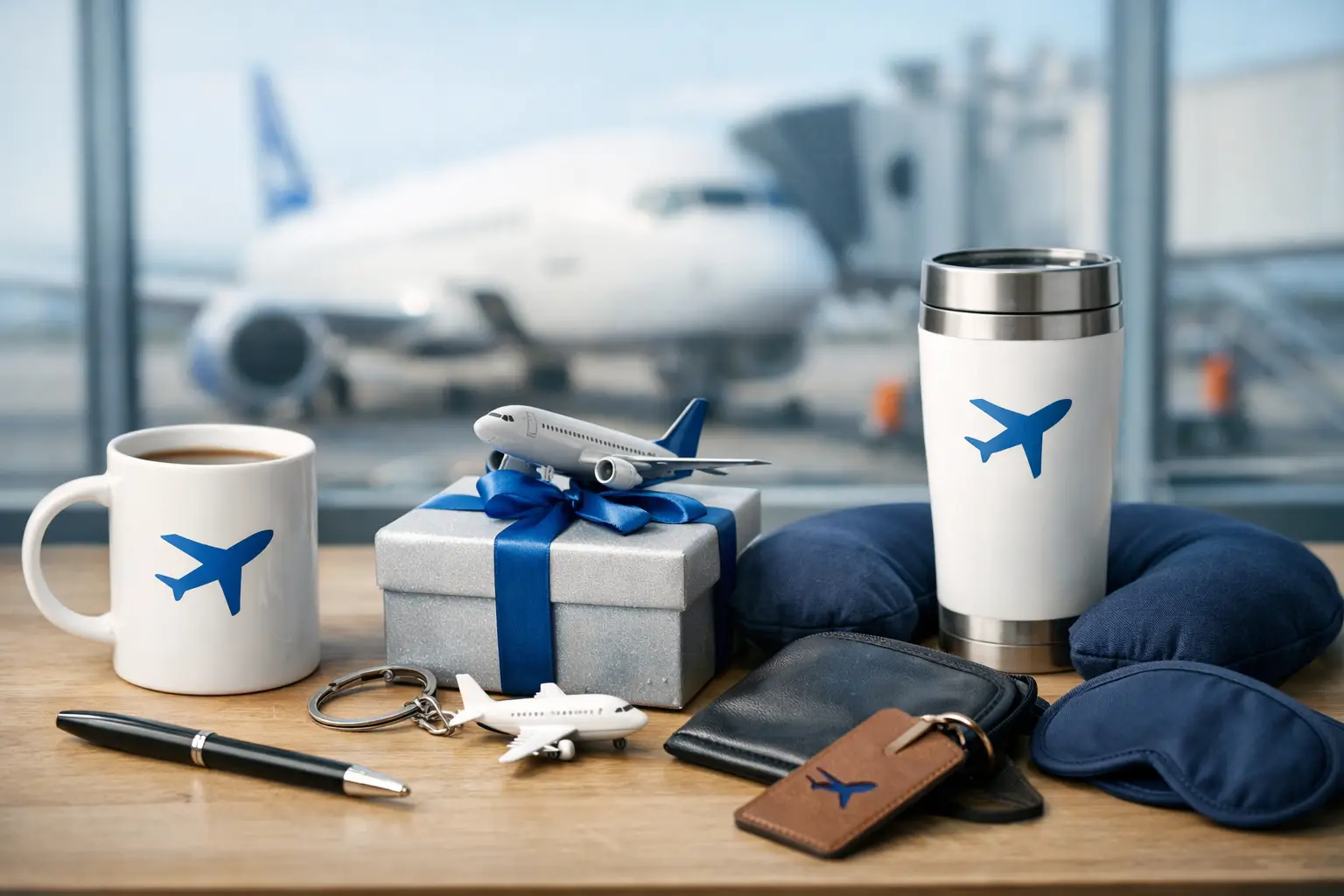
Airlines do not get many second chances with brand experience. A delayed flight, a rushed boarding process, or a forgettable amenity kit can shape how passengers remember the entire journey. That is why Custom Gift Printing for Airlines is not just about putting a logo on a product. It is about choosing the right item, print method, and delivery plan so every branded touchpoint supports service, recall, and perceived value.
For airline marketing teams, procurement managers, and event coordinators, the challenge is rarely finding merchandise. The real challenge is finding merchandise that fits the cabin environment, route profile, passenger segment, campaign timing, and budget. A premium long-haul welcome gift has very different requirements from a trade show giveaway, crew appreciation item, or inaugural flight souvenir. The right supplier should help align all of those moving parts, not just print and ship.
What custom gift printing for airlines needs to achieve
In the airline sector, branded gifts have to work harder than standard corporate merchandise. They are often used in compact spaces, handed out under time pressure, and judged quickly by passengers who are already comparing the airline against competitors on comfort, detail, and service quality.
That means a custom gift should usually do at least one of three jobs well. It should improve the passenger experience, support a promotion or route launch, or strengthen internal engagement with crew and staff. When a gift does none of these, it becomes clutter. When it does one of them properly, it becomes part of the airline’s service story.
Practicality matters more than novelty in most airline use cases. Travel accessories, compact pouches, branded stationery, neck pillows, luggage tags, power banks, socks, eye masks, and refillable bottles often perform better than gimmick products because passengers can use them immediately or keep them for future travel. On the corporate side, premium notebooks, executive drinkware, and elegant gift sets are often better suited for aviation partners, VIP lounges, and stakeholder events.
Choosing the right gifts for different airline use cases
A common mistake is using one merchandise concept across every audience. Airlines usually need separate gift strategies for passengers, premium travelers, crew, partners, and events.
For economy and mass campaign distribution, items need to be lightweight, cost-controlled, and easy to pack. Flat or compact products tend to work best because they reduce storage pressure and simplify onboard handling. Think luggage tags, travel pouches, passport holders, pens, mini notebooks, or basic comfort kits.
For business class, first class, or loyalty program gifting, perceived quality becomes more important than quantity. Materials, finishing, and packaging carry more weight here. A well-printed leatherette organizer, premium tumbler, or curated travel set will usually land better than a bundle of lower-value items.
For crew appreciation and internal engagement, function is still key, but durability matters more. Uniform accessories, insulated bottles, backpacks, document folders, and branded apparel can support both morale and day-to-day usability. Internal gifts often have a longer life cycle, so print quality and product endurance become more visible over time.
For route launches, expos, and aviation events, speed and flexibility matter. Event merchandise often requires faster turnaround, mixed quantities, and clear campaign branding. In these cases, it helps to work with a supplier that can manage product sourcing, printing, and event-related branding under one roof, especially when deadlines are fixed and public-facing.
Print methods matter more than many buyers expect
Not every item should be printed the same way. In airline gifting, the print method affects appearance, durability, lead time, and cost. This is where many purchasing decisions go wrong.
Screen printing is often cost-effective for simple one- or two-color branding on fabric items such as pouches, tote bags, and apparel. It works well for larger runs, but it is less suitable when artwork is highly detailed or when color gradients matter.
Heat transfer and sublimation are useful when artwork needs more color complexity, especially on certain textiles. These methods can produce vibrant results, but suitability depends on fabric type and intended wear.
Pad printing is commonly used for smaller products with curved surfaces, such as pens, gadgets, and compact accessories. It is practical, but branding space can be limited.
UV printing, laser engraving, and embroidery each have their place in premium airline merchandise. UV printing supports crisp branding on hard surfaces. Laser engraving adds a refined look to metal or premium items. Embroidery is often ideal for apparel, travel bags, and crew-focused accessories where texture and durability are priorities.
The best choice depends on the product, quantity, brand standards, and how long the item is expected to stay in use. A good supplier should flag these trade-offs early rather than defaulting to the cheapest print option.
Brand consistency is not just about the logo
Airlines operate in one of the most tightly managed brand environments in any industry. Color accuracy, typography, placement, and finish all affect whether a gift looks official or off-brand. When merchandise is going to passengers or VIPs, even small inconsistencies can weaken presentation.
This is why artwork setup, material matching, and sample review are important. Some logos need special handling on dark fabrics. Some metallic finishes look better engraved than printed. Some colors that work well in digital mockups may shift on coated surfaces or textured materials.
Packaging also deserves attention. A standard item can feel far more premium when presented in a branded box, sleeve, or pouch. For airline gift programs, packaging often makes the difference between a product that feels like a leftover promotional freebie and one that feels intentionally selected.
Operational factors that affect airline gift orders
Airline teams often focus first on item selection, but production and delivery planning are just as important. Storage limits, phased rollouts, and event dates can all affect what is realistic.
Lead time is one major factor. Custom sourcing, printing, packing, and bulk fulfillment each add time, especially when multiple product types are involved. If the order includes imported items, premium packaging, or approval samples, timelines need even more buffer. Last-minute changes in artwork or quantity can also create avoidable delays.
Minimum order quantities are another consideration. Some premium products only make financial sense at higher volumes, while others are better suited for short-run campaigns. A supplier with a broad catalog can often recommend alternatives that preserve the campaign objective without forcing an impractical quantity.
There is also the question of distribution. Some gifts are packed centrally for internal dispatch. Others need event-ready sorting, passenger kit assembly, or segmented packing by class, department, or campaign. This operational detail matters because it affects both cost and labor on the client side.
How to plan custom gift printing for airlines more efficiently
The most efficient airline merchandise projects usually start with clearer internal criteria, not broader product searches. Before requesting quotations, it helps to define the audience, target quantity, intended use, budget range, and delivery date. That basic framework allows the supplier to recommend suitable products faster and avoid rounds of mismatched options.
Artwork readiness also speeds things up. If brand files, logo versions, color references, and placement preferences are already prepared, the approval process becomes much smoother. Where internal brand teams are strict, pre-emptive mockup review can prevent rework later.
It also helps to prioritize what matters most. In some projects, premium presentation is the priority. In others, unit cost or lead time is the deciding factor. There is rarely a perfect balance of top-tier material, ultra-fast turnaround, and rock-bottom price. Knowing which factor comes first leads to better recommendations and fewer compromises late in the process.
For buyers managing multiple campaign needs, working with a one-stop vendor can reduce friction. Product sourcing, customization, printing, packing, and event branding are often handled separately by different vendors, which increases coordination risk. A more integrated approach gives teams better visibility over timelines, quality control, and budget alignment. For business buyers that value speed and dependable execution, that matters as much as the merchandise itself.
What strong airline merchandise programs usually have in common
The best-performing airline gift programs are rarely the most complicated. They tend to use products that are relevant to travel, practical for the audience, and well aligned with the airline’s service tier. The branding is clean, the print quality is consistent, and the rollout plan is realistic.
They also treat gifts as part of a larger experience. A route launch item should reinforce campaign messaging. A premium cabin gift should support the airline’s hospitality positioning. A crew appreciation set should feel useful, not generic. When those details line up, the merchandise does its job quietly and effectively.
For teams sourcing Custom Gift Printing for Airlines, the goal is not simply to fill a welcome pack or event table. It is to put the right branded product in the right hands, with the right finish and timing. That is where experienced production guidance makes a real difference, especially when deadlines are tight and brand expectations are high.