


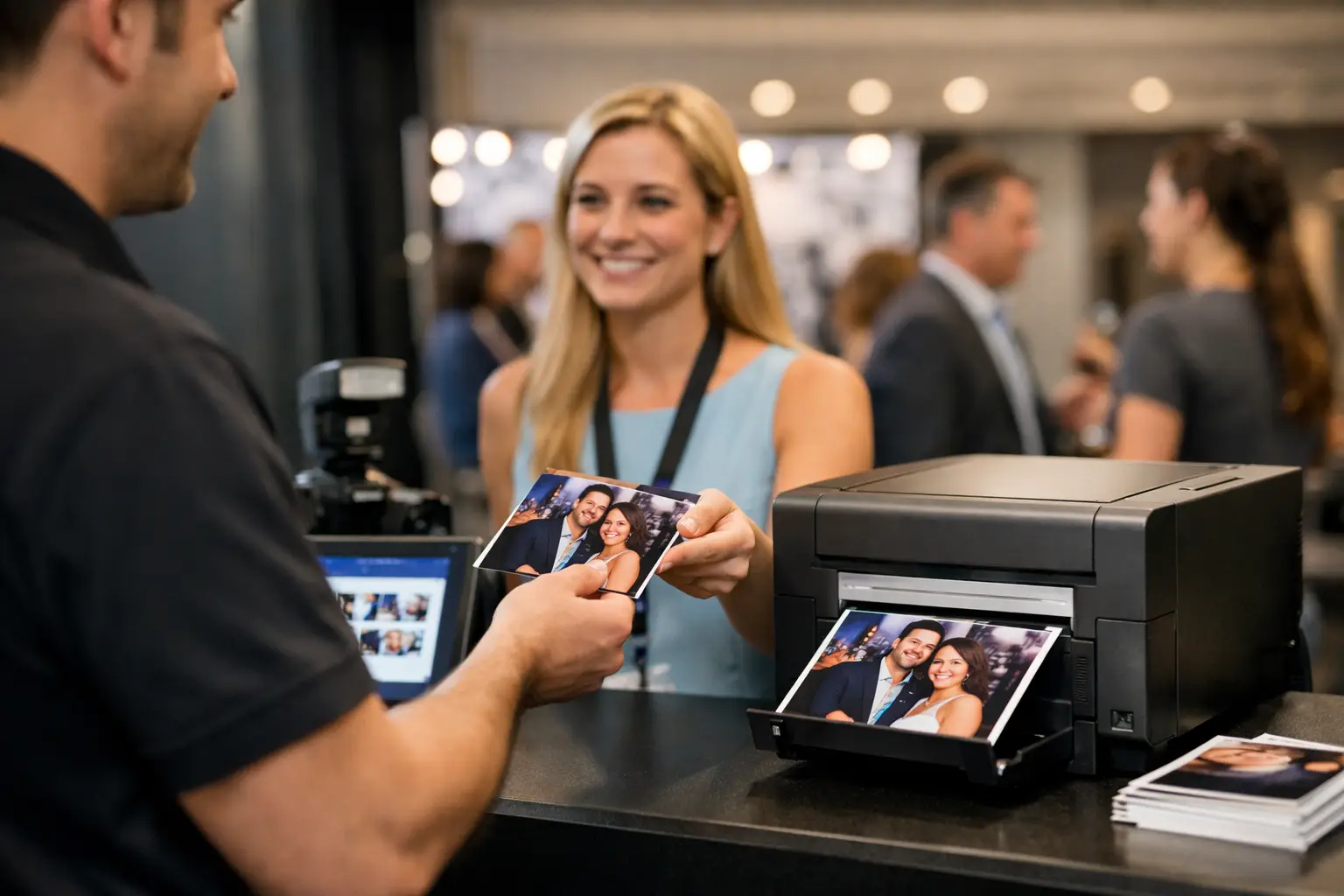
A guest walks up to your booth, chooses a design, watches it get printed on a tote bag in minutes, and leaves carrying something useful with your brand on it. That moment explains what is onsite event printing better than any technical definition. It is the setup of printing or customization equipment at a live event so items can be personalized and produced on the spot for attendees.
For businesses, this is more than a novelty. Onsite event printing turns branded merchandise into an experience. Instead of handing out pre-printed giveaways that may or may not get used, you give people a reason to stop, interact, and remember who they met. That difference matters at trade shows, conferences, roadshows, school events, recruitment fairs, product launches, and internal company activations.
What is onsite event printing in practical terms?
Onsite event printing is live customization done at the venue itself. A print team brings the relevant equipment, blank products, artwork files, and operating crew to the event. As guests arrive, they can receive items printed in real time, often with a choice of design, name, initials, or event-specific graphic.
The products vary depending on the setup. Common choices include T-shirts, tote bags, notebooks, pouches, caps, mugs, lanyards, badges, and other promotional items that can be branded quickly. The method used depends on the material, turnaround time needed, design complexity, and event environment.
In a business setting, onsite printing usually serves one of two goals. The first is audience engagement – getting people to stop, participate, and spend more time with your brand. The second is practical distribution – producing event merchandise in a controlled, efficient way without pre-printing every variation in advance.
How live event printing usually works
The process starts long before the event day. The organizer chooses the product, artwork options, quantity range, and print method based on event objectives and expected footfall. This planning stage matters because live production has to be fast, stable, and realistic under venue conditions.
On event day, the team sets up a dedicated production area or activation counter. Guests then select an item or design option. Depending on the concept, they may add a name, role, department, or short custom text. The print operator prepares the file, produces the item, checks quality, and hands it over within a short turnaround window.
A simple setup may produce one standardized item very quickly. A more interactive setup may offer several design choices, personalization fields, or premium products, which creates a stronger experience but can slow throughput. This is where planning makes a real difference. The right onsite activation balances customization with queue management.
Why brands use onsite event printing
The biggest advantage is attention. People are naturally drawn to live production because they can see something happening. A static display competes with every other booth in the hall. A live printing station creates movement, conversation, and curiosity.
There is also a stronger perceived value. A custom item feels more personal than a generic giveaway picked up from a table. Even a simple tote bag or shirt can become worth keeping when the attendee chooses the design or sees it made in front of them.
For corporate teams, onsite event printing can also reduce waste. If you pre-produce hundreds of items in the wrong sizes, colors, or design mix, leftover stock becomes a cost. Live printing lets you produce closer to actual demand. That is especially useful for events with uncertain attendance or where personalization is part of the appeal.
Another benefit is data and interaction. While a guest waits for an item, your team has time to explain a product, qualify a lead, introduce a campaign, or direct them to the next step. The merchandise becomes a conversation tool, not just a giveaway.
What can be printed onsite?
The best products for onsite printing are items that combine quick production with strong event relevance. Apparel is a popular choice because it is visible, useful, and easy to tie to a campaign theme. Tote bags are another strong option because they are practical during the event itself and keep your brand visible afterward.
Smaller accessories can also work well if the event needs faster output or lower per-piece costs. For example, branded pouches, notebooks, or badge-related items can be customized efficiently and distributed at higher volume. Premium gifts can be effective too, but only if the personalization method suits live production timelines.
The real question is not simply what can be printed. It is what should be printed for your audience. A recruitment event may benefit from practical branded merchandise with broad appeal. A product launch may call for something more visual and social-media friendly. An internal staff event may work better with names, teams, or department-specific artwork.
Print methods and why they matter
Not every printing method is suitable for onsite use. The venue, product type, artwork detail, and quantity expectations all influence the choice.
Heat transfer is often used for live apparel and fabric item customization because it can produce strong results relatively quickly. Direct-to-film and similar methods are useful when designs need color detail and flexibility. For certain hard goods, UV printing or engraving-style personalization may be more appropriate, depending on the equipment and turnaround.
The best option depends on the event. If speed is the priority, the print setup needs to be optimized for throughput. If the experience is the priority, a slower but more visually impressive method might make sense. If the event is outdoors, equipment stability and environmental conditions become part of the decision. This is one reason experienced operational planning matters as much as the print itself.
When onsite event printing makes the most sense
Onsite event printing works best when the merchandise is meant to do more than fill a swag bag. It is particularly effective when you need to increase booth traffic, support a product launch, create a premium guest experience, or make event branding feel interactive rather than generic.
It is also useful when personalization adds meaning. Employee appreciation events, school functions, conferences, and customer engagement campaigns often benefit from names, departments, class years, or event-exclusive designs. These small details can make standard merchandise feel intentional.
That said, onsite printing is not always the right answer. If you need extremely high-volume distribution in a very short window, pre-printed stock may be more efficient. If the venue has tight power restrictions, limited setup access, or difficult logistics, a simpler fulfillment model may be the safer choice. A good supplier should tell you that early, not after the event plan is locked in.
What to consider before booking a live printing setup
The first factor is event objective. Are you trying to generate leads, reward attendees, create social buzz, or manage branded distribution more efficiently? Your goal will shape the product, quantity, and level of personalization.
The second is throughput. A highly customized activation may look impressive but create long lines if demand is underestimated. On the other hand, a setup designed purely for speed may miss the engagement value that made onsite printing attractive in the first place. There is always a balance between experience and volume.
Budget is another practical consideration. Live printing includes more than the product cost. There is equipment transport, crew planning, setup time, operational support, and contingency planning. For many brands, the added cost is justified because the activation performs as both merchandise distribution and audience engagement. Still, it should be evaluated against actual event goals, not just trend appeal.
Artwork preparation matters too. Designs for onsite production need to be tested for print quality, production speed, and product compatibility. The simplest concept often performs best at a live event because it reduces delays and keeps results consistent.
Why execution matters as much as the idea
A live print station can attract attention quickly, but poor execution can do the same for the wrong reasons. Slow queues, inconsistent print placement, product shortages, or technical interruptions can turn a strong activation into an operational problem.
That is why onsite event printing should be treated as part production, part event management. It requires reliable equipment, trained operators, adequate stock planning, and a setup that fits the venue flow. It also helps to work with a partner that understands the full event picture, from product sourcing and artwork preparation to branding support and on-the-ground delivery. For companies managing tight schedules, multiple stakeholders, and brand expectations, that coordination is often what makes the activation successful.
At Global Asia Printings, this is where onsite event printing becomes more than a print service. It becomes a managed event solution designed to help teams deliver branded experiences without adding unnecessary complexity.
The best live merchandise activations are not the flashiest ones. They are the ones that fit the audience, support the event goal, and run smoothly from first print to last handoff. If you are planning an event and want your branding to be seen, used, and remembered, onsite printing is worth considering for exactly that reason.