


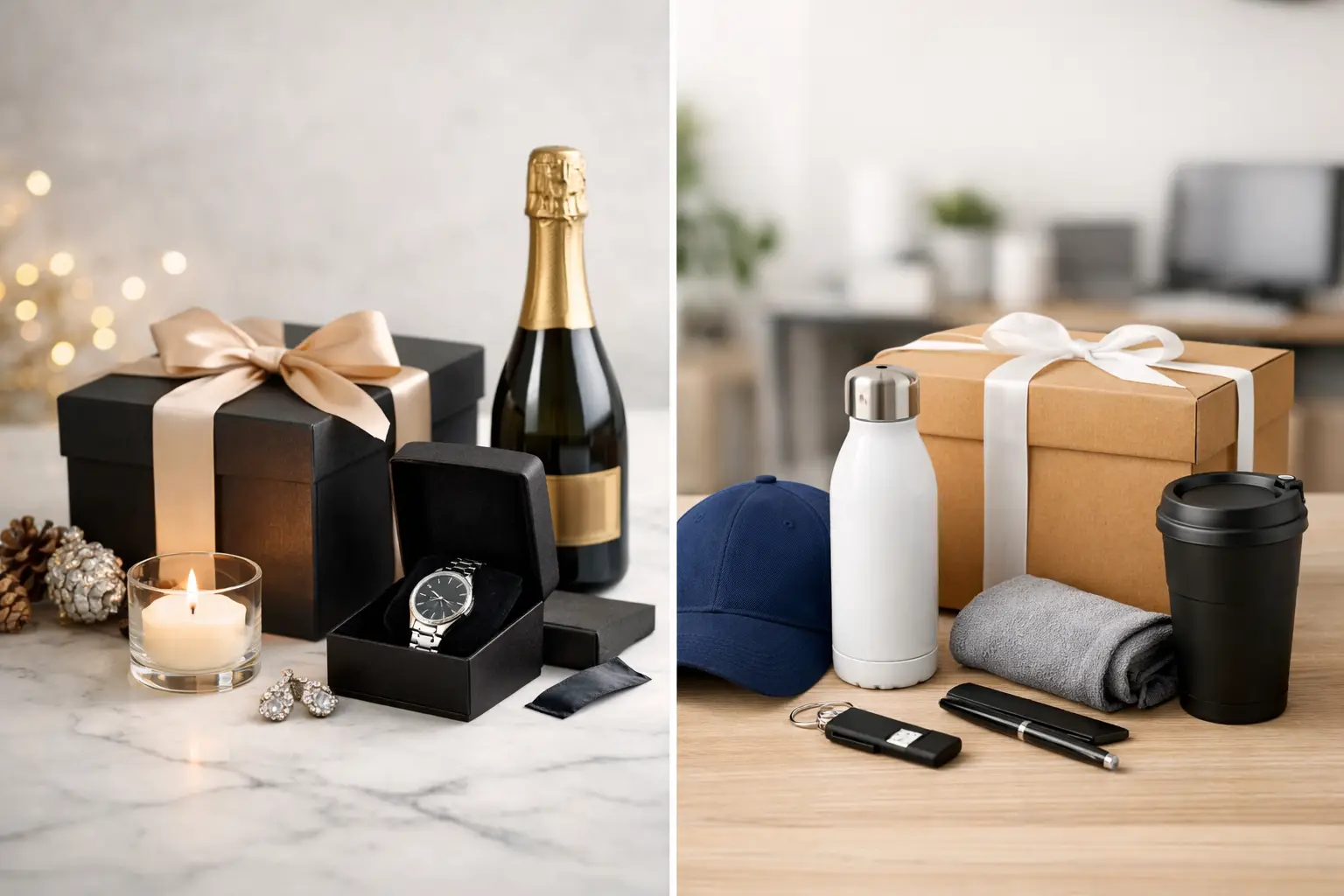
A client gift that lands on an executive desk should not be chosen the same way you source 2,000 event giveaways. That is where premium gifting vs promotional gifting becomes a practical business decision, not just a branding preference. The right choice affects budget efficiency, perceived value, audience response, and how your company is remembered after the campaign or event ends.
For most organizations, the question is not which approach is better in absolute terms. It is which approach fits the goal, the audience, and the moment. When you match the gift strategy to the business objective, the spend works harder.
What premium gifting vs promotional gifting really means
Premium gifting is typically used for smaller, more targeted audiences. Think client appreciation, executive onboarding, milestone awards, festive gifting for key accounts, or internal recognition for high performers. The products are usually higher in perceived value, more refined in presentation, and selected with the recipient in mind. Common examples include premium drinkware, branded tech accessories, curated gift sets, leather items, travel products, and elegant desktop pieces.
Promotional gifting is built for scale and visibility. These are the items used for trade shows, roadshows, community events, recruitment fairs, school campaigns, product launches, and broad brand awareness efforts. The emphasis is usually on reach, practical use, and cost control across volume. Typical items include tote bags, lanyards, pens, notebooks, T-shirts, water bottles, and other everyday merchandise that can be distributed widely.
Both sit under the corporate gifting umbrella, but they do different jobs. One is designed to deepen a relationship. The other is designed to expand exposure.
The main difference is not price – it is intent
Price matters, but intent matters more. A premium gift is usually meant to communicate appreciation, trust, exclusivity, or long-term value. It says, we know who you are, and this was chosen with care. That message can strengthen client relationships, support retention, and elevate the way your brand is perceived.
A promotional gift is usually meant to create awareness, start conversations, support recall, or increase participation at scale. It says, here is something useful that keeps our brand visible. When done well, it stretches your budget while keeping your brand in circulation across many touchpoints.
This is why two companies can spend the same total amount and get very different outcomes. One may invest in 50 premium sets for strategic accounts. Another may distribute 5,000 promotional items at an exhibition. Neither is wrong. The return depends on the campaign objective.
When premium gifting makes more sense
Premium gifting works best when the relationship carries high value or when the occasion calls for a stronger impression. If you are thanking a long-term client, welcoming senior hires, rewarding leadership teams, or sending year-end gifts to decision-makers, a low-cost giveaway often feels out of place.
In these situations, presentation matters almost as much as the item itself. Packaging, product quality, finishing, and branding subtlety all influence how the gift is received. A premium item with discreet branding often performs better than something overly promotional. The recipient should feel appreciated, not advertised to.
There is also a practical side. Premium gifting usually involves lower quantities, more product research, and closer attention to details like personalization, gift sets, card inserts, and delivery timing. It is less about speed and mass reach, and more about accuracy and fit.
That said, premium does not always mean expensive. A well-chosen mid-range item with strong packaging and clean customization can feel more premium than a costly item with poor presentation. Perceived value is shaped by the full experience.
Best use cases for premium gifting
Premium gifting is often the better fit for VIP events, board meetings, partner appreciation, festive client deliveries, employee service awards, and premium conference kits for select attendees. It is also effective when your brand positioning leans toward quality, trust, and long-term partnership rather than price-first visibility.
When promotional gifting delivers better results
Promotional gifting is the practical choice when scale matters. If your goal is to put your brand into many hands, support traffic at a booth, equip participants for an event, or give attendees something useful to carry away, promotional products usually offer the strongest value.
The best promotional gifts are not the cheapest items available. They are the items people will actually keep and use. A pen that writes well, a tote bag with a clean print, a comfortable event T-shirt, or a bottle suited to daily use can generate repeated exposure long after the event. Poor-quality promotional items may hit a low unit price, but they often fail to create meaningful brand recall.
This is where operational planning matters. For large-volume campaigns, you need products that are available in quantity, suitable for your timeline, and compatible with the right print method. A good campaign item is not only attractive on paper. It also needs reliable stock, consistent branding output, and smooth fulfillment.
Best use cases for promotional gifting
Promotional gifting is ideal for trade show handouts, walk-in event registrations, school orientations, recruitment drives, community activations, public campaigns, and branded merchandise packs where quantity and efficiency matter most.
How to decide between premium and promotional gifting
Start with the audience. Are you speaking to 20 key clients or 2,000 event attendees? Audience size will immediately shape the suitable product range, branding style, and fulfillment approach.
Next, look at the purpose. If the goal is appreciation, loyalty, or recognition, premium gifting usually gives you more impact per recipient. If the goal is awareness, traffic, participation, or broad distribution, promotional gifting is usually the better tool.
Then consider brand positioning. A financial services firm hosting a private client dinner may benefit from understated premium gifts. A consumer brand running a mall activation may get stronger results from practical promotional merchandise distributed at scale. The product should feel consistent with the setting.
Budget should be considered after strategy, not before it. Many teams start with a fixed unit cost and work backward, which can lead to poor fit. A more reliable approach is to define the audience and objective first, then build a product recommendation around the available budget.
Lead time is another deciding factor. Premium gifting can require more sourcing, customization options, packaging work, and quality checks. Promotional gifting often moves faster, especially when using proven items and standard branding methods. If your timeline is compressed, the best option may be the one that can be executed properly without compromising quality.
Why many businesses need both
The strongest gifting programs usually do not choose one category forever. They use both, depending on the campaign layer. A company might distribute promotional tote bags and notebooks at an exhibition while preparing premium thank-you gifts for top prospects met at the same event. An HR team may order event shirts for all staff and reserve premium gift sets for award recipients.
This layered approach is often more efficient than forcing one type of item to serve every purpose. It allows you to manage spend intelligently while keeping the experience appropriate for each audience segment.
For buyers managing multiple internal stakeholders, this also reduces friction. Marketing, HR, procurement, and event teams often have different goals. A mixed gifting strategy gives each group a practical solution without compromising consistency in branding and delivery.
Common mistakes to avoid
One common mistake is using premium gifts too broadly. If the audience is too large, costs rise quickly without a clear return. Another is treating promotional gifting as an afterthought and choosing items based only on the lowest quote. Low-quality merchandise can make the brand look careless.
Branding style is another area where decisions go wrong. Premium gifts usually benefit from subtle branding, while promotional items can often carry more visible logos. Applying the same branding treatment to both can weaken the result.
There is also the issue of timing. Last-minute gifting decisions limit product options and increase the risk of substitutions, rushed artwork, or delivery problems. Whether the order is premium or promotional, planning early gives you better control over product selection, print quality, and budget.
For companies handling merchandise, custom printing, and event support under one timeline, it helps to work with a partner that can guide product fit, branding methods, and delivery requirements in one workflow. That is often where execution gets easier.
At GAPS, we see this most clearly when clients are planning both event distribution and stakeholder gifting within the same campaign window. The products are different, but the need is the same: clear advice, dependable turnaround, and output that matches the purpose.
The better question to ask
Instead of asking whether premium gifting or promotional gifting is better, ask what the gift needs to achieve. If it needs to impress a small group, strengthen a business relationship, or reflect a higher-value interaction, go premium. If it needs to travel far, reach many people, and keep your brand visible in everyday settings, go promotional.
The best gift is not the most expensive item or the cheapest unit cost. It is the one that fits the audience, the occasion, and the outcome you actually need. Choose with that level of clarity, and your gifting stops being a routine purchase and starts doing real work for your brand.