


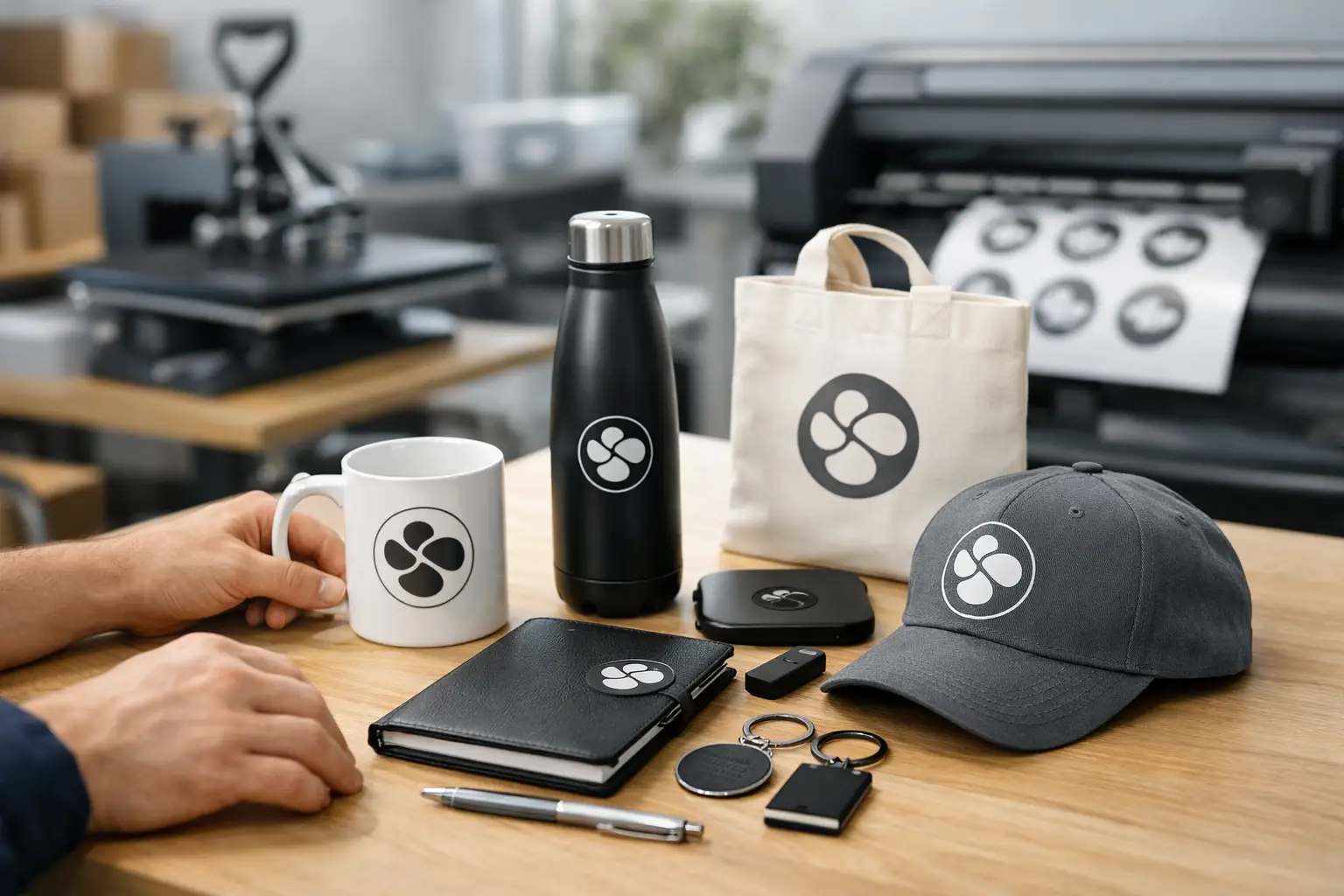
A rushed gift order usually fails in the same predictable ways. The item looks fine in a catalog, the logo file turns out to be wrong for production, lead times get tighter by the day, and suddenly three vendors are involved for one campaign. That is exactly why businesses look for logo gift printing services that do more than print a mark on a product. They need a partner that can help them choose the right item, match branding to the use case, and deliver on schedule.
For corporate teams, schools, event organizers, and procurement staff, branded gifts are rarely just giveaways. They support launches, staff appreciation, client engagement, conferences, roadshows, and internal programs. When the order goes well, the items feel intentional and the process stays controlled. When it does not, even a simple gift run can create delays, budget overruns, and brand inconsistency.
What businesses really need from logo gift printing services
At a basic level, the service sounds simple: pick a product, add a logo, place an order. In practice, there are more moving parts. Different materials accept print differently. A design that works on a cotton tote may not translate well to a metal tumbler or a wireless charger. Packaging, quantity, turnaround time, and event date all affect the final recommendation.
Strong logo gift printing services account for those variables early. That means guiding the buyer toward products that fit the audience, the budget, and the brand image instead of pushing a generic best-seller. A premium client gift and a mass campaign giveaway solve different business problems, so they should not be treated the same way.
This is where experience matters. A dependable vendor should be able to tell you, plainly, when embroidery will outlast screen printing, when UV printing gives better detail on hard surfaces, and when a lower-cost item makes more sense because quantity matters more than presentation. Buyers do not need vague creative talk. They need practical advice that prevents rework.
Choosing the right gift starts with the occasion
The best branded merchandise decisions usually start with one question: what is this item supposed to do? If the goal is broad event visibility, useful and affordable products such as tote bags, lanyards, notebooks, and drinkware tend to perform well. They are easy to distribute, widely used, and suitable for larger runs.
If the goal is client gifting or executive presentation, the standard changes. Perceived value matters more, and the finish must feel polished. In those cases, premium pens, tech accessories, travel items, gift sets, and better packaging can justify a higher unit price because the audience is smaller and expectations are higher.
Employee engagement sits somewhere in the middle. HR and internal communications teams often need gifts for onboarding, wellness campaigns, team events, or company milestones. Here, usability matters as much as branding. Apparel, bottles, desk accessories, and welcome kits are common choices because they support everyday use rather than one-time display.
That is why product breadth matters. When one supplier can source across categories, it becomes easier to build a gift program that matches each use case instead of forcing every campaign into the same narrow selection.
Print method affects the result more than many buyers expect
One of the most common issues in branded merchandise is assuming every logo can be applied the same way on every item. It cannot. The print method changes the look, durability, cost, and production timing.
Screen printing is often a practical choice for larger runs and simpler designs, especially on fabric items. Heat transfer can help with more detailed graphics on apparel, though durability depends on the application and usage. Embroidery gives a premium, durable finish on polos, jackets, caps, and uniforms, but fine details and very small text may need adjustment.
On hard goods such as bottles, pens, electronics, and awards, UV printing, pad printing, laser engraving, or silkscreen may be the better fit. Laser engraving, for example, often creates a more refined result on metal surfaces, while full-color printing may be better when brand identity depends on exact color reproduction.
The right provider will flag these trade-offs before production starts. That avoids a frustrating scenario where the mockup looks perfect but the finished item does not suit the material.
Speed matters, but so does production planning
Many corporate gift orders come with real deadline pressure. Events move forward even when artwork approval is late. Procurement timelines compress. Internal stakeholders change quantities after the initial quote. A vendor that cannot manage shifting requirements becomes a risk very quickly.
Good logo gift printing services are not just fast. They are organized. They should confirm product availability, recommend realistic branding options based on the deadline, and advise where compromises may be necessary. Sometimes that means choosing in-stock products over imported options. Sometimes it means simplifying the print application to protect delivery dates.
This kind of guidance is especially valuable for event teams. If gifts are part of a launch, registration pack, trade show booth, or appreciation event, delays affect more than merchandise. They affect the overall event experience. A supplier that understands fulfillment, packing, and deadline coordination brings real value beyond production.
Why one-vendor coordination saves time
Fragmented vendor management is one of the biggest hidden costs in branded merchandise. One supplier handles apparel, another handles gifts, another handles packaging, and someone else manages event setup. Even when each party performs reasonably well, the buyer ends up coordinating artwork files, approvals, logistics, and timelines across multiple contacts.
A more efficient model is end-to-end coordination. When sourcing, customization, printing, packing, and related event support are handled through one experienced partner, communication becomes simpler and accountability is clearer. That does not mean every project should be treated as one large bundle, but it does mean the buyer spends less time chasing updates and solving handoff issues.
For organizations running campaigns at scale, this matters. A school with multiple events, a corporate marketing team preparing a product roadshow, or an HR department organizing employee kits all benefit from having one source that can recommend products, manage branding consistency, and deliver according to plan. That is part of why companies such as Global Asia Printings are often chosen for repeat orders rather than just one-off jobs.
Budget control is not about choosing the cheapest item
Most buyers are working within a fixed budget, but that does not automatically mean choosing the lowest unit cost. A cheap item with poor print quality or little practical use can waste the budget just as quickly as an overly premium item ordered for the wrong audience.
A better approach is to align spend with purpose. If the goal is reach, a lower-cost but useful product can be the right decision. If the goal is relationship building, quality should carry more weight. Unit price, setup cost, print method, packaging, and delivery all need to be considered together.
An experienced supplier should help buyers compare these variables honestly. Sometimes a slightly higher product cost makes sense because it improves durability and reduces complaints. Other times, changing the branding method or reducing packaging complexity can keep the order within budget without hurting presentation.
That kind of budget guidance is especially important for procurement teams that need options, not pressure. A trustworthy vendor helps narrow the field quickly and explains the trade-offs clearly.
What to prepare before placing a branded gift order
The smoother the brief, the smoother the order. Buyers do not need to arrive with every specification finalized, but a few details make a major difference. It helps to know the target audience, estimated quantity, budget range, event or delivery date, and whether the gift is meant for mass distribution or a more selective group.
Artwork readiness also matters. Vector logo files are usually preferred because they reproduce more cleanly across print methods and sizes. If the logo includes gradients, small text, or multiple brand colors, that should be discussed early so the supplier can recommend suitable products and decoration methods.
It is also worth thinking about presentation. Individual packing, gift boxes, kitting, and bundling can change both cost and lead time. For a campaign with multiple components, these operational details are not secondary. They are part of the final user experience.
The best result is a gift that feels considered
The strongest branded merchandise rarely comes from picking the fanciest item in the catalog. It comes from matching the product, print method, timeline, and budget to the actual business need. That is what reliable logo gift printing services are supposed to do.
When the process is handled well, buyers spend less time managing vendors and more time focusing on the campaign, event, or program the gifts are meant to support. And the recipient gets something useful, well-finished, and clearly connected to the brand. That is usually the difference between an item that gets left behind and one that stays in use long after the event ends.
If you are planning branded gifts, the smartest first step is not asking what is popular. It is asking what needs to work, by when, and for whom. The right partner can take it from there.