


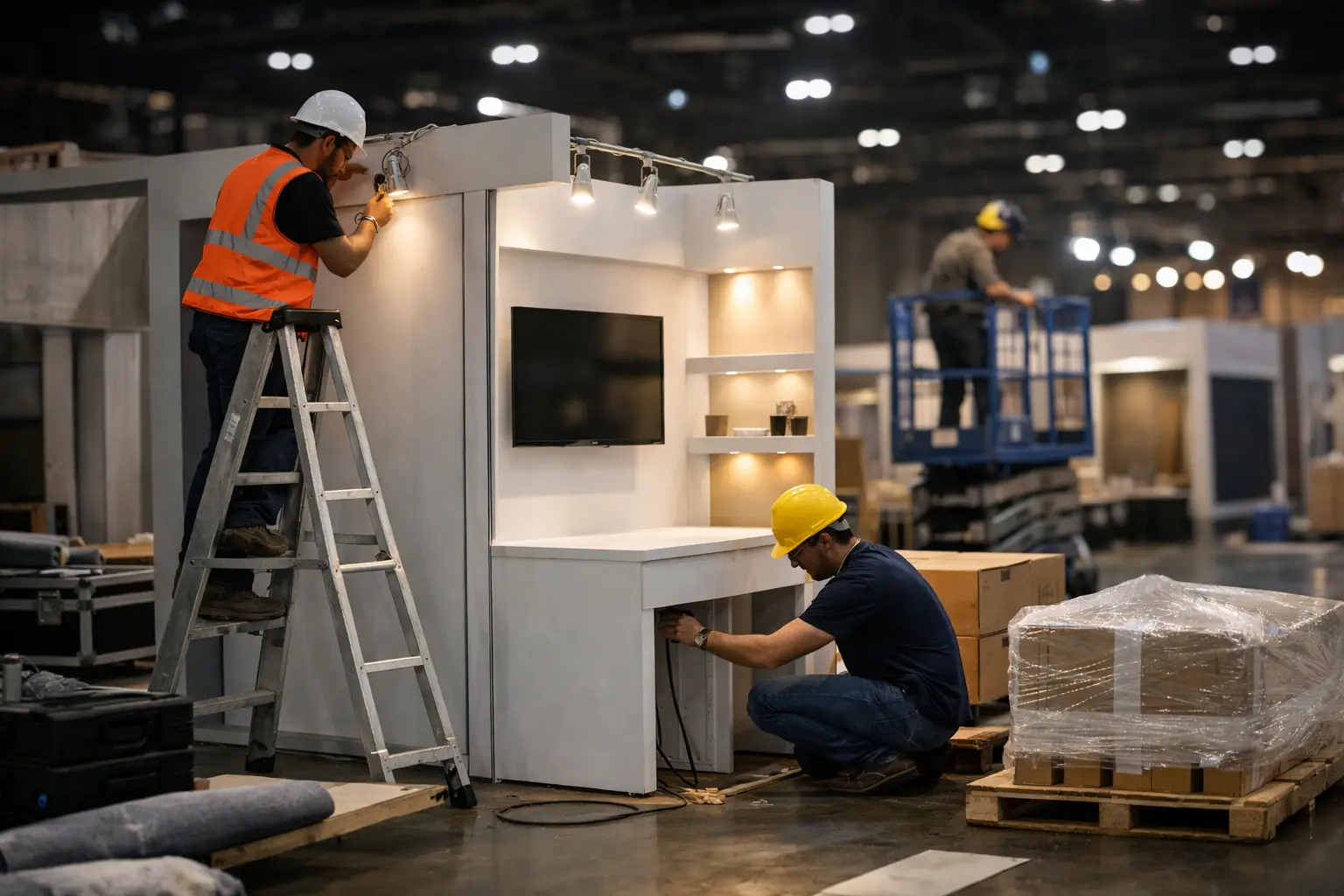
A booth that looks simple on the show floor may involve carpentry, electrical connections, graphic installation, furniture placement, and strict venue procedures behind the scenes. So, can booths be installed overnight? Often, yes. But an overnight installation is not a shortcut for late planning. It is a tightly managed operation that depends on approved designs, clear access, the right crew, and enough time for safety checks before doors open.
For event planners, marketing teams, and corporate coordinators, the real question is not whether work can happen at night. It is whether the booth can be delivered, installed, inspected, and handed over without creating last-minute risk for the event team.
Can Booths Be Installed Overnight at Any Venue?
Not automatically. Exhibition halls, convention centers, malls, hotels, and private event venues each set their own move-in windows, loading procedures, contractor rules, and safety requirements. Some venues specifically allocate overnight hours for exhibitors, particularly before a large trade show opens. Others limit work after certain hours because of noise, shared building operations, or restrictions on freight elevators and loading bays.
A venue may also distinguish between a light setup and a full build. Placing a backdrop, counter, TV screen, and branded collateral can be completed relatively quickly. A custom booth with built walls, raised flooring, overhead features, lighting, storage, or electrical work requires more coordination and may need earlier access.
This is why the venue manual should be reviewed before a booth design is finalized. It affects not only installation timing but also the materials, dimensions, electrical plan, fire-safety requirements, and crew credentials needed to enter the site.
What Makes an Overnight Booth Installation Work
Overnight setups succeed when the project is prepared well before the truck reaches the loading bay. The installation window may be short, but production, packing, and coordination should already be complete.
Approved artwork and a build-ready design
Artwork should be finalized before print production begins. A last-minute logo change, revised product message, or unapproved layout can delay graphic printing and create avoidable errors on site. For custom structures, the drawings should also account for venue height limits, access points, and the location of power supplies.
A practical design is especially valuable when setup time is limited. Modular frames, tension-fabric backdrops, pre-built counters, and plug-and-play display elements can reduce installation time while still creating a polished branded presence. Custom builds can be effective too, but they need a realistic production and assembly schedule.
Confirmed venue access and paperwork
Overnight crews need more than a venue address. They need confirmed loading access, move-in passes, vehicle details, freight elevator arrangements where applicable, and an understanding of where materials can be staged. At busy exhibitions, arriving without the correct documentation can mean waiting while other contractors work around the schedule.
Some venues require contractor insurance, work permits, risk assessments, or electrical declarations. These are not administrative extras. They can determine whether a team is allowed to begin work. A dependable booth partner handles these requirements early and keeps the organizer, venue, and client aligned.
A crew matched to the scope
The installation team should reflect the booth itself. A compact promotional setup may only require installers experienced in frames, graphics, displays, and furniture. Larger booths can require carpenters, electricians, audiovisual technicians, rigging specialists, or additional labor for unloading and positioning heavier items.
It is tempting to reduce costs by assigning too few people to an overnight build. That can become expensive when the crew loses time moving materials, waiting for equipment, or correcting rushed assembly. The better approach is to size the crew for the actual work and build in time for finishing details.
Materials packed in installation order
A well-packed delivery makes a substantial difference at 1:00 a.m. Structural components, tools, graphics, electrical items, furniture, and event collateral should be labeled and loaded in a sequence that supports the build. The team should not have to unpack every carton to find one missing connector or a set of printed panels.
For branded event campaigns, this coordination can include more than the booth structure. Lanyards, uniforms, giveaway items, brochures, display samples, and live-printing equipment may all need to arrive together. A single coordinated delivery reduces handoffs and helps the event team avoid chasing multiple vendors during setup.
The Typical Overnight Installation Sequence
While every venue differs, a disciplined schedule usually starts with check-in and a site walk. The team confirms the booth location, reviews the surrounding space, identifies power points, and verifies that the delivered items match the approved plan.
The structure is assembled first, followed by flooring or major display elements where required. Graphics, lighting, screens, furniture, and product displays are installed after the main framework is stable. This order protects printed materials from damage and gives technicians a clearer path for electrical and audiovisual work.
The final stage should never be treated as optional. The crew checks graphic alignment, cleans surfaces, secures loose cables, tests screens and lighting, and removes packing materials. If the booth includes shelves, displays, or interactive elements, they should be tested from a visitor’s perspective rather than simply switched on.
Before handover, the project lead should document the completed setup and confirm any venue sign-off. This gives the client confidence that the booth is ready before the morning team arrives.
Risks That Can Disrupt an Overnight Setup
The biggest delays are usually predictable. Late freight delivery, inaccessible loading bays, missing passes, incomplete artwork, unapproved electrical requirements, and damaged components can all put pressure on a narrow schedule. Congested move-in periods are another common issue, especially when many exhibitors are working in the same hall.
There is also a quality trade-off. A booth can sometimes be physically assembled overnight, but that does not mean it should be designed without any margin for adjustment. If a high-profile launch, executive visit, or media event depends on the space, allowing time for a pre-event inspection is a sensible safeguard.
Weather can matter as well when materials are moved between vehicles, outdoor loading docks, and interior halls. Printed graphics, electronics, and premium display pieces should be properly protected during transport. For outdoor activations, overnight installation may require additional lighting, weather protection, and site-security planning.
When Overnight Installation Is the Right Choice
An overnight build is often ideal when the venue only releases the space after another event, when business operations need to continue during the day, or when a trade show has a defined contractor move-in schedule. It can also be useful for retail activations, corporate roadshows, and office events where employees need the space ready at the start of the workday.
It is less suitable when the booth concept is still changing, site measurements are uncertain, or complex custom fabrication has not been tested. In those cases, a phased installation or earlier build window may be the better commercial decision. The fastest setup is not always the most reliable one.
For teams managing a campaign with branded apparel, promotional merchandise, printed collateral, and a physical booth, working with one experienced provider can simplify the schedule. Global Asia Printings can coordinate booth setup alongside the wider event branding requirements, helping teams keep production, delivery, and on-site presentation under one accountable plan.
Planning an Overnight Booth Setup With Confidence
Start the conversation with your booth provider as soon as the event date and venue are known. Share the floor plan, organizer guidelines, access window, branding objectives, estimated visitor flow, and any special requirements such as power, screens, product displays, or live customization. Early information enables better recommendations on booth format, material choices, budget, and staffing.
Then protect the final days before the event. Lock artwork by an agreed deadline, confirm approvals in writing, and nominate one client contact who can make fast decisions if a question arises overnight. A clear approval process prevents small issues from becoming costly delays.
A well-executed overnight installation should feel invisible to the people who arrive the next morning. They should walk into a clean, functional, on-brand space that is ready to welcome customers, employees, or event guests. That result comes from preparation, not luck – and the right planning partner makes all the difference when the clock is running.