


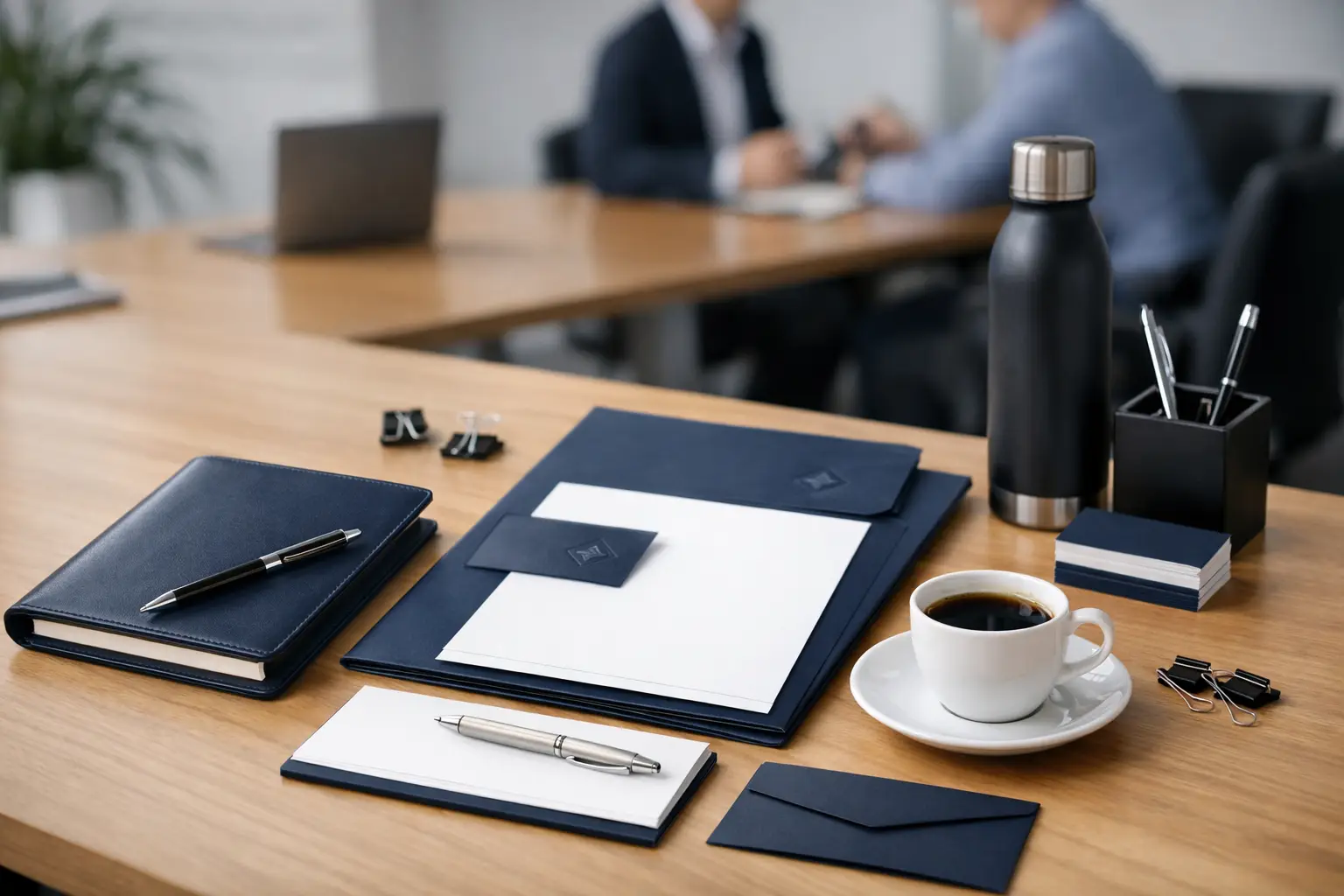
A meeting room tells people what kind of organization they are dealing with before the first slide appears. A clean notebook, a reliable pen, and a well-finished folder can make an internal planning session feel organized or give a client presentation the polish it deserves. The best branded stationery for meetings is not simply the item with the largest logo. It is the stationery people will genuinely use during and after the conversation.
For corporate teams, event planners, HR departments, and procurement buyers, the right selection comes down to purpose, audience, meeting length, and quantity. A board meeting, new-hire orientation, sales pitch, and large conference registration each call for a different approach. Choosing well prevents wasted budget while giving your brand a visible, useful place at the table.
What Makes Branded Meeting Stationery Effective?
Good meeting stationery should support the work happening in the room. Participants need somewhere to capture decisions, hold printed materials, and keep essential information together. Branding should be clear and consistent, but it should not get in the way of usability.
Start by considering what attendees will do. If they will take extensive notes, a quality notebook or writing pad is the priority. If they are reviewing proposals, contracts, or training materials, a presentation folder helps keep documents orderly. For a short briefing, a branded pen and notepad may be all that is needed. The most effective kits are intentional rather than overfilled.
Material quality matters because it affects how your brand is perceived. Thin paper that bleeds through, pens that skip, or folders that bend quickly can undermine an otherwise professional event. A slightly better specification often delivers more value than adding extra low-cost items that attendees leave behind.
The Best Branded Stationery for Meetings by Use Case
Branded notebooks for planning sessions and workshops
Notebooks are among the most versatile choices for branded meetings. They suit strategy workshops, training sessions, leadership offsites, client discovery meetings, and employee onboarding. Unlike a single-use handout, a good notebook can remain on a desk or travel in a work bag for months, extending brand visibility beyond the event itself.
For longer sessions, choose an A5 or A4 notebook with enough pages for practical note-taking. Hardcover notebooks feel more premium and work well for executive meetings, appreciation programs, or client gifting. Softcover and recycled-paper options are often better for large-scale training or conference programs where cost control and lighter packing matter.
Customization can include a logo on the cover, a full-color cover design, an event name, or a campaign message. For internal programs, adding the meeting theme or company values can make the notebook feel more relevant than a generic corporate giveaway. Keep the design readable. A clean logo placement and well-chosen brand color will generally look more professional than a crowded cover.
Custom pens people will actually keep
A pen is small, but it is often the most-used item in a meeting kit. It also has one job that cannot be overlooked: it must write well. A pen that feels comfortable and performs reliably makes a better impression than an elaborate model with poor ink flow.
Plastic ballpoint pens are a practical choice for high-volume conferences, school programs, recruitment events, and training sessions. Metal pens offer a more refined feel for client meetings, management gatherings, and formal corporate events. Gel pens and rollerball styles can be appropriate when the audience is likely to use them regularly, though they may require a higher budget.
For the branding, make sure the logo is readable at the pen’s print area. Very small text, lengthy taglines, and intricate artwork rarely reproduce well on a narrow barrel. A company name, logo, or short event title is usually enough. If your brand uses specific colors, request a print method and ink color that maintain consistency across the wider meeting set.
Presentation folders for client-facing meetings
Presentation folders do more than hold paper. They help your team hand over proposals, brochures, quotations, or onboarding documents in a way that feels prepared and easy to follow. They are particularly useful for sales presentations, partnership discussions, investor meetings, corporate briefings, and welcome packs.
A standard two-pocket folder is suitable for most uses, while folders with a business card slot add a useful personal touch for client-facing teams. For a more substantial document set, consider a folder with a notepad slot, elastic closure, or ring binder format. The right choice depends on how much material participants need to carry away.
Print finish should match the occasion. Full-color printed folders can support campaign artwork and product visuals. A more restrained logo treatment on a textured or matte surface may be better for professional services, financial presentations, or executive events. If the folder will contain only a few sheets, avoid overspecifying it. The goal is useful presentation, not unnecessary bulk.
Notepads and memo pads for fast, focused sessions
Branded notepads work especially well when the meeting is short, the attendee count is high, or the information changes frequently. They are easy to distribute at registration desks, place at individual seats, and replenish for recurring internal meetings.
A simple branded header with lined, grid, or blank pages is enough for most business settings. Grid pages can be useful for design workshops and project planning, while lined pages suit training notes and presentations. Tear-off pads are convenient for active sessions, although bound notepads tend to feel more substantial.
Notepads also work well as a lower-cost companion to a branded pen. This pairing is a dependable option for town halls, staff briefings, seminars, and community outreach events where a full stationery kit is not necessary.
Desk accessories that add value, not clutter
For longer workshops or executive programs, add-ons can improve the experience. Sticky note sets, page markers, rulers, document clips, and desk organizers can all be branded effectively when they relate to the meeting format. Page flags, for example, are useful for reviewing reports or training manuals. Sticky notes can help teams organize ideas during brainstorming sessions.
The trade-off is that extra accessories can make a kit look promotional rather than purposeful. Include them when they help participants complete a task. For a two-hour client presentation, a notebook and pen may be more appropriate than a large gift box of desk items.
Build a Meeting Kit Around the Attendee Experience
The best results come from planning the set as one experience. The colors, logo treatment, and materials should look connected, even when the items have different print areas. A notebook, pen, folder, and lanyard do not need identical artwork, but they should clearly belong to the same organization or event.
For internal meetings, practicality is usually the deciding factor. A notebook, pen, and name card or lanyard can support attendance, note-taking, and team identification. For client meetings, a premium folder and quality pen may carry more weight, especially if documents will be presented or taken back to the office. For conferences, a compact notebook or notepad, pen, agenda insert, and badge holder is easy to distribute at scale.
Think about logistics early. Ask whether items need to be individually packed, assembled into welcome kits, delivered to multiple locations, or set out at each seat. These details affect production lead time, packing requirements, and total cost. They also determine whether a product that looks attractive in a catalog is suitable for the actual event.
Choose Customization That Stays on Brand
Artwork preparation is one of the most common causes of delay in branded stationery orders. Supply vector logo files where possible, confirm the correct brand colors, and check whether the logo will be printed, embossed, foil stamped, or applied through another method. Each process has different strengths and limitations.
Full-color printing is ideal for detailed graphics, event artwork, and vibrant campaign themes. Screen printing can be a cost-effective choice for bold, simple designs. Embossing and debossing create a subtle premium effect on selected notebook covers and folders, but they work best with uncomplicated logos. Foil stamping can add impact for formal events, although it may not suit every brand or budget.
Before approving production, review a digital artwork proof carefully. Check spelling, logo position, dimensions, color references, and any names or dates. For important launches or high-value client programs, a physical sample may be worthwhile. It adds time upfront but reduces the risk of a larger, more expensive mistake later.
Budget and Lead Time: Where to Be Practical
A meeting stationery order should be planned around the event date, not just the product preference. Custom printing, stock availability, artwork approval, and packing all take time. Short deadlines may narrow material choices or require a simpler branding method, so it helps to identify the must-have item first.
If budget is tight, invest in the item attendees will use most. For many meetings, that is a reliable pen and a well-designed notepad. If the meeting is high stakes, shift more of the budget toward a notebook or presentation folder that supports a stronger client impression. Quantity also affects unit pricing, so a set for a recurring series of meetings may be more cost-effective when ordered together.
Working with one supplier for product sourcing, artwork guidance, printing, packing, and event items can reduce the coordination burden on busy teams. Global Asia Printings supports this kind of end-to-end planning, helping organizations match stationery choices to their budget, timeline, and event requirements.
The right branded stationery should make attendees feel prepared, not marketed to. Choose useful items, specify quality where it will be noticed, and give your team enough time to get every detail right. When the meeting ends, the best piece is the one participants continue reaching for at their desks.