


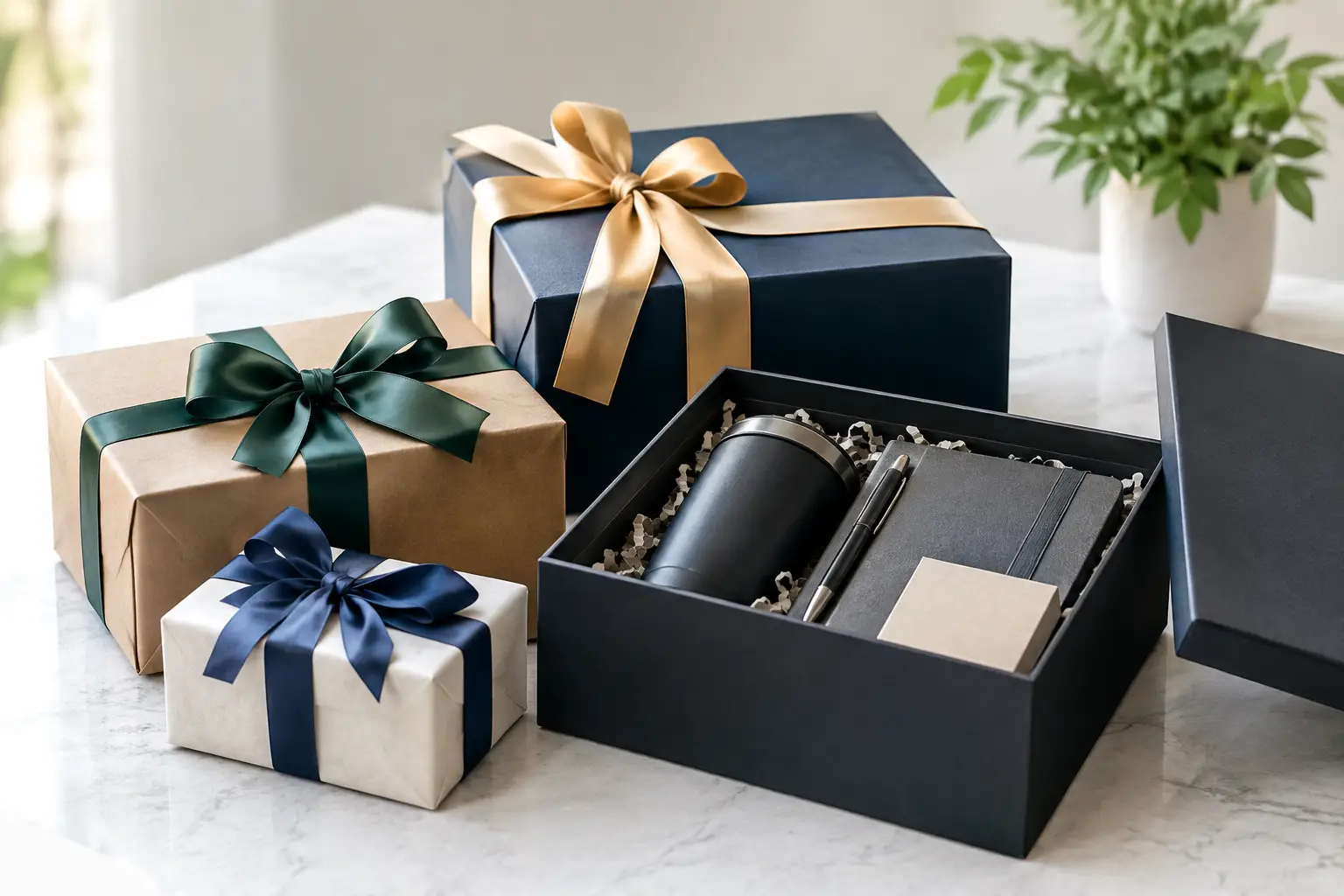
A corporate gift can be useful, well chosen, and beautifully branded, yet still feel ordinary if it arrives in a plain carton with little thought behind the presentation. Premium gift packaging trends are changing that expectation. For client appreciation, employee milestones, VIP events, and campaign launches, the packaging now carries as much of the brand experience as the item inside.
For business buyers, this does not mean adding expensive layers for the sake of appearance. The strongest packaging choices make gifts feel intentional while protecting products, supporting practical fulfillment, and staying aligned with the budget. The goal is a presentation people remember without creating unnecessary complexity for the team managing the order.
Why Premium Gift Packaging Trends Matter
Recipients form an impression before they use a tumbler, tech accessory, notebook, or apparel item. The texture of the box, the way it opens, the placement of a logo, and a short personal message all signal how much care the organization has put into the relationship. This is especially relevant for executive gifts and event welcome kits, where the first moment of receipt often happens in front of colleagues, clients, or social media cameras.
Premium packaging also helps bring varied merchandise together. A campaign kit may include a custom T-shirt, notebook, lanyard, and drinkware. Without a considered outer presentation, those products can look like a collection of separate purchases. A coordinated box, sleeve, or reusable bag turns them into one branded experience.
The right approach depends on the occasion. A high-value client gift may justify rigid construction and individual name personalization. A large employee appreciation order may benefit more from attractive, efficiently packed mailer boxes that control cost and simplify distribution. Premium should mean appropriate, not automatically elaborate.
1. Sustainable Materials With a Refined Finish
Sustainability remains one of the most visible premium gift packaging trends, but corporate buyers are moving beyond packaging that simply looks recycled. They want materials that feel substantial, print cleanly, and match their brand standards.
Uncoated kraft paper, recycled board, FSC-certified paper options, fabric pouches, and reusable tote-style packaging all offer practical alternatives to excessive plastic. The design matters as much as the material. A natural paper box with a sharp one-color logo, embossed detail, or branded paper band can look more considered than a glossy box covered in graphics.
There is a trade-off. Recycled stocks can have visible fibers and slight color variation, which may not suit every brand palette or photographic print. They also require early artwork testing when color accuracy is critical. A dependable supplier should explain these limitations before production, rather than treating every eco-focused option as interchangeable.
Reusable packaging deserves particular attention for internal programs and events. A drawstring pouch, premium tote, or insulated bag can continue to serve the recipient after the gift is opened. When the package has a second life, the organization gains more sustained brand visibility and reduces the risk of a beautiful box becoming immediate waste.
2. Quiet Branding Instead of Logo Overload
Premium packaging increasingly favors restraint. Rather than printing a large logo across every surface, many organizations are choosing smaller marks, blind embossing, foil accents, debossed logos, or branded belly bands. These details create a more polished result without making the recipient feel they have received an advertisement.
This does not mean branding should disappear. The logo still needs to be recognizable and consistent with the broader campaign. The difference is in placement and hierarchy. A box might carry a subtle logo on the lid, while the inside reveals a branded message card, product insert, or full-color campaign artwork.
For organizations with multiple stakeholders, this approach can also make approvals easier. The external package can remain aligned with corporate identity guidelines, while an interior card carries event-specific information, a department message, or a sponsor logo. That flexibility is useful for conferences, onboarding kits, and partnership activations.
3. Personalization That Feels Worth Keeping
A recipient’s name on a gift box, card, pouch, or product is a simple detail with outsized impact. It turns a bulk order into a direct gesture, especially for leadership gifts, service awards, new-hire kits, and small-group client events.
Variable-data printing has made personalized packaging more accessible, but it still requires careful operational planning. Names must be supplied in an accurate, final format. The team packing the gifts needs a clear matching process so the right item, card, and box stay together. If gifts will be shipped individually, address labels and carrier requirements must be incorporated into the schedule.
Personalization is most effective when it serves the moment. For a 50-person executive dinner, individual names can be an excellent investment. For 2,000 conference attendees, a personalized welcome message or themed insert may create a similar sense of care without adding significant sorting time and cost.
4. Structured Unboxing for Multi-Item Gift Sets
Gift sets are becoming more intentional in how they are arranged. Instead of placing several products loosely into a box, brands are using custom inserts, tissue wraps, dividers, and layered reveals. This creates order, protects fragile items, and makes the contents easier to present at an event or distribute through an office.
A well-designed insert is particularly valuable when the set contains items with different shapes, such as electronics, drinkware, snacks, and stationery. It prevents movement in transit and avoids the disappointing experience of opening a premium box to find products jumbled together.
However, custom inserts are not always the right answer. They may require higher minimum quantities, longer lead times, and more detailed product measurements. For short-turnaround projects, standard boxes with branded tissue paper and a carefully placed card can still produce a strong result. The best packaging plan balances visual impact with the realities of quantity, timeline, and storage.
5. Event-Ready Packaging That Supports Distribution
Packaging is no longer only an end-of-production detail. For event teams, it affects how quickly gifts can be handed out, carried around a venue, restocked at a booth, and transported after the event ends.
For example, a welcome kit designed for registration should be easy to identify and fast to distribute. A sturdy branded bag may work better than a closed box when attendees need to move immediately into a conference. A VIP gift delivered to a hotel room, on the other hand, benefits from a more elevated box-and-card presentation.
Live experiences are influencing this trend as well. A pre-packed gift can be paired with on-site personalization, such as a printed name, event graphic, or custom apparel element. This combines the reliability of prepared inventory with the excitement of a made-for-me moment. It is particularly effective for product launches, appreciation days, and booth activations where attendees expect something more engaging than a standard giveaway.
How to Choose Packaging for the Gift and the Moment
Before selecting a box style or finish, start with the use case. Ask where the gift will be received, whether it will be carried or shipped, how many items it contains, and what the recipient should feel when opening it. These answers narrow the choices quickly.
A practical packaging brief should confirm four areas:
- The gift contents, including dimensions, weight, and any fragile or temperature-sensitive items.
- The brand treatment, such as logo placement, campaign colors, personalized names, and printed inserts.
- The fulfillment method, whether gifts are handed out at an event, delivered to offices, or shipped individually.
- The production deadline, including time for artwork approval, sampling, packing, and delivery.
This early planning prevents common problems, such as choosing a box before the final product dimensions are confirmed or approving a premium finish that cannot be completed within the event timeline. It also allows the supplier to recommend alternatives when a preferred option is outside the budget.
Premium Packaging Works Best as Part of One Production Plan
The strongest results come when merchandise, packaging, printing, and fulfillment are planned together. This reduces the handoffs that often cause mismatched colors, late-arriving components, and packing errors. It also gives buyers a clearer view of total cost instead of treating packaging as a last-minute add-on.
At Global Asia Printings, corporate teams can coordinate branded merchandise, custom packaging, printed collateral, and event requirements through one project workflow. That matters when a gift set needs to look consistent across every item and arrive ready for distribution on a fixed date.
A premium gift does not need the largest box, the most foil, or the most elaborate insert. It needs packaging that fits the recipient, protects the products, reflects the brand with confidence, and arrives ready for the moment it was created to support.