


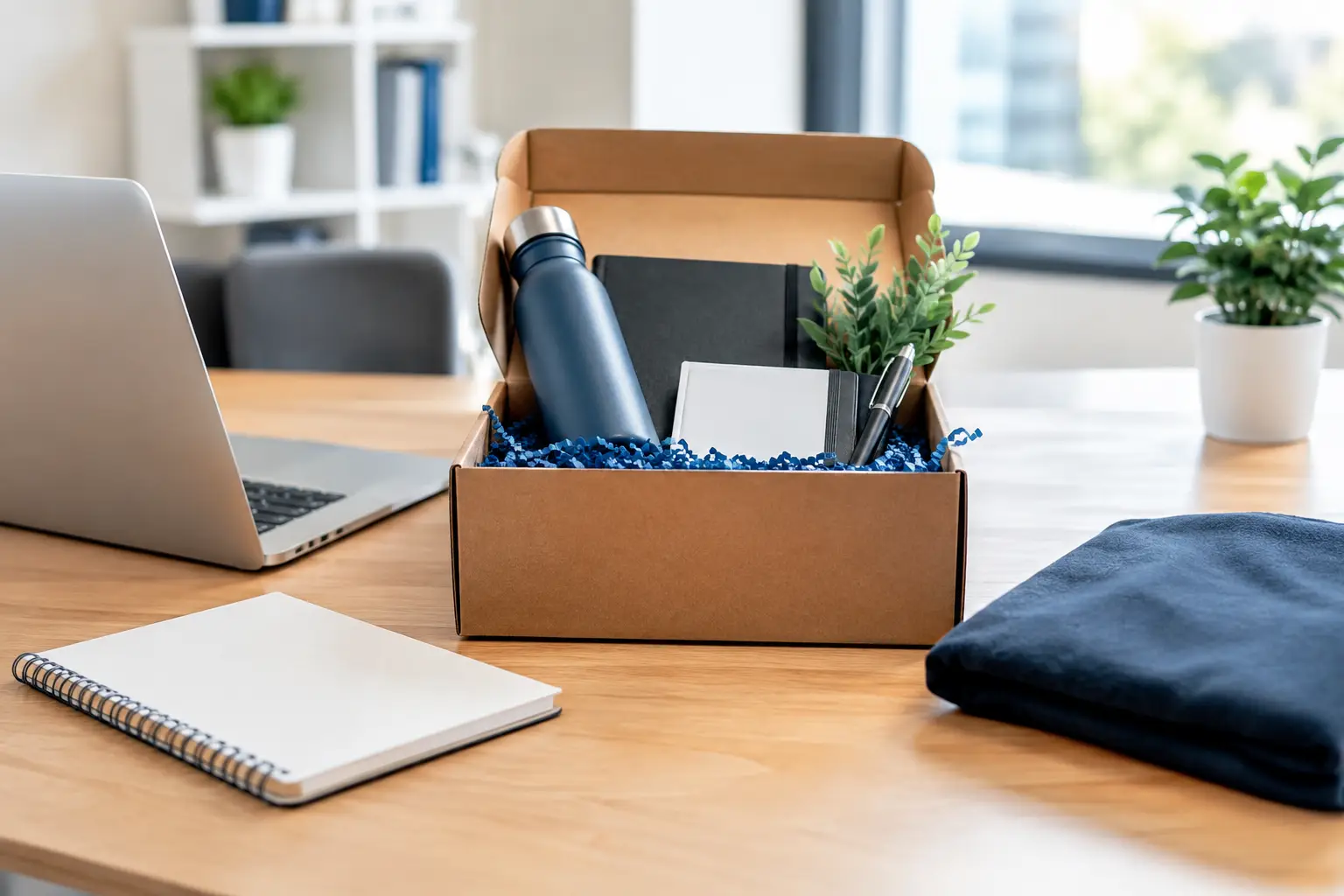
A new hire can form an opinion about an employer before their first team meeting. A thoughtfully prepared kit waiting at their desk, home, or orientation session says the company planned for their arrival. Knowing how to create employee onboarding kits is less about adding more merchandise and more about choosing useful, well-branded items that make people feel ready to belong.
For HR teams, office managers, and procurement coordinators, the challenge is balancing a polished first impression with practical budgets, changing headcounts, and delivery deadlines. The strongest kits are organized around the employee experience, not simply a logo placement.
Start With the First-Day Experience
Before selecting products, decide what the kit should accomplish in the employee’s first week. A field sales representative, a hybrid office employee, and a new retail team member need different things. The common goal is to reduce first-day friction while reinforcing company culture.
Consider where and how the kit will be received. If new hires attend a group orientation, a branded tote bag or presentation box creates a coordinated welcome moment. If employees work remotely, packaging must protect the items during shipping and remain easy to open. If kits are distributed across several office locations, consistent packing and labeling become as important as product selection.
Also set a clear standard for who receives what. Some companies issue one core kit to every employee, then add role-specific items. Others create tiers based on seniority, work arrangement, or program type. A consistent core keeps the program fair and easier to manage, while selective add-ons prevent unnecessary spending.
How to Create Employee Onboarding Kits Around Real Needs
Start with products employees will use repeatedly. Everyday utility gives branded merchandise a longer life and keeps your company visible without making the kit feel promotional.
A practical core kit often combines a branded notebook and pen, reusable drinkware, an ID lanyard, and a bag for carrying work essentials. Apparel can be a strong addition when it suits the culture, such as a T-shirt, polo, jacket, or cap for customer-facing teams, events, and team-building programs.
Beyond the basics, choose items based on the work environment:
- For office-based teams, consider desk organizers, wireless chargers, mouse pads, stationery, and insulated tumblers.
- For hybrid and remote employees, include practical home-work items such as laptop sleeves, webcam covers, portable chargers, or a quality hoodie.
- For field, operations, and event teams, prioritize durable bags, uniforms, rain gear, caps, and easy-to-carry drinkware.
- For leadership or milestone hires, add premium gift items, travel accessories, or awards that feel appropriate to the role.
The right mix depends on the budget and the expected lifespan of each item. A lower-cost item that is genuinely useful may create more goodwill than an expensive novelty product that ends up in a drawer.
Include Culture, Not Just Merchandise
Physical items set the tone, but the human message is what makes an onboarding kit memorable. Include a short welcome note from a leader, team, or hiring manager. Keep it specific and warm. A generic paragraph about company values has less impact than a note that recognizes the employee’s role and the contribution they are expected to make.
A printed first-week schedule, office map, key contacts, or simple checklist can also remove uncertainty. For remote employees, include instructions for accessing orientation materials and receiving any technology issued separately. These documents do not need elaborate production, but they should use the same visual identity as the rest of the kit.
If your company has a mission-driven culture, use the kit to show it through the products themselves. A reusable bottle may support a waste-reduction initiative. A locally sourced snack or community-made item may reflect your social commitments. The point is authenticity. Employees can tell when an item was selected with care and when it was added only to fill a box.
Build a Budget That Covers the Full Program
The product cost is only one part of the onboarding kit budget. Plan for design setup, printing, packaging, kitting, size variations, individual name labels, storage, and delivery. A kit that appears affordable per unit can become costly if these operational requirements are not identified early.
A useful approach is to set a target cost per employee and divide it into three parts: core merchandise, printed materials and packaging, and fulfillment. This makes it easier to protect the items that matter most if prices change or the hiring volume increases.
Quantity has a major effect on unit cost. Ordering for a large annual hiring plan may reduce pricing, but it also creates storage needs and risks leaving you with outdated items after a rebrand. For organizations with unpredictable hiring, a smaller batch with replenishment orders can be more sensible. It may cost more per kit, but it reduces waste and avoids tying up budget in inventory.
For apparel, ask for a size breakdown before production. A one-size approach can simplify logistics, but it rarely works well for clothing. Collecting sizes during preboarding improves the employee experience and prevents unused inventory.
Make Brand Consistency Easy to Maintain
Onboarding kits should look coordinated, not crowded with logos. Choose one clear visual direction: the company logo, approved brand colors, and a limited number of decoration positions. A bag, notebook, bottle, and apparel item do not all need the same oversized mark.
Different products require different printing methods. Screen printing can be cost-effective for larger apparel runs with simple colors. Embroidery gives polos, caps, and jackets a more premium finish. Digital printing suits detailed artwork and shorter runs, while engraving can work well for metal drinkware and executive gifts. The best method depends on the material, artwork, order quantity, and expected use.
Provide brand assets in the correct format before finalizing products. Vector logos, approved color references, and clear artwork guidance help prevent delays and inconsistent results. Request a visual mockup before production so stakeholders can confirm placement, scale, and color treatment. This small review stage is far less expensive than correcting finished merchandise.
Plan Production and Delivery Backward From Day One
Short lead times are common in hiring, especially when a department is growing quickly or a new office is opening. That does not mean every onboarding program needs to be rushed. Build a repeatable process that starts well before an employee’s first day.
Begin with the delivery date, then work backward through artwork approval, product sourcing, customization, packing, and shipping. Leave room for revisions and approval delays, particularly when several departments need to sign off. Custom apparel, specialty electronics, and premium packaging may require more lead time than standard stationery or tote bags.
Assign one internal owner for the program. This person does not need to pack every kit, but they should maintain the approved product list, artwork files, supplier contacts, current inventory, and onboarding schedule. Without clear ownership, kits often become inconsistent as different teams place one-off orders.
For larger programs, a single production partner can simplify coordination across apparel, promotional items, printed inserts, and kit assembly. This reduces handoffs, makes quality checks easier, and gives the buyer one point of contact when timelines shift. Ask early about minimum order quantities, sample options, packing methods, and delivery schedules.
Check the Kit Before It Reaches a New Hire
Quality control is part of the welcome experience. Before releasing a full batch, inspect a completed sample as the employee would receive it. Check logo clarity, color accuracy, garment sizing, spelling on printed materials, and whether the packaging protects the contents.
Then review the practical details. Is the kit easy to carry home? Is it too heavy or too large to ship economically? Does the welcome note have the correct employee name and start date? Are any items restricted for international delivery? These questions may seem minor, but they often determine whether a program feels organized or improvised.
It is also worth asking new hires what they actually used after 30 days. Their feedback can reveal that the branded charger was highly valued, while the extra giveaway item was not. Use those insights to refine future orders rather than repeating the same kit by habit.
A good onboarding kit does not need to be extravagant. It needs to arrive on time, look considered, and help a new employee start with confidence. When each item has a purpose and every production detail is handled carefully, the kit becomes a practical reminder that the company is prepared to support the people joining it.