


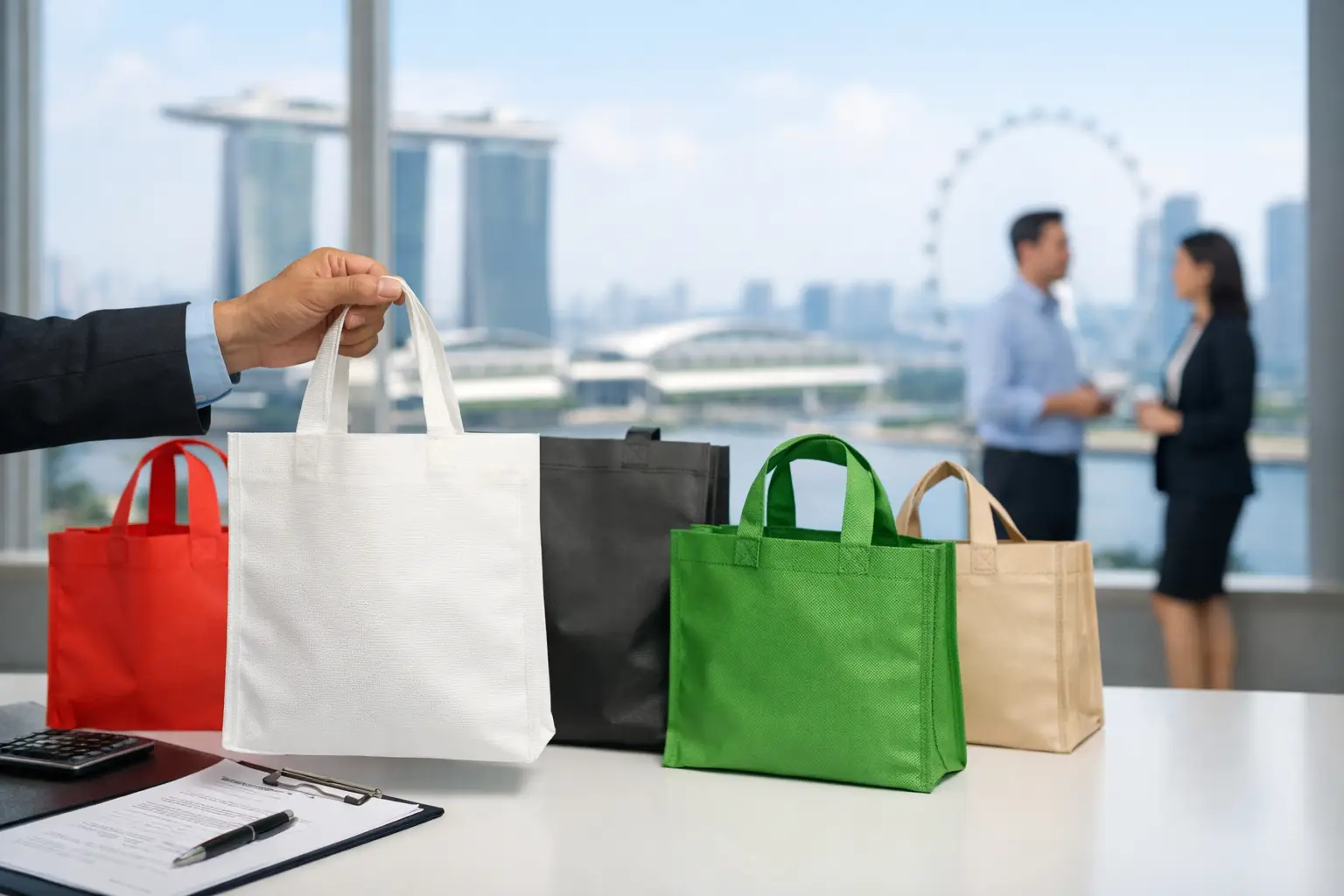
Cheap bags are expensive when they arrive late, print poorly, or fall apart halfway through your event. For marketing teams, HR buyers, procurement staff, and event organizers, choosing the right Non Woven Bag Supplier in Singapore is less about finding the lowest quote and more about getting the job done without surprises.
Non-woven bags remain one of the most practical branded items for corporate giveaways, retail use, conferences, roadshows, school programs, and internal campaigns. They are lightweight, useful, easy to customize, and suitable for high-volume orders. But the final result depends heavily on the supplier you choose. Material quality, stitching, print accuracy, artwork support, and delivery reliability all affect whether the bags strengthen your brand or create unnecessary problems.
What businesses actually need from a non woven bag supplier in Singapore
Most corporate buyers are not just purchasing bags. They are managing a campaign, an event deadline, a staff initiative, or a client-facing activity where branded merchandise needs to arrive on time and look consistent. That means a supplier should do more than provide a catalog and a unit price.
A dependable partner should be able to guide you on bag size, handle type, material thickness, printing method, and packaging based on your intended use. A giveaway bag for a roadshow has very different requirements from a premium event tote for conference delegates. One needs cost efficiency at volume. The other may need better finishing, stronger construction, and cleaner logo presentation.
This is where many buyers run into issues. One vendor offers low pricing but limited customization. Another can print well but has weak communication. A third may be able to supply the bags but not support the wider event requirements around lanyards, T-shirts, booth setup, or last-minute branded items. Managing multiple vendors creates delays and increases the chance of mismatch across your campaign materials.
How to evaluate a Non Woven Bag Supplier in Singapore
The best way to compare suppliers is to look beyond the initial quote. Pricing matters, but so do the details that determine whether the order runs smoothly.
Start with material and construction quality
Not all non-woven bags are made to the same standard. GSM, stitching quality, handle attachment, gusset design, and overall structure affect durability and presentation. If the bag is meant to carry brochures, product samples, boxed gifts, or event kits, weak construction becomes obvious very quickly.
A reliable supplier should be able to explain what material thickness suits your use case. If the order is for a short campaign with lightweight inserts, a more economical specification may work. If the bags need to carry heavier contents or be reused repeatedly, paying slightly more for better material often saves you from complaints and waste.
Check printing methods and artwork handling
Your logo is the first thing people notice. Poor print alignment, faded colors, or incorrect scaling can make even a well-made bag look unprofessional. Ask how the supplier handles artwork preparation, color matching, print placement, and proofing.
This is especially important for brands with strict CI requirements. A supplier that can advise on file setup and realistic print outcomes is far more valuable than one that simply accepts artwork without review. Some logos look sharp in one-color printing, while others need adjustments to remain legible on textured bag surfaces. A good supplier will flag these issues early.
Review lead times honestly
Lead time is where many projects go off track. Buyers often ask for an urgent order, but urgency means different things depending on quantity, printing complexity, stock availability, and delivery schedule. A supplier should be straightforward about production timing rather than overpromising.
For event-driven orders, this matters even more. If your bags are part of a larger rollout that includes apparel, printed inserts, and booth materials, delays in one item can affect the entire activation. Working with a supplier that understands event timelines and production dependencies reduces stress significantly.
Look at order flexibility and budget guidance
Some projects need a simple standard bag with one-color print. Others need multiple sizes, different artwork versions, or coordinated merchandise bundles. A useful supplier helps you balance branding goals with budget realities instead of pushing a one-size-fits-all solution.
This is especially helpful for HR teams, schools, and procurement departments managing quantity-heavy orders. Sometimes a small design adjustment, size change, or print simplification can reduce cost without affecting the overall impact. That kind of guidance is a practical advantage, not just a sales feature.
Common use cases for non-woven bags in business settings
Non-woven bags continue to perform well because they fit so many commercial and organizational needs. For exhibitions and trade shows, they work as carry bags for brochures, catalogs, samples, and giveaway items. For employee engagement programs, they can be packed with onboarding kits, wellness items, or festive gifts.
Retail promotions and product launches also benefit from them because they are visible, functional, and easy to distribute in volume. Schools and institutions often use them for orientation packs, open house events, and campaign materials. In each case, the bag is not just packaging. It becomes part of the brand experience.
That is why the right specification matters. A conference tote for executives may need cleaner finishing and a larger usable print area. A supermarket or roadshow giveaway may prioritize quantity, cost control, and strong handles. The supplier should be able to recommend the right configuration based on actual usage, not guesswork.
Red flags buyers should not ignore
Some issues are easy to miss until the order is already in production. One common red flag is vague communication around print size, material grade, or final dimensions. If specifications are not clearly documented, misunderstandings are likely.
Another warning sign is pricing that seems unusually low without a clear breakdown. In many cases, low quotes are tied to thinner material, smaller print areas, weaker stitching, or limited quality checks. That does not always make the supplier unsuitable, but it does mean you need to understand exactly what you are getting.
Inconsistent response times are also a problem. If communication is already slow before payment, it rarely improves once production begins. For corporate orders with internal approval chains and fixed deadlines, responsiveness is part of the service.
Why one-stop execution makes a difference
For many organizations, bags are only one part of a larger order. They may also need T-shirt printing, lanyards, flyers, notebooks, event signage, or booth setup. Coordinating these items through separate vendors can create unnecessary back-and-forth, especially when artwork versions, brand colors, and delivery timing need to stay aligned.
This is where an experienced merchandise and printing partner adds real value. Instead of treating the bag order as an isolated purchase, the supplier can help fit it into the broader campaign. That means better consistency across printed items, easier project coordination, and fewer last-minute issues.
Global Asia Printings supports this kind of practical coordination for business buyers in Singapore who need customization, merchandise sourcing, and event-related production under one roof. For teams managing deadlines rather than just unit costs, that kind of support often matters more than a marginal price difference.
Questions worth asking before you confirm an order
Before placing a bulk order, ask how the supplier handles samples or mockups, whether the quoted price includes printing, and what happens if artwork needs revision after discussion. Clarify delivery timing, packing method, and whether there are quantity tolerances for production runs.
It also helps to ask what similar projects they usually support. A supplier familiar with exhibitions, internal staff distributions, school events, and promotional campaigns will typically give more practical recommendations than one focused only on generic resale.
The right conversation should leave you with fewer unknowns, not more. You should know what the bag will look like, how it will be printed, when it will arrive, and what trade-offs were made to meet your budget.
Choosing based on outcomes, not just price
A non-woven bag may seem like a simple item, but in a business setting it carries your logo, your planning standards, and sometimes your event reputation with it. The best supplier is the one that can match quality to purpose, advise clearly, and deliver consistently under real deadlines.
If your order is tied to a campaign, conference, staff initiative, or promotional push, choose a supplier that understands execution as well as production. That is usually the difference between bags that simply fill a requirement and bags that support the impression your brand is trying to make.