


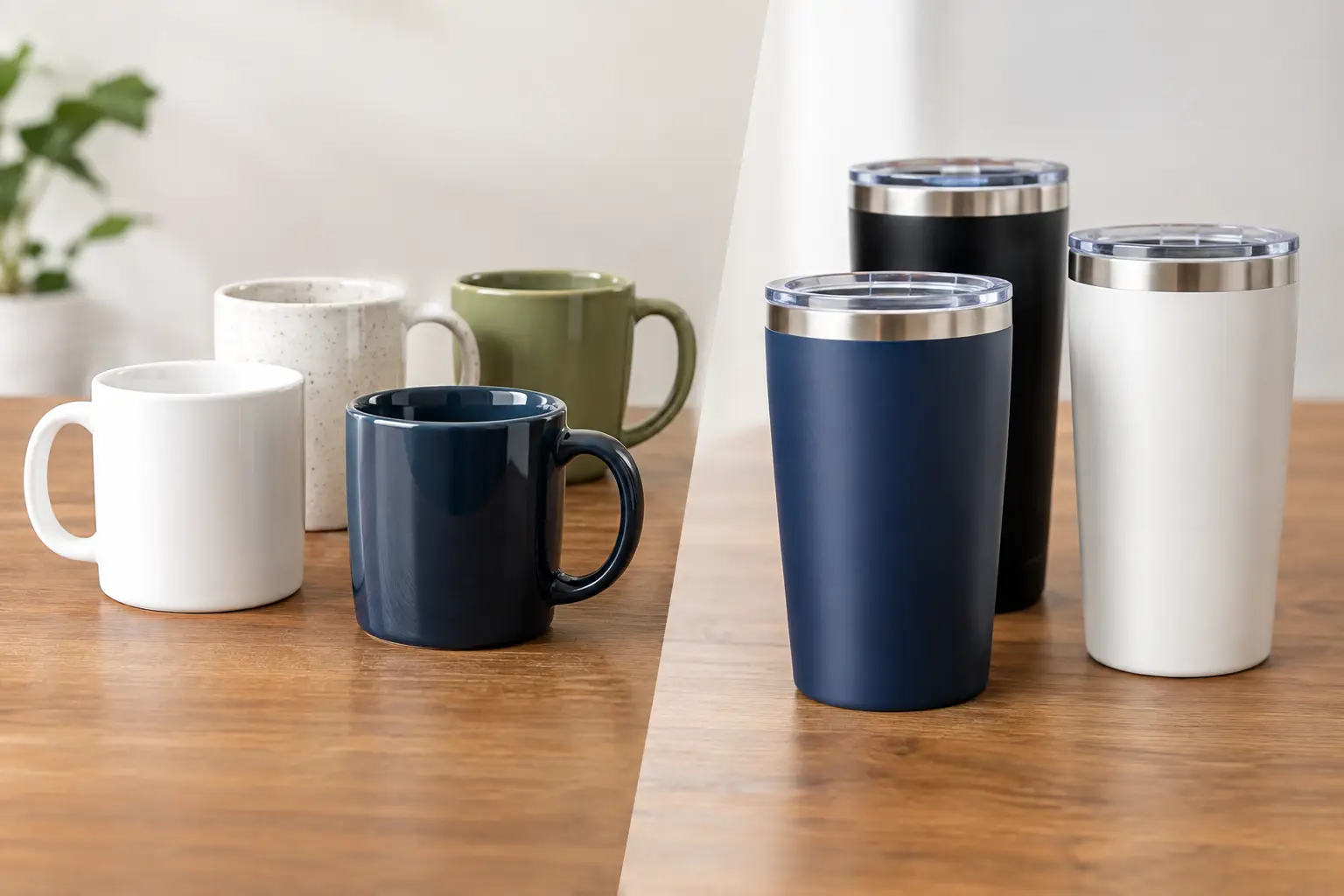
A drinkware choice can quietly shape how often a campaign is seen. When deciding between custom mugs versus tumblers, the better option is rarely the one that simply looks best in a product catalog. It is the one that suits the recipient’s routine, represents the occasion well, and can be branded reliably within your budget and deadline.
For corporate teams, event planners, HR departments, and procurement buyers, both products have a clear place. Mugs feel familiar, welcoming, and office-ready. Tumblers feel active, premium, and suited to life beyond the desk. Understanding where each performs best helps turn a practical giveaway into merchandise people keep using.
Custom Mugs Versus Tumblers: The Core Difference
The main distinction is use case. A custom mug is usually designed for hot drinks at a desk, in a pantry, or at home. It is a dependable option for coffee, tea, staff welcome packs, and client gifting where comfort and familiarity matter. Ceramic mugs also provide a broad, easy-to-see print area, giving logos and campaign artwork a prominent place.
A tumbler is built around portability and temperature retention. Depending on the model, it may feature double-wall insulation, a spill-resistant lid, a straw, or a handle. These details make it better suited to commuting, outdoor activities, meetings on the move, and longer workdays. It can also carry a higher perceived value, especially in stainless steel or insulated formats.
Neither is automatically the stronger branded product. The right choice depends on what you want recipients to do with it after the event is over.
When custom mugs make more sense
Mugs are a practical choice when the audience is likely to use them in a stable setting. Think employee appreciation programs, company pantries, training sessions, school staff gifts, hospitality packages, or year-end client presents. They work particularly well when the aim is to create a warm, everyday connection with the brand.
A mug can also be a cost-effective answer for larger quantities. Standard ceramic styles are generally accessible for mass distribution, while colored interiors, colored handles, matte finishes, spoon mugs, and glass options provide room to match a campaign theme. For organizations working with a fixed per-person allowance, this range makes it easier to control spending without making the item feel generic.
The trade-off is portability. A mug is less likely to travel in a bag, and it does not retain temperature as long as an insulated tumbler. It also requires more care in packing and distribution because ceramic can break if mishandled.
When tumblers are the stronger choice
Tumblers are well suited to recipients who commute, attend meetings across different locations, travel, exercise, or spend time outdoors. They are effective for conference welcome kits, sales incentive programs, executive gifts, wellness campaigns, sports events, and premium employee recognition.
The practical benefits are easy to understand. A good tumbler can help keep coffee warm or cold drinks chilled, while a secure lid supports use in cars, offices, and event venues. Because it often stays with the user throughout the day, it may generate more frequent brand exposure than a mug reserved for a desk or kitchen shelf.
However, tumblers usually require a larger investment, especially insulated stainless-steel designs. Their curved surfaces and finishes can also affect print options. A small logo may look refined, but detailed artwork, fine gradients, or long messages may need adjustment to remain clear and durable.
Match the Drinkware to the Occasion
The occasion should guide the product before color or decoration is discussed. For a company’s internal onboarding program, a mug paired with stationery or a custom T-shirt can make a useful, coordinated welcome set. It is familiar, easy to distribute, and appropriate for a broad mix of employees.
For a large public event, the decision depends on audience movement. If attendees will be seated for workshops or presentations, mugs can support a comfortable hospitality experience. If they will be moving between exhibition areas, outdoor activities, or multiple venues, tumblers are more practical and more likely to leave the event with them.
Client gifts need a different lens. A ceramic mug can feel personable when paired with premium coffee or tea, particularly for relationship-driven gifting. A quality insulated tumbler may be more suitable when the objective is a more elevated, long-lasting gift. The recipient profile matters here: an office-based client may appreciate either, while a frequently traveling client may get more value from a tumbler.
For sustainability-focused campaigns, both options can work if they replace disposable cups over time. A tumbler has the advantage of supporting drinks on the go, while a reusable mug can encourage less reliance on disposable pantry cups. The key is to select a product recipients will genuinely use rather than choosing a sustainability message without considering daily habits.
Branding Considerations for Mugs and Tumblers
Branding is not only about putting a logo on a surface. The shape, material, finish, and available print area all influence how artwork is perceived.
Ceramic mugs are often more forgiving for larger campaign graphics. Their broad sides can accommodate a logo, tagline, illustration, event name, or even a personalized name. Full-color printing can make sense for vibrant creative concepts, while a simple one-color logo gives a clean corporate result. For a polished finish, artwork should be prepared with enough contrast against the mug color and positioned to remain visible when held.
Tumblers often reward simpler design. Stainless steel finishes, powder coating, and narrow cylindrical shapes can make a single-color logo, laser-engraved mark, or concise campaign message look premium. Some models support wider print areas, but not every tumbler is suitable for complex artwork. If your identity relies on detailed visuals, confirm the decoration method early rather than assuming the same file will work across every product.
Color selection also deserves attention. A white mug can make colorful artwork stand out, while black, navy, or matte finishes can create a more executive look with a restrained logo treatment. For tumblers, matching a key brand color may strengthen recognition, but stock availability and minimum quantities can affect the final choice.
At GAPS, product selection and artwork review can be handled as part of the same project, helping teams identify a drinkware option that works for both the intended use and the planned branding method.
Budget, Quantity, and Lead Time Matter
A tumbler may appear to offer more value because of its features, but a lower unit cost mug can be the smarter investment for a high-volume campaign. The answer depends on distribution scale and the desired impact per recipient. If you are preparing 1,000 items for a staff event, a well-designed mug may give you better reach. If you are recognizing 50 top performers, a higher-quality tumbler may feel more appropriate.
Packaging should be included in budget discussions from the beginning. Mugs may need protective boxes to reduce breakage during transport, while tumblers may come with individual packaging depending on the model. If the item will be mailed to employees or clients, shipping weight, dimensions, and product protection become part of the decision as well.
Lead time can be equally important. Stock availability varies by color, capacity, material, and quantity. Customization methods also have different production requirements. Buyers with short timelines should be ready to prioritize readily available models and a straightforward print approach. This protects quality while keeping delivery expectations realistic.
How to Make the Final Choice
Start with the recipient’s likely routine. Choose a mug if your audience will mostly enjoy hot drinks at a desk, in a staff room, or at home. Choose a tumbler if portability, insulation, and travel-friendly use are central to the experience.
Then consider the message. A broad, visual event campaign may be better expressed on a mug. A premium logo or employee recognition message may look especially strong on an insulated tumbler. Finally, align the choice with quantity, available budget, fulfillment needs, and event date before approving the design.
The most effective drinkware is the item recipients reach for without being reminded. Choose the format that fits their day, give the branding room to look intentional, and your campaign can stay visible long after the event materials are packed away.