


A logo that cracks after two washes does not support a professional brand. For uniforms, campaign shirts, staff apparel, and high-volume event merchandise, screen printing remains one of the most dependable ways to achieve bold color, strong coverage, and long-lasting results at a practical unit cost.
For business buyers, the question is rarely whether a design can be printed. The real question is whether the finished item will look right, arrive on time, suit the audience, and stay within budget. The right print method depends on your artwork, garment choice, order quantity, and the role the merchandise needs to play.
Why Screen Printing Works for Business Orders
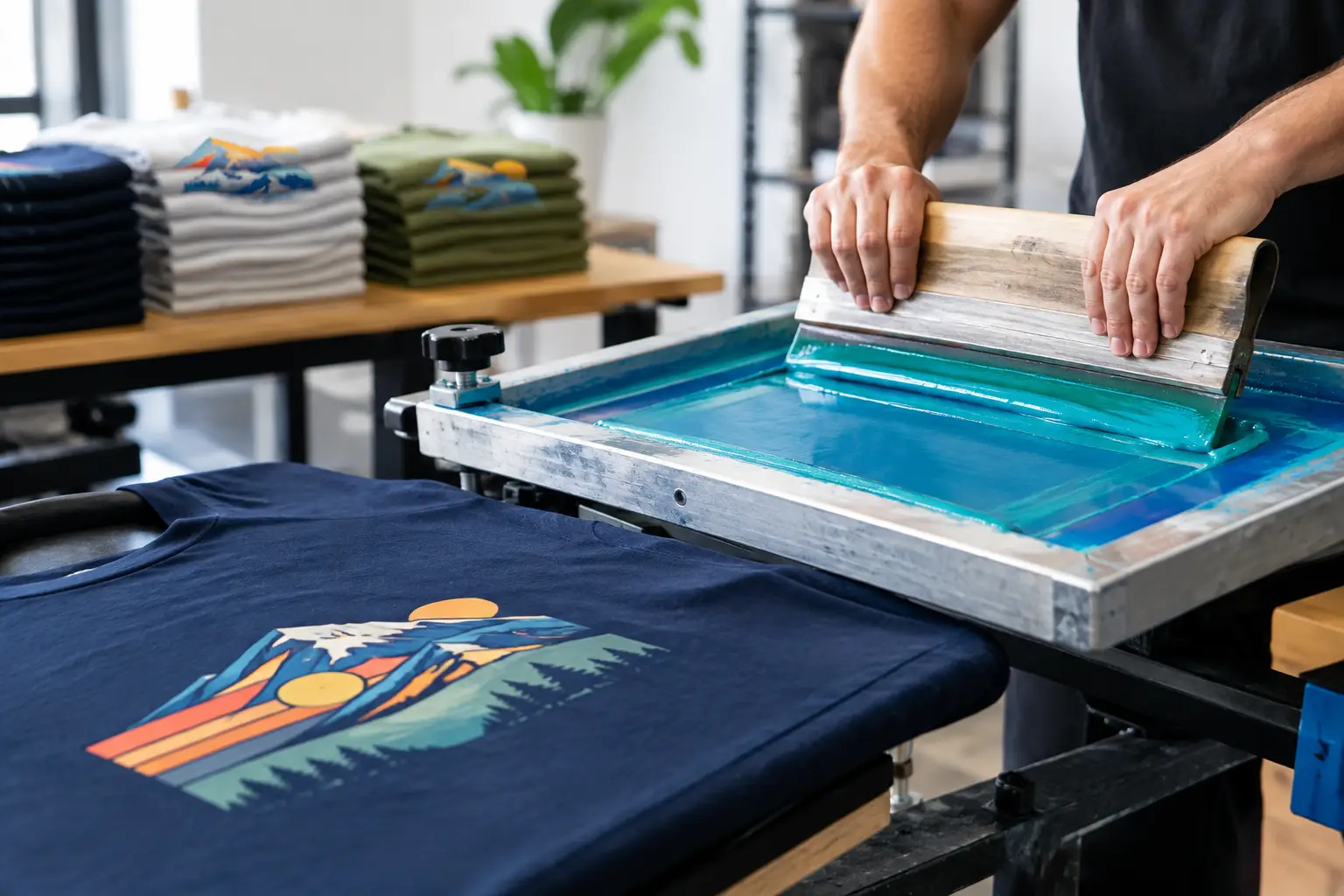
Screen printing applies ink to a product through a prepared mesh screen. Each color in the design is printed separately, creating layered, opaque artwork that holds up well on fabric. It is particularly effective for cotton T-shirts, polos, tote bags, jackets, uniforms, and promotional apparel where visibility and durability matter.
The process is built for repeatability. Once screens are prepared, the same artwork can be applied consistently across a larger run of shirts or bags. That makes it a strong choice for company-wide apparel, sports day shirts, roadshow crews, school programs, product launches, and event giveaways.
It also gives brand colors real impact. A white or light ink can be printed over a dark garment as a solid base, helping logos and messages remain legible from a distance. For a busy event floor or outdoor activation, that clarity is often more valuable than a highly detailed image that disappears when viewed from several feet away.
The trade-off is setup. Because a separate screen is required for each ink color, a one-color or two-color logo is generally more cost-efficient than a complex full-color illustration. Screen printing is not automatically the best answer for every small order, photo-based design, or item with individualized names. It earns its place when quantity, color consistency, and durability are the priority.
Choose the Right Screen Printing Setup
A good production plan starts with the intended use of the item. A black staff polo worn several times a week has different requirements from a one-day campaign shirt. Similarly, a premium cotton tote for a client gift should feel and look different from a lightweight nonwoven bag for a mass distribution event.
Start With the Garment or Product
Fabric affects both the print appearance and the feel of the finished product. Cotton is a popular surface for screen printing because it absorbs ink well and gives a familiar, comfortable hand feel. Cotton-blend garments can also produce excellent results, though the exact ink system may need to account for dye migration or stretch.
Polyester performance wear needs more planning. Certain dark or brightly dyed polyester fabrics can release dye into lighter inks during curing, affecting the final color. A knowledgeable print partner will recommend suitable inks and test methods rather than assuming every white logo will behave the same way on every sports shirt.
The product itself matters too. Flat, accessible print areas are easier to produce cleanly than seams, zippers, pockets, heavily textured surfaces, or unusually shaped bags. If your logo needs to sit close to a pocket or wrap around the side of a tote, share that requirement before artwork is finalized. A small adjustment in placement can protect both print quality and production time.
Keep Artwork Purposeful
Screen printing rewards clear, intentional artwork. Strong logos, bold type, simplified icons, and well-separated colors typically reproduce best. Fine lines may need to be thickened, and very small text may need to be enlarged so it remains readable after printing.
For corporate orders, it is useful to ask whether every element of a design needs to appear on the item. A full brand lockup, event date, sponsor list, and social handle may work on a poster, but not necessarily on a left-chest print. A cleaner front logo paired with a larger back graphic often gives the wearer a more polished garment and gives the message room to work.
Whenever possible, provide vector artwork such as AI, EPS, or PDF files. These files allow artwork to be scaled cleanly and colors to be separated accurately for production. High-resolution PNG files can work for some designs, but a blurry screenshot or compressed web image creates avoidable risk.
Plan Colors With Cost and Impact in Mind
Each additional ink color can add setup and production complexity. That does not mean every order should be limited to one color. It means colors should earn their place.
A single-color logo in white can look sharp on black, navy, or deep green apparel. Two colors can create better brand recognition while staying efficient for larger employee or event orders. More complex spot-color designs are appropriate when the artwork is central to the campaign and the order volume supports the additional setup.
For precise corporate colors, share Pantone references where available. A print supplier can guide you on how close a color can be matched on the chosen fabric, but expectations should remain practical. Ink on a natural canvas bag, for example, can look slightly different than the same ink on a white cotton shirt. Material color, texture, and ink opacity all influence the result.
Screen Printing for Events and Team Apparel
Event merchandise has to do more than display a logo. It often has to identify staff, distinguish teams, create a giveaway people actually keep, or make an activation look coordinated in photos. That calls for decisions beyond the print itself.
For staff apparel, prioritize visibility and comfort. A clearly printed shirt in a recognizable event color helps attendees locate registration teams, brand ambassadors, and technical crew quickly. If staff will work outdoors or for long shifts, breathable fabric and a practical garment fit may matter more than adding another graphic element.
For giveaways, think about the life of the item after the event. A well-designed T-shirt or tote bag becomes recurring brand exposure when recipients choose to use it again. A generic giveaway with an oversized logo may be distributed quickly but forgotten just as quickly. The better approach is to create something useful, wearable, and aligned with the audience.
Live printing can add another layer to an event experience. Rather than handing out pre-printed shirts, attendees can select a design, personalize an item, or watch the print process happen on site. This works especially well for product launches, campus events, community campaigns, and retail activations where participation is part of the objective. It does require advance planning around throughput, product stock, artwork choices, venue access, and event-day staffing.
Quantity, Budget, and Lead Time Need to Work Together
Screen printing becomes more cost-effective as quantities increase because setup costs are spread over more units. That is why a 20-piece order and a 500-piece order can have very different per-unit economics, even when the design is identical. If your total quantity is close to a pricing threshold, ask for options at several quantities before confirming the order.
Avoid treating lead time as the time needed only to print. Production begins after key details are approved: product selection, sizes, colors, artwork, print placement, quotation, and payment terms. Custom or imported items may also require sourcing time before printing starts.
A realistic schedule includes time for artwork checks and a production sample or visual mockup where needed. Rushing these decisions can lead to errors that cost more than the time saved. For events with a fixed date, work backward from the delivery deadline and allow a buffer for packing, venue delivery, and last-minute changes in attendee numbers.
Budget guidance should be part of the conversation early. A capable supplier can suggest alternative garment grades, simplify color counts, recommend a more suitable print area, or propose another decoration method when it offers better value. The goal is not simply to reduce cost. It is to spend where the audience will notice and avoid paying for details that do not improve the outcome.
What to Confirm Before Production
Before approving a screen printing order, confirm the product model, garment color, size breakdown, print locations, artwork version, ink colors, quantity, delivery date, and packaging requirements. If items are intended for multiple offices, event teams, or gift recipients, confirm how they should be sorted and labeled as well.
It is also worth discussing reorders. If a campaign, uniform program, or annual event may continue, keeping approved artwork and specifications on record makes future production faster and more consistent. At GAPS, this kind of end-to-end coordination helps teams manage apparel, promotional products, and event requirements through one accountable production partner.
The best branded item is not necessarily the one with the most colors or the biggest logo. It is the one that fits the occasion, represents the organization well, and reaches people when it matters. Start with that purpose, and the right screen printing choices become much easier to make.