


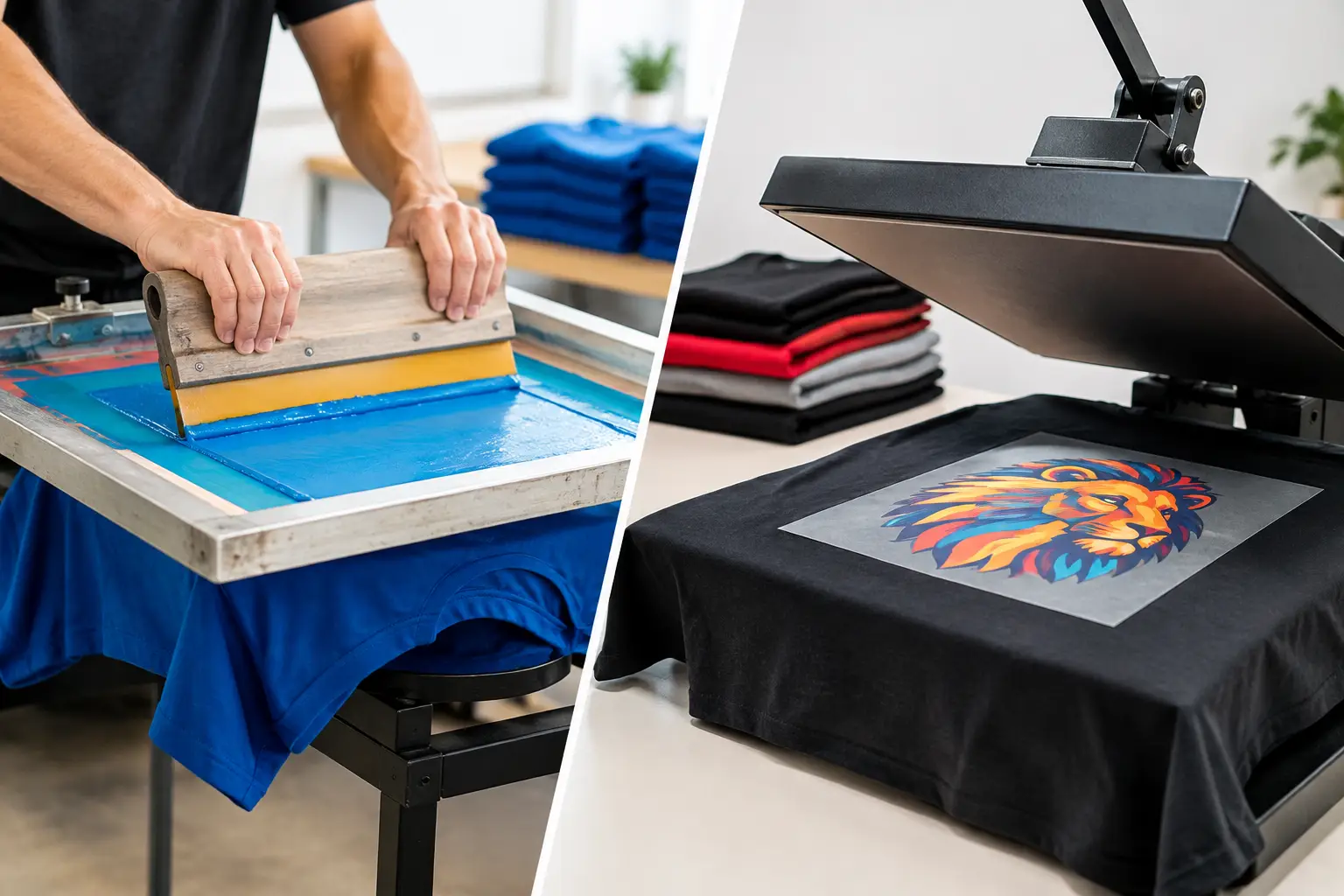
A staff shirt that cracks after a few washes, a campaign tee with a visible print border, or an event order delayed by the wrong production method can all create avoidable problems. In the screen printing versus heat transfer decision, the best choice is not simply about which method looks better. It depends on your artwork, garment type, quantity, deadline, budget, and how the item will be worn.
For corporate uniforms, employee appreciation gifts, school activities, roadshows, and promotional campaigns, choosing the right decoration method early helps protect both your budget and your brand presentation. Here is how to assess the trade-offs before placing an order.
What Is Screen Printing?
Screen printing applies ink directly to the fabric through a mesh screen. Each color in the artwork generally requires its own screen, and the ink is cured with heat to help it bond to the garment.
The result is a clean, professional print with strong color coverage and a finish that becomes part of the garment rather than sitting on top of it. It is a long-standing choice for company T-shirts, event shirts, team apparel, and promotional merchandise, particularly when the design is simple and the order quantity is higher.
Traditional screen printing works especially well with bold logos, text-based artwork, and designs with a limited number of solid colors. A white logo on a black cotton T-shirt, for example, is an efficient and dependable screen printing job. Large runs also benefit because the setup cost is spread across more pieces.
Where Screen Printing Performs Best
Screen printing is usually the stronger option when durability and consistent color matter most. Properly printed and cared-for garments can withstand repeated washing, which is useful for uniforms, retail merchandise, and apparel intended for regular use.
It also produces vibrant spot colors. If your organization has a specific brand red, blue, or green, a print partner can work toward a close color match using appropriate ink choices. This gives marketing teams more control over visual consistency across shirts, bags, and other fabric items.
The trade-off is setup. Screens must be prepared before printing begins, so screen printing is less economical for very small orders or designs that contain many colors. Changes to the artwork after setup may also add time and cost.
What Is Heat Transfer?
Heat transfer is a broad category of decoration methods that uses heat and pressure to apply a design to a garment. Depending on the application, the design may be cut from heat-transfer vinyl, printed on transfer film, or produced as a digital transfer such as direct-to-film printing.
Rather than pushing ink through a screen directly onto the garment, the artwork is prepared separately and pressed onto the material. This makes heat transfer a flexible option for small quantities, personalized garments, and detailed full-color artwork.
For example, a company may need 25 event shirts with the same front logo but different staff names and job roles on the back. Heat transfer can be practical because each name can be produced without creating a separate screen setup. It is also useful for designs containing photographs, gradients, or multiple colors that would be expensive or impractical to screen print.
Where Heat Transfer Performs Best
Heat transfer is well suited to short-run orders, variable data, and urgent personalization. Names, numbers, individual titles, and one-off designs can be added efficiently. This makes it a common choice for sports jerseys, small team orders, event crew apparel, and last-minute campaign requirements.
It can also reproduce complex artwork more easily than traditional screen printing. A full-color illustration with subtle shading may look sharper through a quality digital transfer than through a multi-screen print process.
However, the finish can feel different on the garment. Some transfers have a slightly raised or film-like surface, especially when they cover a large area. The quality of materials, pressing technique, and garment compatibility all affect wash durability, stretch, and comfort. A trusted production partner should advise when a transfer will be suitable and when another method may serve the project better.
Screen Printing Versus Heat Transfer: The Key Differences
The most useful comparison is not about declaring one method the winner. It is about matching the method to the job.
Quantity and Cost
Screen printing becomes more cost-effective as quantities increase, particularly for one-color or two-color artwork. While there are setup costs at the start, the per-piece price typically improves on larger runs. This is why it is often recommended for company-wide shirt orders, large events, and promotional giveaways.
Heat transfer usually has lower setup requirements, making it more accessible for small orders. For an order of 10 to 30 pieces, it may be the more practical route, especially if every item needs a different name or number. As quantities rise, however, heat transfer can become less economical than screen printing for the same repeated design.
Artwork and Color Complexity
Screen printing is excellent for simple, high-impact graphics. It delivers solid colors well and is ideal for logos that use a limited palette. Complex artwork can still be screen printed, but each additional color increases preparation, production time, and cost.
Heat transfer is more forgiving when artwork includes many colors, gradients, fine details, or photographic elements. A detailed event graphic may require a digital transfer to retain its intended look. The decision should still consider print size and placement, because a large, dense transfer may affect breathability on lightweight apparel.
Durability and Feel
A properly cured screen print is known for its longevity. It generally has a softer hand feel than a large transfer, particularly when the print area is not heavily layered with ink. For uniforms and workwear that will be washed frequently, this can be a meaningful advantage.
Modern heat transfers can also be durable when produced and applied correctly. But not all transfers are equal. The wrong transfer material, too much heat, insufficient pressure, or unsuitable fabric can lead to peeling, cracking, or poor adhesion. This is why garment selection and production testing matter, especially for performance fabrics and stretch materials.
Fabric Compatibility
Cotton and cotton-blend T-shirts are common choices for both methods. Polyester, nylon, spandex blends, jackets, and performance apparel require more careful evaluation. Dye migration, heat sensitivity, and fabric stretch can affect results.
For instance, dark polyester garments may bleed dye into certain inks or transfers during heat application. Stretchy activewear may need materials designed to flex with the fabric. A production consultation should consider the garment composition before the artwork is finalized, not after the items have been purchased.
Turnaround Time
Heat transfer can be fast for small, ready-to-produce orders because it does not require traditional screen preparation. This can help when an event date is approaching and the artwork is already approved.
Screen printing requires more pre-production work, but it can move efficiently once screens are set up and the design is approved. For larger orders, it may offer a more streamlined production path than pressing each garment individually. The real determinant is the production schedule, artwork readiness, item availability, and order size.
How to Choose the Right Method for Your Order
Start with the intended use of the apparel. If you are producing 500 campaign shirts with a two-color logo for a community event, screen printing will likely provide the best value, visual consistency, and durable finish. If you need 20 polo shirts with individual names for a leadership retreat, heat transfer may be more suitable.
Then review the design honestly. A clean logo with two spot colors does not need a complex method. On the other hand, forcing a detailed, full-color illustration into a low-color screen print can compromise the artwork or increase costs unnecessarily.
It is also worth considering the wearer. A large front print on a staff shirt worn outdoors for an entire day should remain comfortable and breathable. A small chest logo on a tote bag has different performance requirements. The item, print location, and expected wear all influence the right recommendation.
For projects involving several merchandise types, keeping artwork, colors, and approval standards coordinated is just as important as selecting a print method. A capable customization partner can help organize samples, recommend appropriate products, and plan production around your launch or event date.
Ask Before You Approve Production
Before approving artwork, confirm the garment fabric, print dimensions, number of print colors, and whether individual names or numbers are needed. Request guidance on the expected print feel and washing instructions, especially for jackets, activewear, and dark polyester garments.
It also helps to ask whether your deadline allows enough time for artwork checks, product sourcing, sample approval, printing, packing, and delivery. A quick decision on decoration method can prevent a rushed decision later when stock or production capacity is tighter.
The right print method should make your branded apparel easier to wear, easier to distribute, and easier to remember. When the design, garment, quantity, and event timeline are considered together, your order is far more likely to arrive looking exactly as your organization intended.