


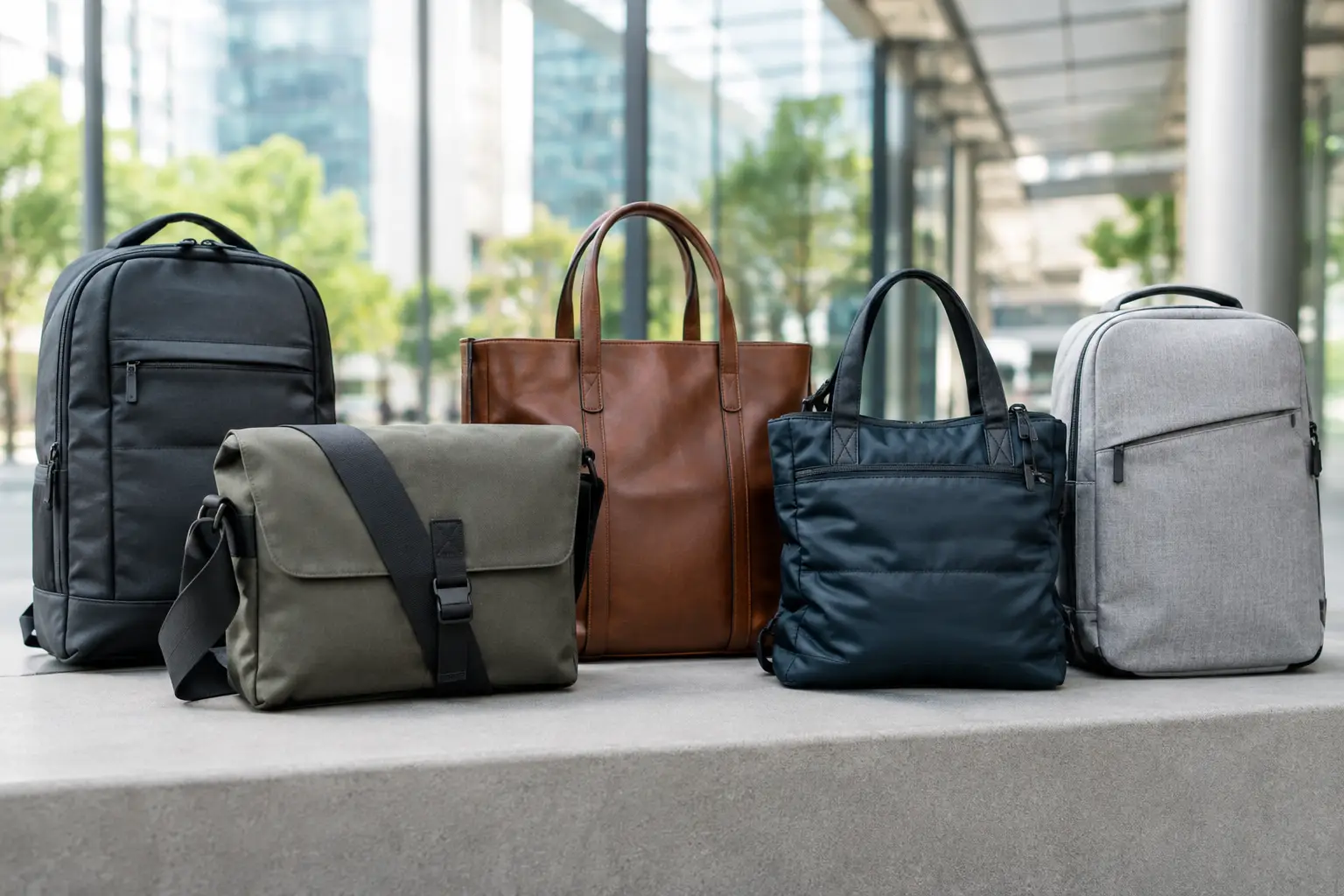
A branded bag earns its place when it survives the morning train platform, protects a laptop through a rainy walk, and still looks professional at a client meeting. The top custom bags for commuters are not simply the cheapest bags with a logo. They are practical items people choose repeatedly because they make the trip to work easier.
For HR teams, marketers, procurement managers, and event organizers, that daily use matters. A well-selected commuter bag gives a campaign far more visibility than a giveaway that ends up in a drawer. The right choice depends on how your recipients travel, what they carry, and where your logo needs to appear.
What Makes a Commuter Bag Worth Customizing?
Commuters judge a bag by its usefulness before they notice the branding. If the shoulder strap digs in, the zipper catches, or there is nowhere safe for a laptop, the product will not get regular use. Begin with the daily journey: public transit, driving, cycling, walking between meetings, or traveling between campus and work sites.
Capacity is the first decision. A compact sling bag may be ideal for a quick event handout or a field team carrying a tablet and personal items. A 15-inch laptop backpack is better suited to office employees who bring chargers, documents, lunch, and gym gear. Choosing too small creates frustration; choosing an oversized bag can make a campaign feel less targeted and raise the unit cost unnecessarily.
Material also affects the perceived value of your brand. Polyester and nylon are practical, lightweight options for large-volume programs. Canvas offers a more substantial, lifestyle-oriented look for tote bags and retail-style gifting. Recycled fabrics can support sustainability messaging, but ask about the composition, color range, print method, and lead time before finalizing artwork.
Customization should suit the bag rather than fight it. A clean one-color logo can be highly effective on a backpack front panel, while a larger full-color graphic may work better on a broad tote surface. Embroidery adds texture and durability to selected fabric bags, but it may not suit detailed artwork or very small text. Screen printing, heat transfer, and digital print options each have different strengths for color, quantity, and placement.
7 Top Custom Bags for Commuters
1. Laptop Backpacks for Everyday Office Travel
Laptop backpacks are often the safest choice for employee onboarding, corporate appreciation, and conference delegate kits. They distribute weight more comfortably than one-shoulder options and offer the organization people need during a full workday.
Look for padded laptop compartments, zipper closures, adjustable shoulder straps, and a separate front pocket for chargers or access cards. For employees commuting by transit, a water-resistant exterior and secure internal organization are worth prioritizing. A logo placed on the front panel is visible without overpowering the design.
The trade-off is price. Better padding, stronger zippers, and more compartments increase cost, so this format is usually best for teams where long-term use and a polished presentation matter more than the lowest possible giveaway price.
2. Convertible Tote Backpacks for Flexible Workdays
A convertible tote backpack can be carried by hand, over the shoulder, or on the back. That flexibility makes it a strong option for hybrid workers, client-facing teams, and recipients who move between the office, errands, and after-work plans.
This style feels less technical than a conventional backpack while still offering hands-free convenience. It is particularly useful for lifestyle-led corporate gifting, women-focused events, and organizations seeking a modern alternative to a standard conference bag. Choose a structured design with a zippered top and sufficient strap strength. An open tote may look attractive, but it is less practical on crowded transport.
Branding is often most effective when kept restrained: a small logo near the upper front, a woven label, or a tasteful tonal print can make the bag feel like a useful accessory rather than event merchandise.
3. Messenger Bags for Client-Facing Professionals
Messenger bags remain a practical choice for professionals carrying documents, tablets, samples, or compact laptops. Their flap design can create a broad branding area, and they work well for training programs, sales teams, and executive seminars.
They are best for lighter loads. A messenger bag packed with a heavy laptop, bottle, and paperwork can strain one shoulder over time. For that reason, specify an adjustable padded strap and a secure closure. Internal pockets help prevent the bag from becoming a single cluttered compartment.
For corporate branding, this category suits logos that need a formal, visible setting. It can also pair well with matching notebooks, lanyards, and stationery for a coordinated event or onboarding kit.
4. Roll-Top Backpacks for Active Commuters
Roll-top backpacks offer adaptable capacity. Users can keep the profile compact for a normal workday, then expand it when carrying a jacket, groceries, or event materials home. Their contemporary look suits younger workforces, creative teams, and brands with an urban audience.
The main advantage is versatility, but not every roll-top design is equally easy to access. Select one with a side zipper or quick-access pocket for essentials such as keys, transit cards, and phones. If laptop protection is required, confirm that the bag has a dedicated padded compartment rather than assuming the roll-top section is enough.
A large front panel gives room for a bold graphic treatment, making this a useful format for campaigns that want a stronger visual identity. Keep artwork simple enough to remain recognizable when the top is rolled down or the bag is partly filled.
5. Crossbody Sling Bags for Light Daily Carry
For commuters who travel light, a crossbody sling bag is compact, convenient, and easy to use in crowded spaces. It works well for roadshows, sports events, team outings, and campaigns aimed at people who carry only a phone, wallet, earbuds, keys, and perhaps a small tablet.
This is not the right bag for laptop-heavy roles. Its value comes from portability, not capacity. A good sling bag should have secure zippers, an adjustable strap, and enough pocket separation to keep small essentials organized.
Because the imprint area is smaller, use a clear logo mark rather than detailed promotional copy. A well-made sling bag with subtle branding can become a frequent weekend and commuting companion, extending the life of the campaign beyond the event day.
6. Drawstring Bags for High-Volume Events
Drawstring bags are a practical budget-conscious option when quantity, speed, and portability are the priority. They are easy to distribute at school programs, charity runs, orientation events, internal activations, and large conferences. Recipients can use them for a change of clothes, gym items, or lightweight daily essentials.
Their limitations are clear: they provide less structure, less security, and less comfort than a backpack. Avoid positioning them as premium corporate gifts. Instead, use them where a lightweight, visible, easy-to-pack bag fits the event purpose.
The large flat surface is excellent for bold logos, campaign names, and sponsor recognition. For designs with multiple partners, keep spacing generous so each mark remains legible from a distance.
7. Insulated Lunch Totes for Workplace Wellness Programs
A lunch tote may not be the first item that comes to mind when planning commuter merchandise, but it can be remarkably useful. Employees who bring meals to the office, work at sites without nearby food options, or commute long distances can use an insulated tote every day.
This option is especially relevant for wellness initiatives, employee appreciation packs, and sustainability programs that encourage reusable food storage. Choose an easy-clean lining, reliable zipper, sturdy handles, and a shape that fits comfortably alongside a work bag.
The branding opportunity is more personal than promotional. A discreet logo on a quality lunch tote reinforces care for employees and supports a practical workplace benefit. It also pairs naturally with reusable drinkware or food containers for a complete gift set.
How to Select the Right Bag for Your Program
Start with the recipient rather than the logo. A new-hire welcome kit may justify a laptop backpack with a higher perceived value. A trade show with hundreds of visitors may need an economical drawstring bag that can be packed and distributed quickly. A client gift may call for a structured tote or messenger bag with refined branding.
Next, define the non-negotiables: laptop size, water resistance, number of compartments, material preference, color, and budget range. This prevents an attractive product image from becoming an unsuitable final choice. If recipients will receive the bags outdoors or during an event, consider storage, packing volume, and how quickly staff can distribute them.
Artwork preparation should happen early. Logos with fine lines or small text may need adjustment for embroidery or textured fabric. Brand colors can also look different on black, colored, recycled, or canvas materials. Request guidance on the most suitable decoration method and placement before approving production.
For organizations managing multiple branded items, working with one partner can simplify bag sourcing, artwork coordination, printing, and event fulfillment. Global Asia Printings supports this kind of planning with product guidance that balances usability, brand presentation, quantity, and delivery requirements.
A commuter bag becomes valuable when it fits naturally into a person’s routine. Choose one that your recipients would be happy to carry even if there were no event around it, and your brand will travel with them for the right reason.