


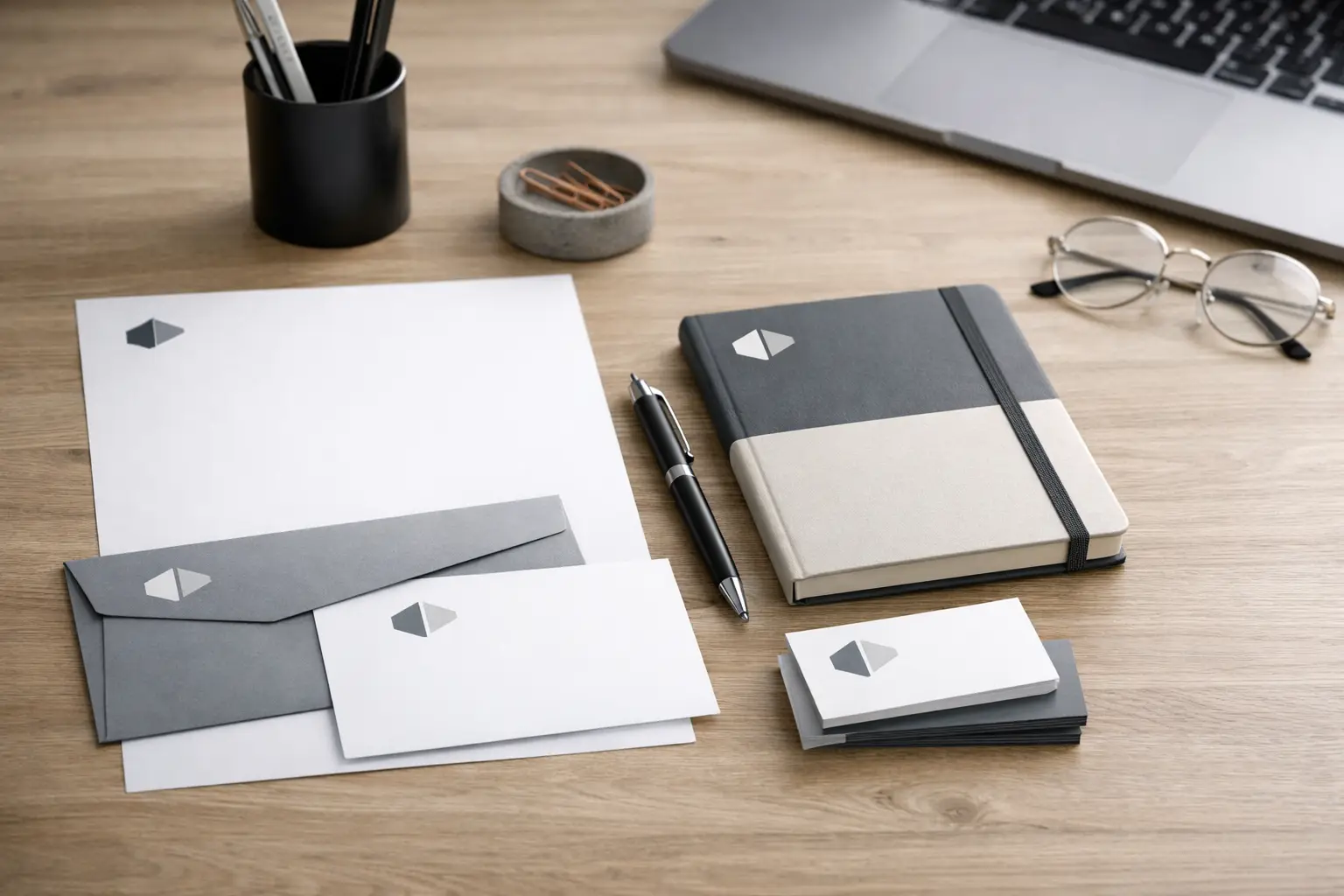
A proposal printed on generic paper, a handwritten note on an unbranded card, or event registration materials with mismatched colors can make an otherwise polished business feel less considered. Learning how to create branded stationery gives every everyday interaction a clearer, more professional identity – from internal meetings to client gifts, conferences, and onboarding packs.
For business teams, branded stationery is not simply about placing a logo on a notebook. The right combination of products, artwork, materials, and print methods should suit the purpose, represent the brand accurately, and remain practical for the people using it. A thoughtful approach also helps control cost, especially when ordering for a large team, campaign, or event.
Start With the Job Each Stationery Item Must Do
The best stationery programs begin with use cases, not product catalogs. A notebook for new employee onboarding has different requirements from a premium pen set for client appreciation. Likewise, a conference notepad needs to be easy to carry and write on, while a presentation folder needs to hold documents securely and look credible in front of prospects.
Consider where the item will appear, who will receive it, and how long it should remain useful. This prevents common purchasing mistakes, such as selecting an impressive but impractical product for a high-volume event or choosing low-cost materials for a key client meeting where presentation matters more.
For most corporate orders, stationery falls into a few practical groups:
- Everyday office essentials, including pens, notebooks, sticky notes, desk organizers, and document folders.
- Event and training materials, such as conference pads, name cards, lanyard inserts, writing sets, and welcome-pack folders.
- Employee engagement items, including onboarding kits, branded journals, planners, and desk accessories.
- Client and executive gifts, such as premium pen boxes, leather-look notebooks, personalized portfolios, and award sets.
A single campaign may need more than one tier. For example, attendees may receive a practical notebook and pen, while speakers or priority clients receive a higher-end gift set. This approach keeps the overall budget sensible without making every recipient experience identical.
How to Create Branded Stationery That Looks Consistent
Consistency is what turns separate products into a recognizable stationery collection. Your logo, brand colors, typefaces, and visual style should work together across each item, even when product sizes and materials vary.
Start by gathering the approved brand assets before artwork begins. Use the correct logo files, color references, font details, and any existing style guidelines. Vector logo files are generally preferred for print because they can scale cleanly without becoming blurry. If your team only has a low-resolution image copied from a website or presentation, request the original artwork before production is scheduled.
Then decide how prominently the branding should appear. A logo does not always need to dominate the entire product. On a premium notebook, a small debossed logo in one corner may look more refined than a large full-color print. On event notepads or sticky notes, a more visible logo and campaign message may be appropriate because the items support immediate brand recall.
Keep the design focused. Stationery has limited printable space, and crowded artwork often looks less professional once produced. Use one clear brand message, adequate spacing around the logo, and colors that remain legible on the chosen material. A pale logo may look attractive on screen but disappear when printed on kraft paper, textured card stock, or a light-colored pen.
It is also wise to consider the complete set together. A navy notebook, white pen, and folder can all feel cohesive when they share the same logo placement and accent color, even if the products are not identical. This is usually more effective than forcing the same full design onto every item.
Choose Products That Match Your Brand Positioning
Materials communicate as much as graphics. A financial services firm may favor clean hard-cover journals and metal pens. A school or youth program may prioritize colorful, durable notebooks and practical stationery packs. A sustainability-focused organization might choose recycled paper options, reusable pens, or packaging with minimal plastic.
There is no universal “best” product. The right choice depends on audience expectations, quantity, intended use, and brand position. A hard-cover notebook is durable and gift-worthy, but it may not be the most efficient choice for 1,000 event attendees. A simple wire-bound pad can be easier to distribute and more economical, especially when it will be used during a one-day workshop.
Think about physical details before approving an item: page count, paper weight, cover finish, pen refill quality, packaging, and whether the product is easy to store or transport. These details affect how recipients perceive the item long after the event or meeting ends.
Select a Print Method That Suits the Product
Print method affects appearance, durability, lead time, and budget. The same logo can look very different when screen printed, digitally printed, foil stamped, embossed, or laser engraved.
Full-color digital printing is useful for designs with multiple colors, gradients, photos, or variable details. It works well for notebooks, folders, paper products, and inserts where visual flexibility matters. Screen printing can be a strong option for bold, simple artwork on selected stationery products, particularly for larger quantities.
For a more premium finish, consider foil stamping, embossing, debossing, or laser engraving. These methods can give journals, pen sets, and portfolios a more tactile, executive feel. However, they may be better suited to simpler logos and shorter production runs. Fine details, very small text, or complex color artwork may not reproduce well with every finishing technique.
Ask for a clear recommendation based on the actual product and artwork rather than choosing a print method from photos alone. A dependable print partner should explain what will reproduce cleanly, flag artwork concerns early, and provide budget guidance when a preferred finish is outside the planned cost range.
Plan Quantities, Timelines, and Budget Early
Branded stationery is often requested close to an event date, but production involves more than printing. Artwork checks, product sourcing, sample approval, customization, packing, and delivery all take time. Specialty finishes and custom-made items may require longer lead times than ready-stock products with standard printing.
Build in room for decisions. Confirm the quantity, delivery location, artwork owner, approval process, and required-in-hand date at the beginning. If the stationery is part of an event, account for other materials that may need to arrive together, such as lanyards, tote bags, apparel, signage, or gift packs.
Budget planning should cover the complete project, not only the unit price. Setup charges, individual name personalization, special packaging, rush production, and split deliveries can change the final cost. Ordering a larger quantity may reduce the cost per item, but only when the products will genuinely be used. Excess branded stock can become outdated after a logo refresh, campaign change, or office move.
A practical option is to create a core stationery range that can be reordered throughout the year, then add event-specific inserts or packaging when needed. This gives teams a consistent branded base while allowing flexibility for different campaigns.
Review Proofs Before Full Production
A digital proof is the checkpoint that protects the project. Review it carefully for spelling, logo version, color references, placement, dimensions, and contact details. Do not assume that an artwork file is correct simply because it was used on another product. A design that works on a large banner may need adjustments for a narrow pen barrel or small notebook cover.
For high-value orders, unusual materials, or brand-critical gifts, request a physical sample when the timeline allows. It is the best way to assess color, texture, print sharpness, and overall quality. Samples are particularly useful when choosing between several notebook covers, pen finishes, or premium decoration methods.
The approval stage should have one clear decision-maker. Too many uncoordinated comments can delay production and create conflicting instructions. Gather internal feedback, consolidate it, and submit one final approval only after all details are confirmed.
Make Stationery Part of a Larger Brand Experience
Stationery works especially well when it supports a wider business moment. A branded notebook can sit inside an onboarding box with a company T-shirt and welcome card. A conference folder can be paired with a lanyard, tote bag, and live event personalization. A premium pen set can complement an award presentation or client appreciation package.
Working with one experienced supplier for these connected items can reduce fragmented communication, align colors and artwork across products, and simplify delivery planning. Global Asia Printings supports businesses that need this kind of coordinated execution, from product selection and customization through event-ready fulfillment.
The most effective branded stationery does not need to be elaborate. It needs to feel intentional, useful, and unmistakably connected to your business. When the product, design, finish, and delivery plan are aligned, even a simple notepad or pen becomes a small but credible reminder of the standards behind your brand.