


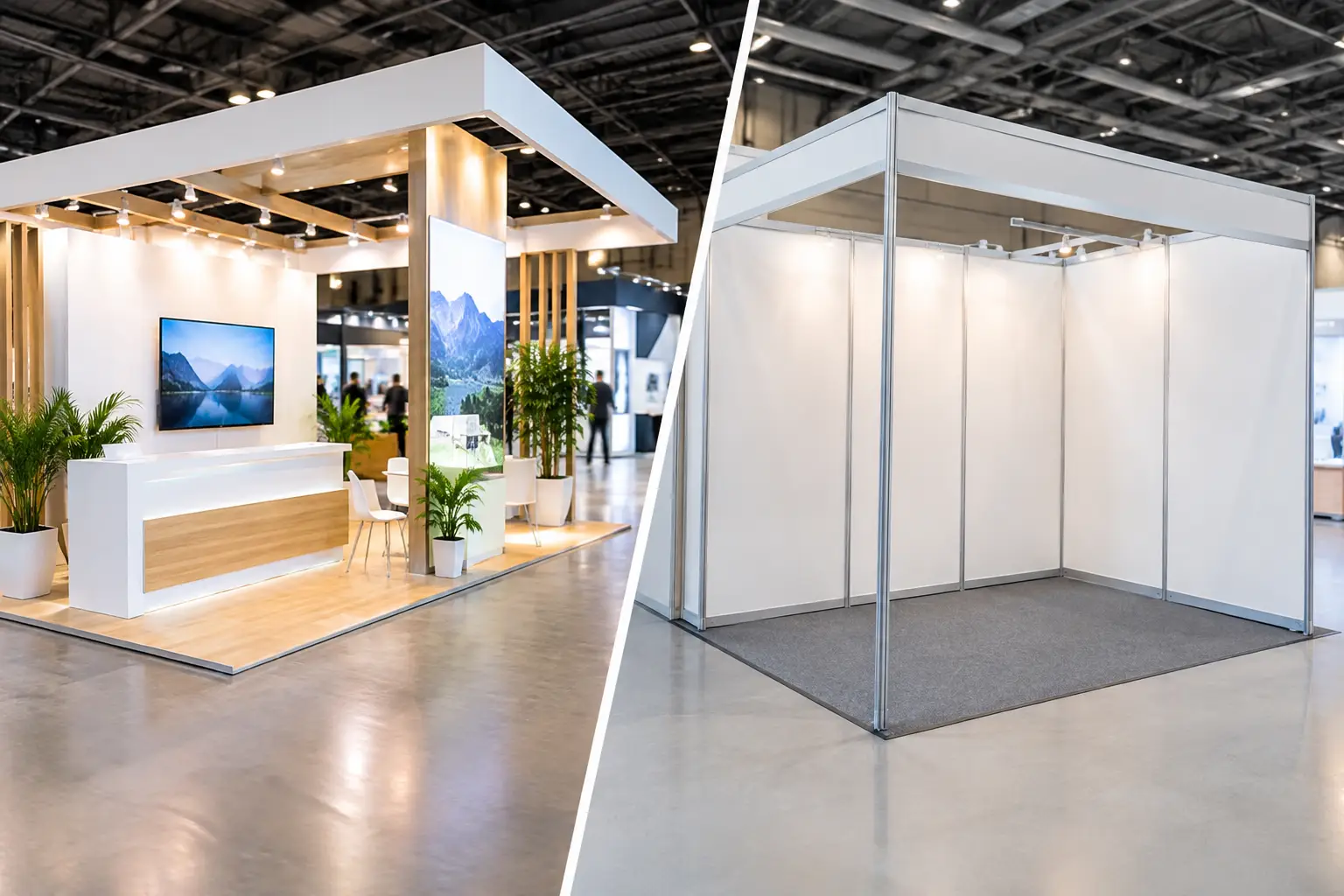
A blank booth space can look like an opportunity until you start pricing flooring, walls, lighting, electrical points, furniture, graphics, delivery, and installation. That is why the exhibition booth setup vs shell scheme decision should be made before design work begins. The right choice affects not only how your brand appears on the show floor, but also your budget, approval timeline, staffing needs, and what happens after the event ends.
For many exhibitors, the practical question is simple: do you need a branded space that will stop visitors and support a full campaign, or do you need a professional, efficient presence with less production risk? Both approaches can work well when matched to the event, audience, and business objective.
What Is the Difference Between a Booth Setup and a Shell Scheme?
A shell scheme is a standardized exhibition booth supplied by the event organizer or official contractor. It usually includes partition walls, basic carpeting, a fascia board with your company name, and limited lighting or electrical provision. You rent the structure as part of your exhibition package, then add graphics, furniture, display products, and promotional materials.
An exhibition booth setup is a broader service that turns either a raw space or an existing shell scheme into a branded environment. For a space-only booking, it may involve a custom-built booth with walls, counters, flooring, lighting, displays, storage, and large-format graphics. For a shell scheme, setup can focus on upgrading the supplied structure with printed panels, vinyl graphics, backdrops, shelving, counters, and branded event merchandise.
The terminology can vary between venues. Some U.S. events may call it a modular booth, pipe-and-drape booth, or standard package. The key distinction remains the same: a shell scheme gives you a basic structure, while a booth setup gives you a tailored presentation and the production support to make it happen.
Exhibition Booth Setup vs Shell Scheme: Cost and Value
A shell scheme is usually the lower-cost starting point because the event organizer has already standardized the walls, basic lighting, and installation. It is a sensible option for first-time exhibitors, organizations attending a smaller industry fair, or teams with a limited product range to display.
However, the initial package price is not the full cost. A plain shell scheme often needs branded panels, posters, a reception counter, furniture, product displays, and power upgrades before it looks ready for visitors. These additions can bring the final spend closer to a more considered booth setup, particularly if the event runs for several days or your team is competing with larger exhibitors nearby.
A custom exhibition booth setup generally requires a higher upfront investment. You are paying for design, fabrication, graphics production, logistics, installation, and dismantling. In return, you can use the space more effectively. A well-planned booth may include a meeting area, product demonstration zone, storage, lead-capture counter, or live personalization station rather than forcing every activity into one open area.
The strongest value does not always come from choosing the cheapest structure. It comes from matching your spend to the commercial purpose of the event. If your goal is to meet existing clients and maintain visibility, a polished shell scheme may be enough. If you are launching a product, hosting appointments, or pursuing high-value leads, a custom setup may earn its place in the budget.
Branding Freedom and Visitor Impact
Shell schemes have clear physical limits. Standard wall dimensions, aluminum frames, and fixed fascia locations can restrict where your messaging goes. Full-wall printed graphics can improve the look considerably, but careful artwork preparation is essential. A design that ignores frame positions, power points, or access doors can lose impact once installed.
A custom booth setup offers more control over sightlines, color, materials, lighting, and visitor flow. You can build a tall branded feature that is visible from the aisle, place products at comfortable viewing heights, and create distinct areas for demonstrations and conversations. This is especially useful when your company has a large catalog, technical products, or a service offering that needs explanation.
That freedom should be used with discipline. More walls, more screens, and more messaging do not automatically create a better booth. Visitors should be able to understand who you are and why they should stop within a few seconds. A strong setup usually starts with one clear message, a prominent visual identity, and a practical reason to engage, such as a sample, demonstration, giveaway, or consultation.
For shell schemes, the same principle applies. One bold back-wall graphic, a clean counter wrap, and coordinated staff apparel can often look more credible than several unrelated posters. Consistency matters more than filling every available surface.
Lead Times, Logistics, and Responsibility
This is where the exhibition booth setup vs shell scheme choice often becomes urgent. Shell schemes reduce structural planning because the organizer manages the standard build. Yet exhibitors still need to meet artwork deadlines, submit electrical orders, arrange furniture, follow venue rules, and deliver materials on time.
A custom setup has more moving parts. The booth contractor may need approved technical drawings, venue access information, build-up and tear-down schedules, insurance documents, and fire-safety compliance for materials. For larger builds, design and production should begin well ahead of the event. Last-minute changes can affect both cost and feasibility.
There is also a staffing consideration. A shell scheme is often easier for a small team to manage, especially if the display is limited to brochures, samples, and a counter. A custom booth with product demonstrations, hospitality, or live printing needs a clear operational plan. Decide who will greet visitors, qualify leads, replenish merchandise, manage equipment, and keep the space presentable during peak periods.
Working with one event branding partner can simplify the process. Instead of coordinating separate suppliers for graphics, branded shirts, lanyards, giveaways, counters, and booth installation, you can align the visual direction and production schedule across the entire event presence.
How to Choose the Right Format
Start with the event objective, not the booth type. A shell scheme is likely the better fit when you need a reliable, cost-conscious presence, have a short event schedule, or are testing whether a particular show delivers qualified leads. It is also effective when the organizer provides good baseline traffic and your product can be explained quickly.
A custom exhibition booth setup is often the better fit when you need to stand apart in a crowded hall, display multiple products, accommodate private discussions, or create an experience that supports social sharing and lead generation. It is particularly useful for major trade shows, recruitment fairs, product launches, and regional events where brand perception carries weight.
Before committing, ask these practical questions:
- Is the event primarily for awareness, lead generation, sales meetings, product demonstrations, or relationship building?
- What will visitors need to see, touch, test, or discuss before they can take the next step?
- How much of the budget should be allocated to space rental, booth production, staffing, samples, and promotional merchandise?
- Can the booth components be reused for future events, roadshows, or office activations?
Reusable modular components can change the calculation. A custom-looking booth does not always need to be built from scratch for every event. Portable backdrops, fabric displays, counters, shelving, and interchangeable graphics can give repeat exhibitors a more efficient middle ground between a basic shell scheme and a one-time custom build.
Make Either Choice Work Harder
The booth structure is only one part of the visitor experience. Staff apparel, lanyards, printed brochures, product samples, branded bags, and a useful giveaway should all reinforce the same campaign message. When these pieces are planned together, the booth feels organized and visitors leave with something that keeps your brand in view after the event.
Plan the layout around action. Put your clearest message where aisle traffic can see it, keep the counter free of clutter, and store excess stock out of sight. If you are collecting leads, make the process quick and give visitors a reason to participate. A personalized item, printed event photo, or relevant sample can create a more memorable conversation than a generic flyer.
Global Asia Printings can support this process from graphic production and branded merchandise through to booth installation, helping teams keep budgets, deadlines, and event materials aligned. The best format is the one that gives your team confidence on show day and gives visitors a clear reason to start a conversation.