


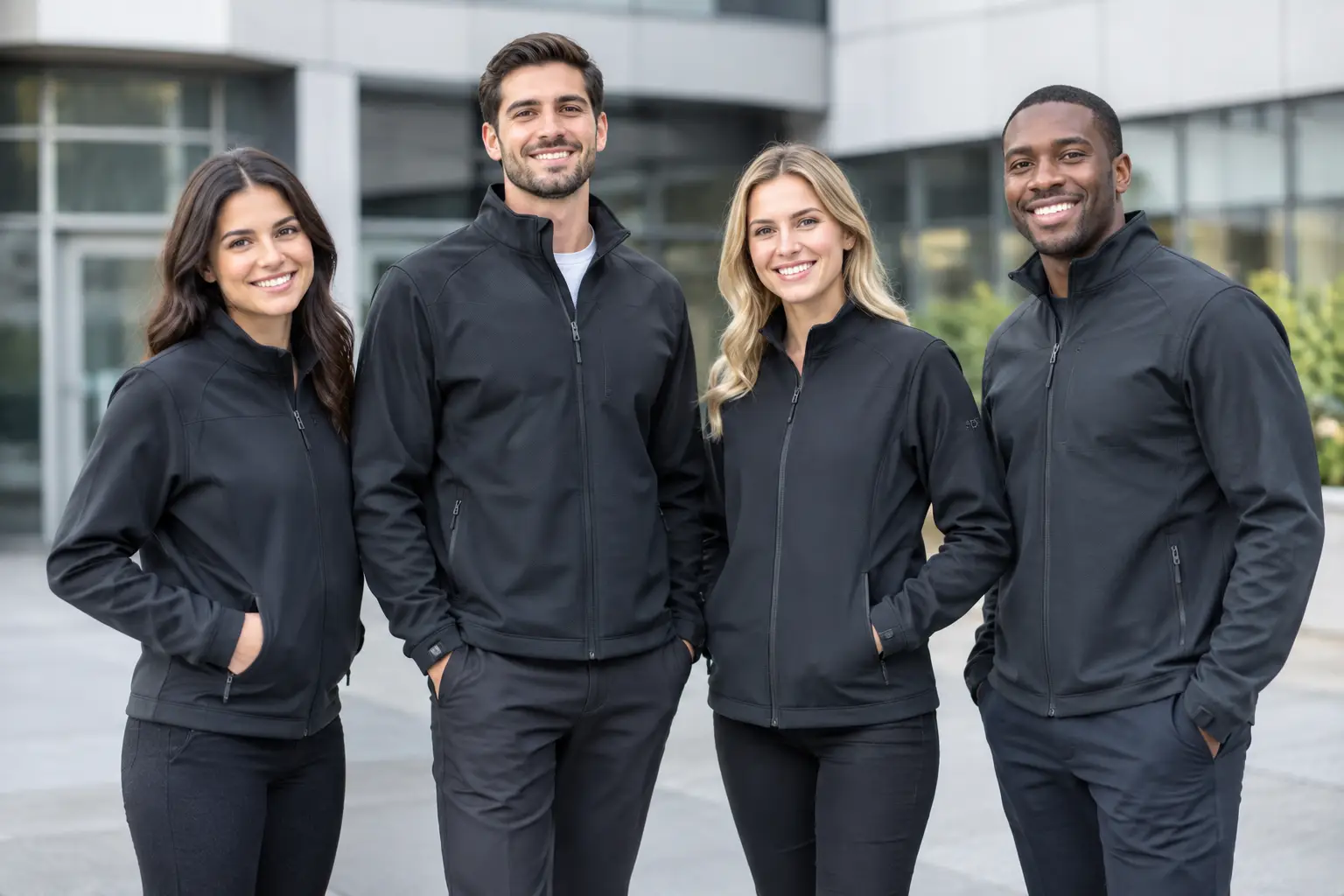
A corporate jacket has to do more than carry a logo. It needs to look credible when a sales team meets clients, keep staff comfortable during an outdoor event, and hold up after repeated wear. This corporate jacket printing review looks at the decisions that determine whether branded outerwear becomes a valued uniform item or an expensive item left in a cupboard.
For HR teams, marketers, procurement coordinators, and event planners, jackets are often ordered for a visible moment: a product launch, site visit, annual conference, staff recognition program, or seasonal campaign. That makes fabric, fit, logo placement, and delivery planning equally important. A well-priced jacket that arrives late, fits poorly, or has a logo that cracks after a few washes is not a successful purchase.
Corporate Jacket Printing Review: What Buyers Should Assess
The best jacket is not always the most premium option in a catalog. It is the one that suits the working environment, reflects the brand appropriately, and stays within the available budget at the required quantity.
Start with how and where recipients will use it. A lightweight windbreaker is practical for event crews, outdoor activations, and travel. A softshell jacket offers a more structured, polished appearance for client-facing teams and employees working in air-conditioned offices or variable weather. Fleece provides warmth and comfort but can look more casual. Puffer jackets create a premium impression, although their bulk, sizing, and decoration requirements need more attention.
The intended lifespan also matters. If jackets are for a one-day event, a lighter construction and simpler decoration may be the sensible choice. For employee uniforms issued across the year, stronger zippers, durable fabric, consistent sizing, and a refined branding method are worth prioritizing. The correct specification comes from the use case, not from choosing the cheapest or most elaborate option by default.
Fabric affects print results and wearer comfort
Fabric selection directly affects both decoration quality and how a jacket performs. Polyester is common for windbreakers and sportswear because it is lightweight, quick-drying, and suitable for many print applications. However, some treated polyester surfaces can be more challenging for ink adhesion. A production partner should check the garment material and recommend a compatible method rather than applying one standard process to every jacket.
Softshell fabrics often have stretch, water resistance, and a layered construction. They look professional and feel substantial, but large printed areas can reduce the fabric’s flexibility or affect its clean finish. Embroidery is frequently a strong option for softshells, particularly for smaller chest logos. Fleece can also work well with embroidery, although a very detailed logo may lose clarity in the fabric texture.
For teams that will wear jackets in warm or humid conditions, breathability and weight deserve as much consideration as appearance. A jacket that looks impressive in a meeting room but feels uncomfortable during setup work or outdoor registration will see limited use.
Choosing Between Print and Embroidery
“Jacket printing” covers several decoration methods, and each has a different visual effect, cost profile, and durability level. The right choice depends on the artwork, garment, order quantity, and placement.
Screen printing is a reliable option for bold, simple artwork, especially on larger orders. It produces solid color coverage and can be cost-effective when the same design is repeated across many units. It is less suitable when the artwork includes many colors, photographic details, or frequent design variations across departments.
Heat transfer printing is useful for full-color logos, individual names, campaign artwork, and smaller quantities. It can reproduce detailed graphics accurately, but the transfer material must be matched to the jacket fabric. Large transfers may feel heavier than the surrounding fabric, so they are generally best used where a strong visual statement is needed rather than across an entire garment.
Embroidery delivers a premium, textured finish that works particularly well for corporate logos on the left chest, sleeve, or upper back. It is durable and recognizable from a distance. The trade-off is that tiny text, gradients, and highly intricate artwork may not translate cleanly into stitches. Artwork sometimes needs to be simplified or digitized differently for embroidery.
Direct-to-film and related transfer processes can offer flexibility for detailed, multicolor graphics and mixed order quantities. As with any transfer method, results depend on the garment surface and correct application. A sample or pre-production check is valuable when branding a new jacket style or working with a color-sensitive logo.
A capable supplier will not treat these methods as interchangeable. They will recommend the method that protects the artwork, suits the fabric, and supports the purpose of the order.
Placement should follow the jacket design
The left chest remains the standard placement for a corporate logo because it is visible in conversation and looks appropriate across most business settings. A sleeve logo can add a secondary brand element without overwhelming the jacket. Back prints are useful for event teams, operational staff, sports groups, and promotional campaigns where visibility from a distance matters.
Placement should account for seams, pockets, zipper lines, hood folds, and fabric panels. A logo positioned too close to a zipper can look distorted when worn. A design that sits across a stretch panel may pull or crack over time. On puffer jackets, decoration areas are limited by the quilted channels, so a small chest logo or an embroidered patch may be more effective than a large print.
Ask to see a digital mock-up that uses the selected jacket, not just a logo placed on a generic apparel outline. This helps stakeholders check scale, contrast, and positioning before production begins.
Sizing, Color, and Brand Presentation
Jacket sizing is one of the most common sources of avoidable waste. Unlike T-shirts, outerwear is often worn over office clothing or uniforms, so recipients may prefer a slightly roomier fit. Review the supplier’s size chart, identify whether the cut is unisex, men’s, women’s, or slim fit, and collect size requirements early.
For larger internal programs, an assortment of sizes is more practical than ordering the same quantity in every size. If the jackets are for a mixed workforce, consider whether separate fits will improve comfort and adoption. This may add coordination, but it can be worthwhile for long-term uniform programs.
Color selection also affects branding and usability. Black, navy, gray, and neutral tones create a professional appearance and are easier to maintain. Brighter colors deliver stronger visibility for events, logistics teams, and outdoor crews. Before selecting a color, check whether the logo retains sufficient contrast. A dark logo on a dark jacket may look subtle on screen but disappear in photographs and crowded venues.
Quantity, Budget, and Lead-Time Planning
The unit price is only one part of the project cost. Decoration setup, embroidery digitization, multiple logo locations, individual names, special packaging, and delivery requirements can all influence the final budget. Clear specifications at the beginning lead to more accurate quotations and fewer last-minute changes.
Quantity usually affects the most efficient decoration method. A small executive gift order may justify premium embroidery and individually selected jacket styles. A 500-piece event order may benefit from a stock windbreaker, a simplified one-color design, and standardized sizing ratios. Neither approach is better in every case. The best value comes from matching the product and decoration to the program’s purpose.
Lead times need realistic attention. Jacket orders can involve product sourcing, size confirmation, artwork approval, sampling, production, quality checks, and delivery scheduling. Custom colors, non-stock sizes, or complex embellishments can add time. If jackets are tied to an event date, work backward from the date and allow time for approvals rather than treating production as the only deadline.
This is where one accountable vendor can reduce friction. Global Asia Printings can support product selection, artwork preparation, jacket customization, and event-related merchandise coordination, helping teams avoid managing separate suppliers for each stage.
Questions Worth Asking Before Approval
A strong quotation should answer practical questions before production begins. Confirm the exact jacket model, fabric composition, available colors, decoration method, logo dimensions, locations, and size breakdown. Request clarity on whether artwork cleanup, setup, or digitization is included.
It is also wise to ask how colors will be matched, what approval stage is required before production, and what happens if a stock item becomes unavailable. For time-sensitive orders, confirm the agreed delivery date in writing and ensure the supplier understands whether delivery is to one office, multiple locations, or an event venue with access restrictions.
For first-time programs, a physical sample can prevent costly assumptions. It allows decision-makers to evaluate the jacket’s weight, zipper quality, sizing, logo finish, and overall presentation in real conditions. A sample may add time upfront, but it often saves far more time than correcting a completed order.
The Standard to Set for Branded Outerwear
Corporate jackets work best when they feel like a considered part of the employee or event experience, not an afterthought with a logo added at the end. Focus on the wearer, the setting, the durability needed, and how the branding will appear at normal viewing distance.
A thoughtful corporate jacket printing review should leave your team with a clear brief, a realistic timeline, and a jacket people are pleased to wear. That is the point where branded outerwear starts doing its job long after the event or campaign has ended.