


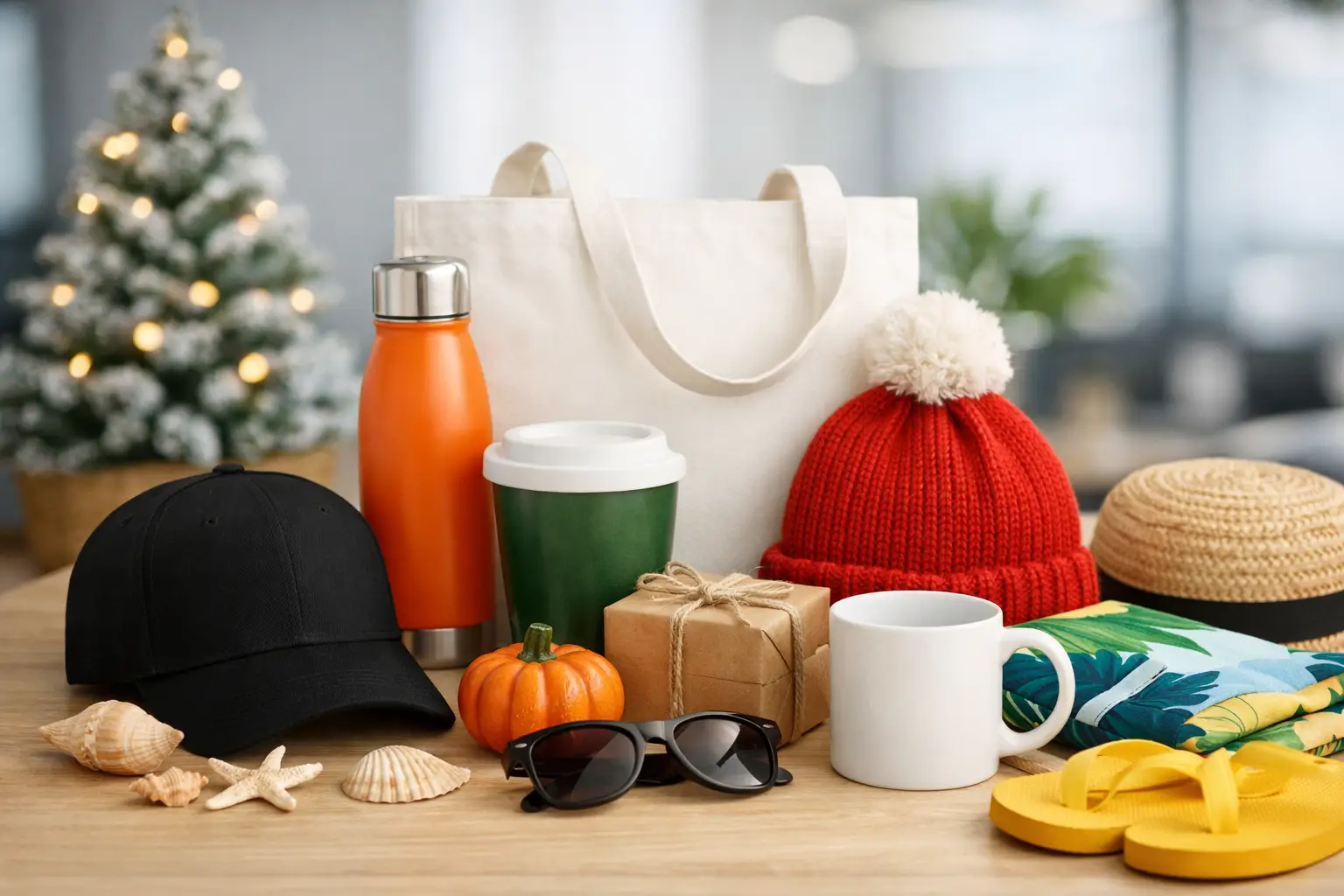
A seasonal campaign has a short window to make an impression. Whether you are preparing employee gifts for year-end, giveaways for a summer activation, welcome packs for a new intake, or branded items for a festive sales push, the merchandise needs to feel timely, useful, and clearly connected to your campaign.
This seasonal campaign merchandise guide is designed for marketing teams, HR departments, event planners, procurement teams, and organization coordinators who need to move from an idea to a well-executed order without juggling multiple suppliers. The strongest campaigns do not simply put a logo on a product. They match the item, message, audience, budget, and delivery timeline from the start.
Start With the Campaign Moment, Not the Product
It is tempting to begin with a popular item such as a tote bag, T-shirt, tumbler, or notebook. A better starting point is the moment you are creating. Ask what people should feel, do, or remember after receiving the merchandise.
For an employee appreciation campaign, practical and slightly elevated products may be more appropriate than a low-cost giveaway. A branded premium gift box, insulated drinkware, work bag, jacket, or wireless accessory can communicate recognition and care. For a public event where hundreds or thousands of attendees are expected, visibility, portability, and cost per unit usually matter more. Lanyards, drawstring bags, caps, reusable bottles, and small stationery items are often easier to distribute at scale.
Seasonality should influence both the product and its use. Rainwear, umbrellas, towels, cooling accessories, and reusable drinkware suit warm-weather or outdoor campaigns. Jackets, mugs, desk accessories, and curated gifting sets work well for year-end programs, staff milestones, and holiday periods. The item does not need to be novelty-themed to feel seasonal. Often, a well-chosen color palette, campaign sleeve, gift packaging, or limited-edition message does the work more effectively.
Build Your Seasonal Campaign Merchandise Plan Around the Audience
The same campaign can require different merchandise for different groups. A client receiving a thank-you gift has different expectations from an employee attending a town hall, a student joining orientation, or a visitor walking through an exhibition booth.
Consider the relationship first. High-value clients and business partners may appreciate useful premium items with refined branding, such as executive stationery, travel accessories, drinkware, or customized gift sets. Employees tend to value products they can wear or use regularly, including apparel, bags, lunch containers, wellness items, and desk essentials. Event visitors respond best to items that are easy to pick up, easy to carry, and relevant to the event experience.
The audience also affects branding decisions. A large logo can be ideal for an event T-shirt or volunteer uniform, where visibility is part of the objective. On premium gifts, a subtle print, engraving, woven label, or tonal treatment may look more appropriate. Good customization is not about placing the biggest possible logo on every surface. It is about making the brand feel intentional.
Choose Products That Earn Their Keep
Seasonal merchandise should do at least one of three jobs: create visibility, provide utility, or reinforce appreciation. Products that meet two or more of these goals tend to generate better value.
A custom tote bag can carry campaign materials at an event, remain useful afterward, and extend brand exposure in public. A quality polo shirt can identify staff during an activation and become part of a team wardrobe. A notebook and pen set may support a conference while making a professional client gift. These are stronger choices than products selected only because they are inexpensive or currently popular.
When comparing options, think beyond unit price. A lower-priced item that is discarded quickly may have less campaign impact than a slightly better product that remains in daily use. At the same time, premium is not always the right answer. For mass distribution, a simple and reliable item with clean printing can outperform an expensive product that forces you to reduce quantity too sharply.
Set a Budget That Accounts for the Full Campaign
Merchandise budgets are often discussed as a per-item figure, but the real project cost includes more than the base product. Printing method, number of print colors, print locations, individual names, packaging, artwork preparation, delivery, and urgent production requirements can all affect the final amount.
Set three budget levels early: an ideal option, a practical option, and a value option. This gives your team room to make decisions if quantities change or a preferred item has limited stock. It also helps avoid a common issue: choosing a product before understanding what the required customization will cost.
For campaigns with varied audiences, consider a tiered approach. Use a high-volume giveaway for attendees, a better-quality item for registered guests or staff, and a premium gift for speakers, sponsors, or key clients. This keeps the campaign cohesive while directing budget where it has the most value.
A capable merchandise partner should guide you toward alternatives when a product exceeds budget or availability is uncertain. In many cases, changing the material, print treatment, or packaging can preserve the campaign idea without compromising the overall presentation.
Plan Backward From the Distribution Date
Seasonal deadlines are rarely flexible. A campaign tied to an event date, holiday period, employee gathering, product launch, or school orientation has a fixed finish line. The earlier you work backward from that date, the more choice and cost control you retain.
Allow time for product selection, stock confirmation, artwork preparation, sampling where needed, production, quality checks, packing, and delivery. Apparel requires additional attention because sizes must be collected and quantities balanced. Custom gift sets need time for item sourcing, assembly, and presentation. Imported or highly specialized products can require longer lead times, especially during peak campaign seasons.
Last-minute orders are possible in some cases, but they create trade-offs. Your available product range may narrow, rush charges may apply, and there may be less time to approve samples or revise artwork. If speed is critical, choose in-stock items and a straightforward customization method rather than building a campaign around a complicated product configuration.
Prepare Artwork for the Actual Product
A logo that looks excellent on a digital presentation may not translate directly to fabric, metal, textured surfaces, or small print areas. Fine lines, tiny text, gradients, and closely matched colors can behave differently depending on the printing technique.
Provide your logo in a high-resolution or vector format and clarify the intended placement. If the campaign uses a specific seasonal color or tagline, share the relevant brand guidelines early. Your supplier can then recommend whether screen printing, heat transfer, embroidery, UV printing, engraving, or another method is most suitable.
Request a visual mock-up before production and review it from the recipient’s perspective. Check readability, scale, logo position, color treatment, and whether the design feels balanced. For major events, apparel programs, or premium gifting, a physical sample can be worthwhile. It adds time upfront but can prevent costly surprises across a large order.
Make Distribution Part of the Experience
Merchandise creates more impact when the handover is planned, not treated as an afterthought. A gift placed on employees’ desks before a town hall creates anticipation. A well-organized redemption counter can encourage event participation. Live on-site printing can turn a standard giveaway into a personalized activity, giving attendees a reason to engage, share, and stay longer.
Packaging matters here too. A simple campaign card can explain the purpose of the gift, reinforce the message, or direct recipients toward a next action. For staff programs, individual name labels help distribution run smoothly. For exhibitions, pre-packed kits reduce counter congestion and give booth teams more time for meaningful conversations.
This is where using one partner for product sourcing, printing, packing, and event support can reduce avoidable coordination work. Global Asia Printings supports this end-to-end process, from product recommendations and customization to high-volume fulfillment and live event printing, so teams can focus on the campaign rather than chase separate vendors.
Measure What Worked Before the Next Season
Not every result needs a complicated dashboard. After the campaign, collect practical feedback from the people who handled distribution and from a small sample of recipients. Did the products arrive on time? Were quantities accurate? Which items ran out first? Did the merchandise encourage booth visits, staff participation, social sharing, or positive client responses?
Keep a simple record of item choices, quantities, print specifications, costs, and lead times. Seasonal campaigns often return every year, and this information makes the next order faster and more confident. It also reveals which products have lasting value and which ones should be replaced.
The right seasonal merchandise should feel considered long after the campaign date has passed. Start early, select for the people receiving it, and give every product a clear role in the experience. That is how a branded item becomes a useful reminder of the campaign and the organization behind it.