


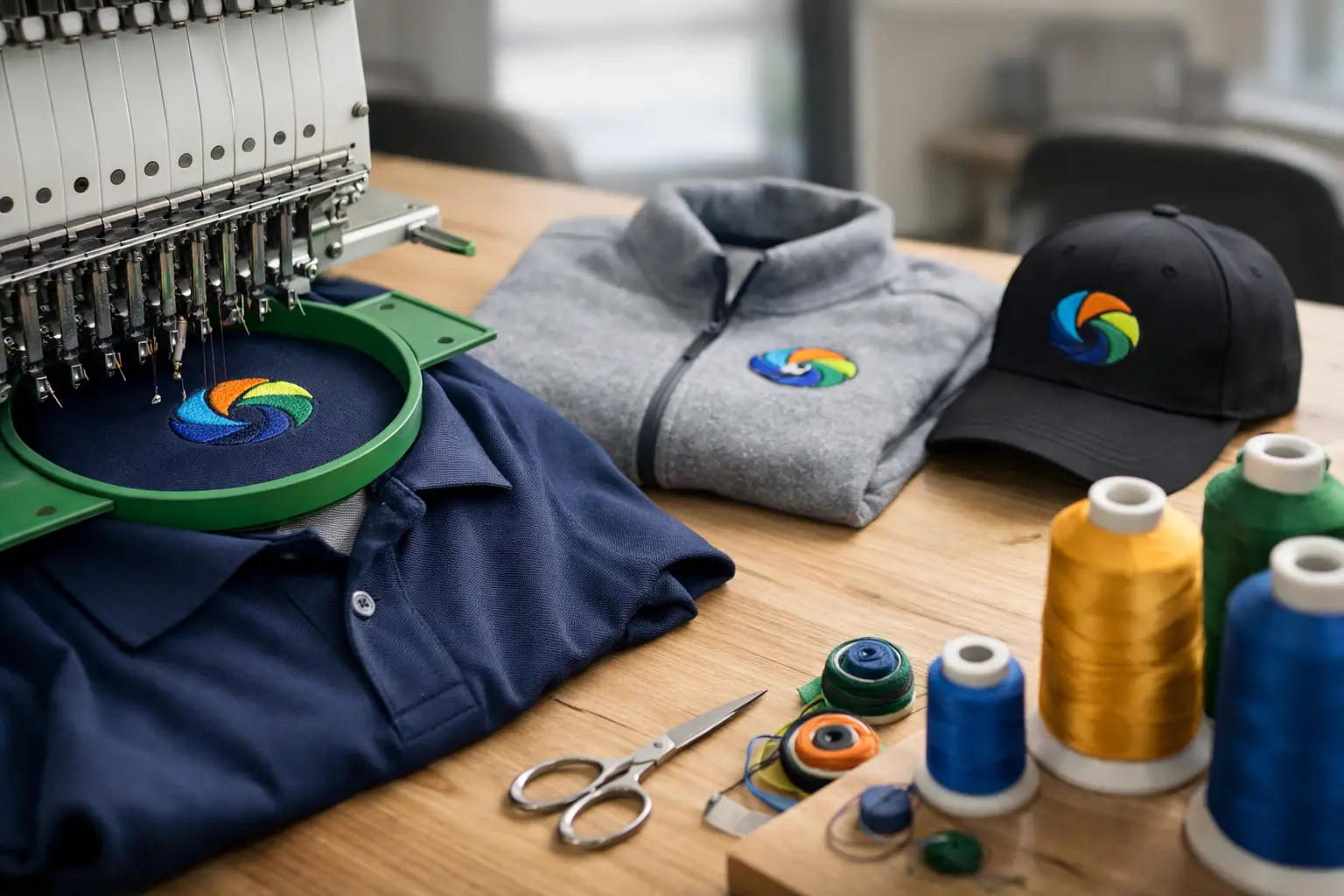
A polo shirt can look perfectly professional from across a meeting room, then lose credibility the moment someone notices a puckered logo, uneven lettering, or thread colors that miss the brand palette. A proper logo embroidery review helps businesses prevent those details from reaching employees, clients, or event guests. It is not just a check on whether a logo appears on a garment. It is a review of how well the logo, thread, fabric, placement, budget, and production timeline work together.
For corporate uniforms, staff jackets, executive gifts, school apparel, and event merchandise, embroidery remains a strong choice because it feels permanent and premium. But it is not automatically the right decoration method for every logo or product. The best result comes from reviewing the artwork and intended use before production begins.
Logo Embroidery Review: What to Check First
The first question is simple: can the logo be embroidered clearly at the size required? A logo that looks sharp on a website or business card may contain fine lines, tiny text, gradients, or detailed icons that do not translate well into thread. Embroidery has physical limits. Each stitch needs space, and thread has thickness that can close small gaps or make compact letters difficult to read.
A supplier should review the original artwork and advise whether it needs simplification for embroidery. This does not mean changing the brand casually. It means creating an embroidery-ready version that protects recognition at a practical size. For example, a small tagline beneath a logo may need to be removed from a left-chest application, while it may remain possible on the back of a jacket or a larger bag panel.
Digitizing Determines the Finished Look
Embroidery begins with digitizing, the process of converting artwork into a stitch file that tells the machine where, how, and in what order to sew. This step has a direct effect on the final result. A well-digitized design has suitable stitch direction, density, underlay, and pull compensation for the logo and material.
Poor digitizing can create gaps in filled areas, distorted circles, misaligned borders, or thread that sits too heavily on the fabric. It can also cause puckering, especially on lightweight polos and stretch garments. A logo may technically be accurate but still look stiff or untidy if the stitch settings do not suit the garment.
Ask to see a digital embroidery proof and, where the order is significant or the logo is detailed, request a physical sample or sew-out. A screen proof confirms the layout. A sewn sample reveals the factors that matter most: readability, texture, thread coverage, and fabric behavior.
Fabric Changes the Result
The same logo will not perform identically across every product. A heavyweight cotton polo provides a relatively stable surface, while performance fabric, fleece, softshell, knitwear, and caps each require different handling. Stretchy material may need stabilizer to maintain shape. Thick fleece can swallow fine details. Structured caps may limit the size and placement of the embroidery area.
This is why businesses should select the garment and decoration method together rather than treat them as separate purchases. If your priority is a refined, long-lasting left-chest logo, a quality polo, oxford shirt, jacket, or cap can be a suitable match. If you need a large, colorful graphic across the back of a lightweight event shirt, printing may be more effective and cost-efficient.
Review Logo Size and Placement in Context
A logo that looks good at 4 inches wide may look oversized on a small polo or disappear on a large jacket. Placement needs to be reviewed against the actual garment size, not only against a flat artwork template.
For most corporate polos, shirts, and jackets, the left chest is the familiar choice. It supports a clean, professional appearance and works well for staff uniforms, client-facing teams, and internal company apparel. Sleeve embroidery can be useful for event names, campaigns, or secondary branding, but it should not compete with the main logo. Caps typically require a simplified front design because the available area is limited and curved.
Consider who will wear the item and where. A hospitality team may benefit from a discreet chest logo that feels polished in person. Event crew apparel may need a larger logo or department identifier for quick recognition in a crowded venue. Premium gifting may call for subtle tonal embroidery on a jacket or bag. There is no universal best placement. The right choice depends on visibility, garment style, and brand personality.
Before approval, confirm the logo dimensions, measured placement from seams or edges, and whether the same position can be maintained across all garment sizes. Consistency matters, particularly when an order includes men’s, women’s, youth, and extended sizes.
Match Thread Color to Brand Expectations
Thread color is one of the most visible parts of an embroidery review. Unlike ink, thread has sheen and texture, so the perceived color can vary under office lights, daylight, and event lighting. A glossy thread may make a logo appear brighter than expected, while matte thread can create a quieter, more contemporary finish.
Provide approved brand color references whenever possible. Pantone references are helpful, but thread shades are not a perfect one-to-one match with printed ink. An experienced supplier should recommend the nearest available thread option and flag any noticeable variation before production.
Also review contrast. Navy thread on a black jacket, dark gray on charcoal, or white on pale heather fabric may be technically on-brand but difficult to see. In some cases, using an approved alternate logo color creates a clearer and more useful result. Brand guidelines should guide this decision, but garment readability should not be ignored.
Understand Cost, Quantity, and Lead Time
Embroidery pricing is usually influenced by stitch count, number of logo locations, order quantity, garment type, and setup requirements. A large, highly detailed logo generally needs more stitches than a simple one-color mark, increasing production time and cost. Adding names, individual titles, or different department identifiers also adds complexity because each item needs separate handling.
For a small corporate order, embroidery may carry a higher cost per piece due to digitizing and setup. At larger quantities, the per-item cost often becomes more favorable. The practical question is not whether embroidery is the cheapest option. It is whether its perceived quality, durability, and fit with the apparel justify the investment.
Lead time needs the same realistic review. Artwork approval, digitizing, sample checks, garment sourcing, embroidery, packing, and delivery all take time. Rush jobs may be possible, but a compressed schedule reduces flexibility if artwork needs revision or a selected garment becomes unavailable. For uniforms tied to onboarding, conferences, roadshows, or annual events, approving the embroidery design early protects the rest of the project timeline.
Sample Approval Is the Best Quality Control Step
A production sample gives decision-makers something far more useful than a mockup: evidence. It shows whether the lettering remains legible, whether the logo lies flat, whether the thread colors are acceptable, and whether the selected garment supports the intended finish.
Review the sample from normal viewing distance as well as close up. A few loose thread tails may be trimmed, but larger issues should be addressed before bulk production. Look for clean outlines, consistent fill areas, balanced spacing, and a logo that sits level on the garment. Turn the item inside out when appropriate to check whether backing is secure and comfortable, especially for uniforms worn for long shifts.
Approval should also cover the full order specification. Confirm sizes and quantities, garment colors, logo locations, individual names if included, packing requirements, and delivery date. Small assumptions at this stage can become expensive corrections later.
When Embroidery Is the Right Choice
Embroidery is particularly well suited to garments and products that need a durable, established look. Corporate polos, work uniforms, jackets, caps, backpacks, towels, and selected premium gifts are common choices. The stitched finish communicates care and tends to hold up well through repeated wear when produced correctly.
There are situations where another method is better. Large artwork with multiple colors, photographic designs, fine gradients, and very small details usually favor print. Lightweight event T-shirts may also be more comfortable and cost-effective with screen printing or heat transfer. A good branding partner will recommend the method that suits the project rather than forcing every design into embroidery.
For organizations managing apparel alongside gifts, event items, or booth needs, a coordinated supplier can reduce the risk of mismatched logos, colors, and deadlines. Global Asia Printings can support that planning from product selection and artwork preparation through customization and fulfillment, helping teams keep one project from becoming several disconnected orders.
The strongest embroidered logo is rarely the result of choosing thread and pressing approve quickly. It comes from asking practical questions early, reviewing a real sample, and selecting a garment that gives the brand room to look its best. That extra review time pays off every time an employee puts the item on.