


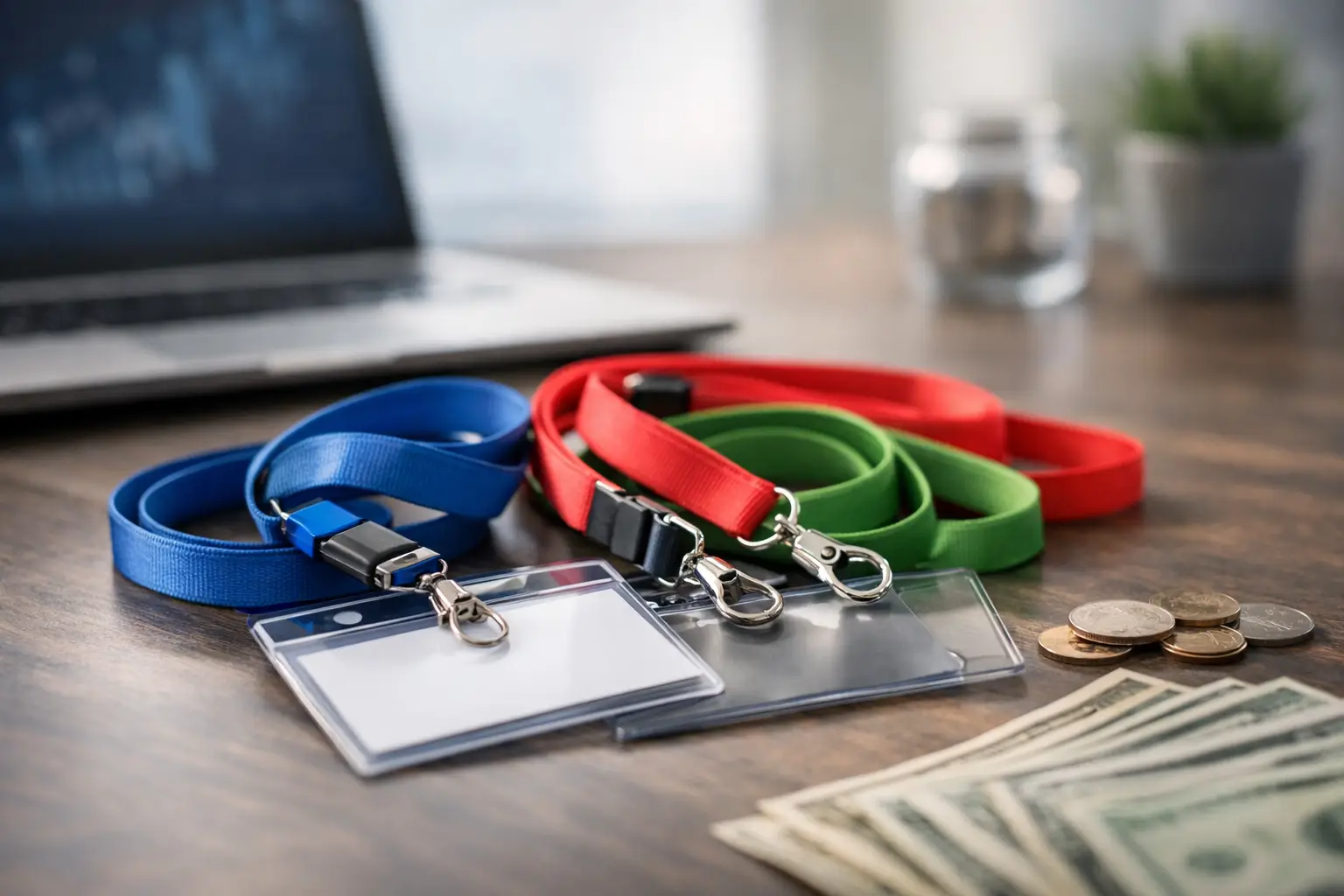
How much do custom lanyards cost? For most business and event orders, the answer is not a single number. A simple printed polyester lanyard may cost well under $2 per piece at volume, while a full-color, recycled, woven, or accessory-fitted option can cost several dollars more. The right budget depends on what the lanyard needs to do: identify attendees, hold access cards securely, support your brand colors, or create a more polished experience for staff and guests.
For marketing teams, HR coordinators, schools, and event planners, a lanyard is a small item with a very visible role. It is worn throughout the day, appears in photographs, and often carries a badge, key, pass, or ID. Planning the order around use, quantity, and deadline helps prevent unnecessary upgrades while protecting the quality your brand needs.
Typical Custom Lanyard Cost Ranges
As a practical planning guide, custom lanyards commonly fall within these per-unit ranges in U.S. dollars before applicable shipping, tax, or special handling:
| Lanyard type | Typical quantity | Estimated cost per piece | |—|—:|—:| | Basic polyester with simple screen print | 100-500 | $0.70-$1.50 | | Full-color dye-sublimated polyester | 100-500 | $1.20-$2.75 | | Woven lanyard | 100-500 | $1.50-$3.50 | | Recycled PET or eco-focused lanyard | 100-500 | $1.50-$3.75 | | Premium lanyard with multiple accessories | 100-500 | $2.50-$6.00+ |
These are budget ranges, not fixed prices. A short, one-color print on a standard lanyard will sit at the lower end. A detailed logo that repeats along a full-color strap, paired with a safety breakaway, detachable buckle, and badge reel, will move the price higher.
The quantity also matters significantly. A 50-piece order generally has a higher unit cost than a 500-piece order because artwork preparation, machine setup, and production handling are spread across fewer pieces. If your attendance estimate is still moving, it is usually more cost-effective to order a sensible buffer from the beginning than to place a small emergency reorder later.
What Changes the Cost of Custom Lanyards?
Printing method and artwork complexity
Screen printing is often the most economical choice for straightforward artwork, especially one or two solid colors. It works well for company names, simple logos, and concise messaging. Each additional print color may increase the price because it requires separate setup and production steps.
Dye sublimation is commonly selected when the artwork includes gradients, photographs, multiple colors, or a logo that needs to remain exact to brand guidelines. The design is printed into the material rather than sitting on top of it, which creates a smooth, durable finish. It costs more than basic screen printing, but it can be better value than trying to simplify a detailed identity just to fit a low-cost print method.
Woven lanyards create the design with thread. They have a textured, professional appearance and suit simple logos or text particularly well. Fine details and tiny type are less suitable for weaving, so the artwork should be assessed before committing to this option.
Material, width, and finish
Standard polyester is durable, comfortable, and budget-friendly, making it a common choice for conferences, visitor passes, staff identification, and school programs. Nylon can offer a smoother, shinier surface, while tubular lanyards have a softer, rounded feel for casual use.
Recycled PET lanyards are a strong option for organizations with sustainability requirements or environmental reporting goals. They can carry a modest cost premium, but they also give event organizers a practical way to align event materials with a broader sustainability message.
Width affects both appearance and cost. A narrow 3/8-inch lanyard can be sufficient for a simple ID card, while 3/4-inch or 1-inch widths give logos more room and create stronger visibility across a busy venue. Wider straps use more material, but they can improve readability enough to justify the difference for sponsor-heavy events or public-facing teams.
Hardware and safety features
The clasp is not a minor detail. A basic swivel hook is a practical default for badges and key cards. A lobster clasp, key ring, detachable buckle, or badge reel may be necessary depending on what employees or attendees are carrying.
Breakaway safety releases deserve careful consideration for schools, healthcare settings, active workplaces, and any environment where a lanyard could snag. They add to the unit cost, but the added safety can make them non-negotiable. Detachable buckles are useful when staff need to scan a card, open secure doors, or remove a key without taking off the lanyard.
Quantity, packaging, and delivery timing
Production pricing improves with volume, but quantity should still reflect a realistic need. Ordering 1,000 lanyards for a 150-person training session simply to chase a lower unit price may create storage waste and tie up budget that could support better badges, event signage, or other branded materials.
Individual packaging, custom card inserts, sorting by department, and kitting with badges can add cost. For a high-touch employee welcome kit or VIP registration pack, those services may save your internal team substantial preparation time. For a simple one-day event, bulk packing may be the more efficient choice.
Rush production and expedited freight are frequent budget surprises. A dependable supplier should ask for your in-hand date, not only your event date. This allows time for artwork approval, proofing, production, shipping, and distribution before registration opens.
How Much Do Custom Lanyards Cost With Add-Ons?
Accessories can change the final price more than buyers expect. A badge holder, for example, may cost less than a premium printing upgrade, but it should be selected based on badge size, orientation, and how often the card will be scanned. A poorly matched holder can bend badges, obscure barcodes, or slow entry lines.
For a basic event ID setup, a standard lanyard with a swivel hook and a clear badge holder is often enough. For security-conscious events, consider a breakaway, detachable buckle, and holder that exposes the barcode or QR code. For staff who need to carry access cards daily, a badge reel may be more convenient than repeatedly unclipping the lanyard.
A good quote should itemize these components. That makes it easier to see whether a higher total comes from the lanyard itself, upgraded hardware, full-color printing, packaging, or fast delivery. It also gives procurement teams a clean basis for comparing options without assuming every quote includes the same specifications.
Choosing the Right Budget for Your Use Case
For a large conference, prioritize visibility, durable printing, and reliable badge attachment. A full-color dye-sublimated polyester lanyard is often worth considering because it carries sponsor logos and event branding clearly. If the event has several attendee tiers, using one base lanyard design with color-coded badges can be more economical than producing multiple lanyard designs.
For internal staff IDs, durability and safety should lead the decision. A simple, well-printed polyester strap with a breakaway feature can provide a professional daily-use solution without overspending on decorative finishes.
For recruiting fairs, client activations, or product launches, the lanyard becomes part of the brand experience. Here, a distinctive full-color print, recycled material, or upgraded hardware can support the impression you want guests to take away. The key is to spend where people will notice: print quality, color accuracy, and comfortable materials matter more than add-ons that do not improve the user experience.
Get a Quote That Is Easy to Compare
To receive an accurate quote, provide the quantity, preferred material, width, print method or number of colors, attachment type, delivery location, and required in-hand date. Include your artwork if it is ready, but do not delay an inquiry if it is not. An experienced production partner can advise whether the logo will reproduce cleanly and suggest a more cost-effective method when appropriate.
At Global Asia Printings, the goal is not simply to supply a lanyard. It is to help teams match the product, customization, and delivery plan to the event or workplace requirement, while keeping the budget clear from the start.
The most useful question is not only what a custom lanyard costs, but what it needs to achieve once it is around someone’s neck. Define that job clearly, allow enough lead time, and the right specification becomes much easier to choose.